
Kamakura
Ibaraki · 鎌倉Browse Ibaraki’s cultural heritage from the Kamakura period (1185 – 1333). Filter by type and keyword, with concise stories, maps, and travel tips.
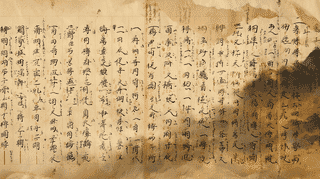
A manuscript owned by the Tokugawa Museum in Mito, Ibaraki Prefecture, which comes down to us here in its own two volumes, the upper and the lower one.

A pagoda finial planted in the ground as a monument in itself: 9.16 metres of hammered copper on a wooden core, raised at Sairenji in 1287 and incised with donors.
Hidden in a wooded hollow at Fukusenji Temple in Hokota City, Ibaraki Prefecture, this life-size standing Shakyamuni Buddha was carved in the late Kamakura period and designated a National Important Cultural Property in 1916. Its rope-coiled hair, exposed cypress finish, and concentric drapery follow the famous Seiryōji-style tradition tracing back through Song China to ancient Indian Gandhāran art. The statue is publicly opened once a year, on April 8.
Preserved at Muryōjuji Temple in Hokota City, Ibaraki, the Shūi Kotokuden is a colored picture scroll on paper composed by Kakunyo, third head priest of Hongan-ji. A surviving fragment from the 1608 fire, this Kamakura-period yamato-e was designated an Important Cultural Property in 1917.
Discover the Illustrated Biography of Prince Shōtoku, a Kamakura-period handscroll designated an Important Cultural Property of Japan and preserved at Jōgūji temple in Naka City, Ibaraki Prefecture. Painted in the soft yamato-e tradition, the 7.39-metre scroll narrates the life of Prince Shōtoku in fourteen scenes and arrived at this rural temple as a gift from Honganji's Kennyo following the Ishiyama War.
Discover the Silk-Painted Biography of Prince Shōtoku, a set of four hanging scrolls designated as a National Important Cultural Property and held by Myōan-ji temple in Bandō City, Ibaraki Prefecture. Created during the Kamakura period to support the Pure Land mission in eastern Japan, this masterpiece depicts about seventy scenes from Prince Shōtoku's legendary life. Learn about its founding by Jōnen, a disciple of Shinran, the painting's iconographic highlights, where to see the faithful replica, visitor access, and surrounding pilgrimage sites.