
Shōwa
Ishikawa · 昭和Browse Ishikawa’s cultural heritage from the Shōwa period (1926 – 1989). Filter by type and keyword, with concise stories, maps, and travel tips.
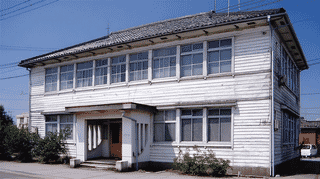
Discover Toita Hall, a beautifully preserved 1940s wooden village office building in Kanazawa, designated as a Registered Tangible Cultural Property. Explore its unique architectural features blending Japanese and Western styles along the historic Kanaishi Road.

Discover Akatsukiya, a 1933 Kanazawa machiya townhouse designated as a Registered Tangible Cultural Property and now operating as a charming guesthouse near Kenrokuen Garden.
Discover the Awazu Enbujo, a Registered Tangible Cultural Property in Komatsu, Ishikawa. Built in 1933, this beautifully restored theater in Awazu Onsen showcases traditional Japanese stage architecture and the cultural legacy of the Kaga hot spring region.
On Kanazawa's Kodatsuno plateau, a 1928 home for biochemist Suto Kenzo: a half-timbered front, Japanese sides under one red-tiled roof, a central-corridor plan.
A 57-metre wall in Kanazawa that grows a hedge between twin concrete runs, built in 1928 for a German-trained doctor and now a registered cultural property.
Built in 1931 and modeled on a Kyoto National Treasure, this cypress Noh stage was moved into Japan's first public Noh theater, beside Kenrokuen in Kanazawa.
In central Kanazawa, Ishiguro Shoten's store and house is a 1936 art dealer's machiya, red-ochre timber set against black plaster walls, registered in 2015.
Built by Shimizu-gumi in 1929 for the Takaoka Bank, this curved four-storey concrete landmark by the Asano River now houses the Kanazawa Bungeikan literary centre.
A nationally registered tangible cultural property in Komatsu City, Ishikawa Prefecture, this rare kiln shed preserves traditional nishiki kilns at the birthplace of Living National Treasure Tokuda Yasokichi III. Explore masterpieces spanning three generations of Kutani ware artistry in an intimate early Shōwa-era townhouse setting.
Built around 1933 in Komatsu, Ishikawa, this machiya was home and workshop to three generations of Tokuda Kutani enamellers. Registered in 2019, now a museum.
Built as a Kanazawa restaurant in 1937, this house was moved intact after the war and made a home, keeping its swan transoms and two shoin alcoves. Registered 2004.
Shokoji's main gate in Hakusan, a gabled four-legged gate of 1956, shows dense bracketing and a dragon carved across the opening, a work of high decorative quality.
Shokoji's Sofu-an in Hakusan, a thatched tea room built in 1935, is named after Chiyo-ni's brush name and marked by a cross-shaped roof; a registered cultural property.
Shokoji's Chiyo-ni Hall in Hakusan, built in 1935 for the poet's 150th memorial, is a tiny thatched shrine holding Yoshida Saburo's carved image of Kaga no Chiyo.
Discover the Harunari Sake Brewery Main House in Nanao, Ishikawa Prefecture — a 1934 segai-style machiya registered as a national tangible cultural property, embodying the Noto Peninsula's sake-brewing tradition and merchant architecture.
Built in 1931, Hikoso Machiya is a modern Japanese-style residence registered as a National Tangible Cultural Property in 2018. Featuring the distinctive Azumadachi gable design of the Hokuriku region, it now serves as the headquarters of the NPO Kanazawa Machiya Research Society, dedicated to preserving Kanazawa's historic townhouse culture.