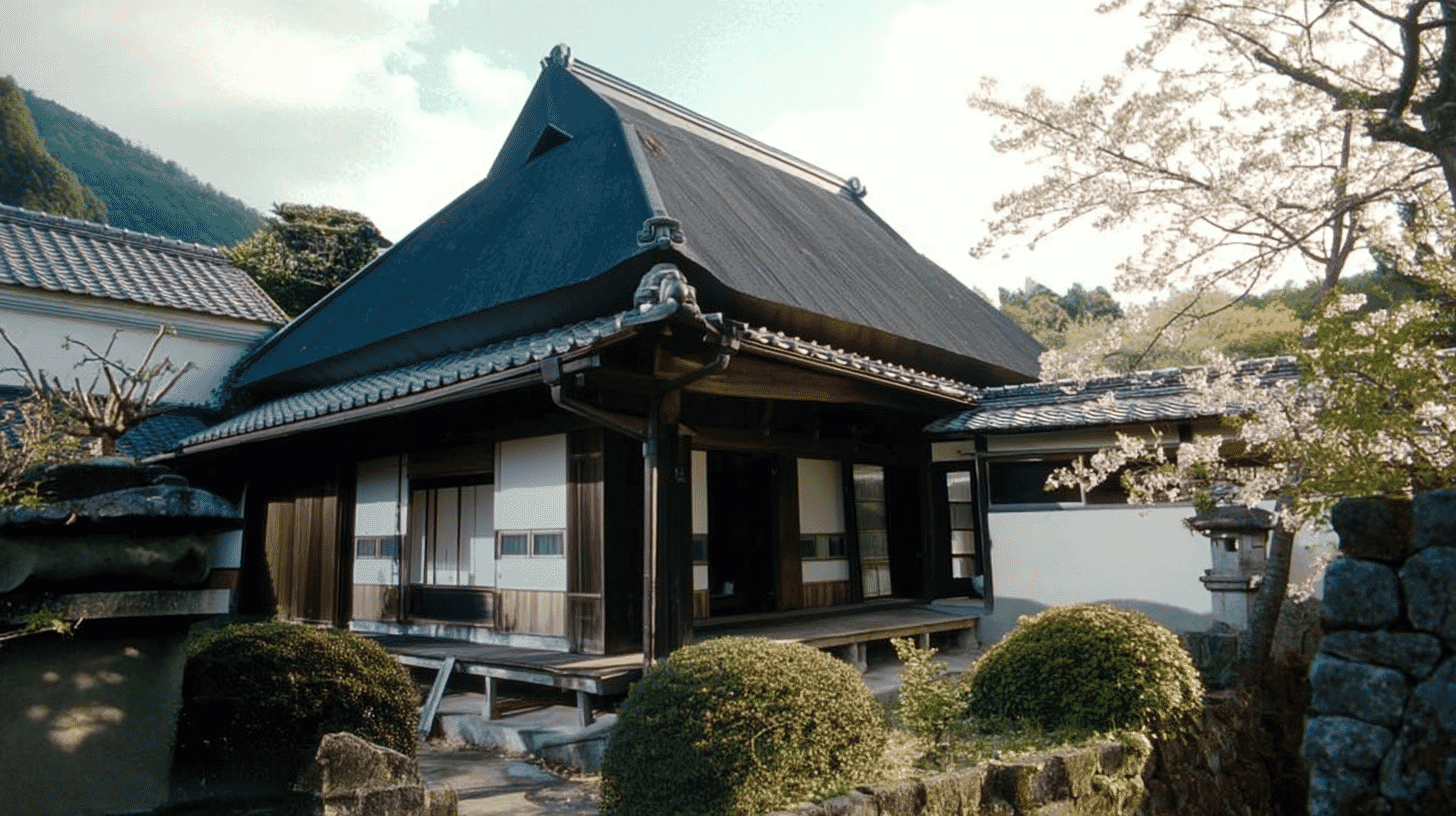
Shigeta Family Residence: A Hidden Gem of Meiji-Era Agricultural Heritage in Kagawa

Discover the Shigeta Family Residence in Manno Town, Kagawa—a collection of six nationally registered cultural properties showcasing upper-class Meiji-era farming architecture. Explore the historic nagaya gate, main house, and connecting corridor along the ancient Hashikura pilgrimage road.

Discover the Shigeta Family Residence: A Living Testament to Meiji-Era Rural Prosperity

Nestled in the foothills of the Sanuki Mountains in Manno Town, Kagawa Prefecture, the Shigeta Family Residence stands as a remarkable example of upper-class farming architecture from Japan's Meiji era. This collection of six nationally registered tangible cultural properties offers visitors a rare glimpse into the prosperous agricultural life of rural Shikoku during a pivotal period of Japanese history.

The residence is located in Yamawaki, a village that once flourished as a vital crossroads between the Sanuki and Awa provinces. This strategic position along the historic Hashikura Kaido pilgrimage route to Kotohira Shrine, combined with its role as a trading hub for the unique "karikoushi" cattle-lending tradition, brought considerable wealth to the region's farming families.

Historical Background: Where Mountain Paths Met Commerce

The Yamawaki district sits at approximately 140 meters elevation on the northern slopes of the Sanuki Mountain Range. Since ancient times, this location served as a crucial junction between Awa Province (present-day Tokushima) and Sanuki Province (present-day Kagawa). The Hashikura Kaido, a pilgrimage road connecting these regions to the famous Kotohira Shrine, passed directly through this area.

Until the 1950s, Yamawaki thrived as an exchange point for "karikoushi" (借耕牛), a fascinating agricultural tradition where cattle were borrowed from Tokushima farmers during spring and autumn busy seasons. Sanuki farmers needed oxen for rice cultivation but lacked the grasslands to raise them, while Tokushima's mountainous terrain was unsuitable for rice but perfect for cattle grazing. This mutually beneficial arrangement brought prosperity to intermediary villages like Yamawaki, where the Shigeta family established their impressive homestead.

The first generation of the Shigeta family engaged in farming, originally occupying only the southeastern corner of what would become the main house. In 1877 (Meiji 10), a significant expansion was undertaken, followed by an additional extension in 1914 (Taisho 3) when the toilet building was added, completing the estate's current configuration.

Registered Cultural Properties: Six Architectural Treasures

On September 19, 2003, six structures within the Shigeta estate received national registration as Tangible Cultural Properties, recognizing their exceptional historical and architectural significance.

Main House (Shuoku)

The main residence occupies a central position on the property, facing south. This single-story wooden structure features an impressive building footprint of 158 square meters, currently covered with metal roofing over the original thatched roof construction. The building spans seven ken (approximately 12.7 meters) in width and five ken (approximately 9.1 meters) in depth, presenting an elegant irimoya (hip-and-gable) roof design.

The interior layout reflects the hierarchy of Meiji-era farm households, with the eastern portion designated as the lower-ranking area and the western side containing the main living spaces. Three tatami rooms of six, eight, and eight mats respectively are arranged along the southern side, with the southwestern eight-mat room serving as a formal reception space doubling as a Buddhist altar room, featuring a corridor along its western edge.

This building exemplifies the "shiho-buta" (four-sided eaves) farmhouse style, with protective eaves extending on all four sides—a distinctive feature of prosperous agricultural homes in the region.

Nagaya Gate (Long House Gate)

Standing south of the main house, this impressive gatehouse represents the formal entrance befitting a wealthy farming household. The east-west oriented structure features an irimoya roof with san-kawara (interlocking) tiles and measures eight ken in length, with a building footprint of 79 square meters.

The western portion houses an eight-mat reception room, while the gate entrance is positioned toward the east. The exterior showcases traditional finishing techniques: namako-kabe (sea cucumber wall) plaster on the lower sections and black lacquered plaster above. Wooden fences with tile roofing extend from both sides, creating an elegant transition between the public road and private estate.

A front garden separates the nagaya gate from a stone-lined waterway along the street, presenting a dignified appearance appropriate for an upper-class farming estate.

Connecting Corridor (Toriai Roka)

This distinctive covered walkway links the main house's formal rooms to the nagaya gate, serving the unusual dual purpose of connecting passage and garden divider. The corridor separates the estate's large front courtyard into two distinct areas: a working space to the east and an ornamental garden to the west.

Measuring half a ken in width and eight ken in length with a building footprint of 15 square meters, this single-story structure features true-wall (shinkabe) construction with white plastered walls and latticework windows in the upper sections, topped by a kirizuma (gable) roof with san-kawara tiles.

This combined corridor-and-garden-wall design is exceptionally rare among farmhouse architecture, making it a particularly valuable example of Meiji-era estate planning.

Earthen Wall and Stone Retaining Wall (Dobei and Ishigaki Yoheki)

The protective perimeter of the estate consists of two complementary elements: along the western boundary, a 40-meter earthen wall approximately 2 meters high rises above a 1.5-meter tani-zumi (valley-stacked) stone wall; along the eastern boundary, a 50-meter stone retaining wall approximately 2 meters high stabilizes the sloping terrain.

Waterways run along both stone walls, and together with the nagaya gate and storage buildings, these elements create a landscape reminiscent of a moated estate, adding to the property's distinguished character and providing practical protection against seasonal winds and flooding.

Architectural Highlights and Design Philosophy

The Shigeta estate occupies a carefully engineered site carved from the mountainside hillslope into a roughly 50-meter square plot. The eastern and northern sides are bordered by small hills that form a natural windbreak, serving as a protective screen against seasonal winds—a testament to the careful site planning of Meiji-era builders.

The property layout follows traditional farmhouse principles: the main house faces south, with the kitchen and bath facilities originally positioned to the right (west), while the tool storage and toilet connect to the left (east). In front of the house lies the "kado" (courtyard), a broad open space serving as an outdoor work area—essential for the agricultural activities that supported the family.

The presence of a nagaya gate marks this as an upper-class farming residence, as such elaborate entrance structures were reserved for households of significant wealth and social standing. The overall composition demonstrates the integration of practical farming needs with aesthetic sensibilities characteristic of Meiji-era rural prosperity.

Visiting the Shigeta Family Residence

The Shigeta Family Residence offers visitors an authentic experience of Meiji-era agricultural life far from the typical tourist circuits. As a privately-owned property, visitors should approach with respect and observe from public areas unless special arrangements have been made through the Manno Town Board of Education.

The surrounding Yamawaki area retains much of its rural character, with terraced rice fields and traditional farmhouses creating a picturesque landscape that has changed little since the Meiji era. Springtime brings cherry blossoms to the hillsides, while autumn paints the Sanuki Mountains in brilliant colors.

Nearby Attractions

Visitors to the Shigeta residence can easily combine their trip with other attractions in Manno Town and the surrounding area.

  • Sanuki Manno National Park: Shikoku's only national park, featuring extensive flower gardens, camping facilities, and cycling paths. The park hosts spectacular illumination events from November through January.
  • Manno Pond: Japan's largest irrigation pond, originally constructed in the 8th century and famously repaired by the Buddhist monk Kukai (Kobo Daishi). The scenic area was designated as Japan's first nationally recognized scenic pond.
  • Kotohira Shrine (Konpira-san): One of Japan's most popular pilgrimage sites, famous for its 785 stone steps to the main hall. The historic pilgrimage route passed through Yamawaki.
  • Hashikura Temple: Known as the "inner sanctuary" of Kotohira, this Shingon Buddhist temple in Tokushima was historically connected to Yamawaki via the Hashikura Kaido road.
  • Shioiri Onsen: A therapeutic hot spring facility offering relaxation after cultural exploration.
📍 Plan Your Visit to Kagawa
Find tours, activities & transport passes near Shigeta Family Residence Main Building
[ Naoshima Art Island & Kotohiragu Shrine Visit ]

Q&A

QCan I enter the Shigeta Family Residence buildings?
AThe Shigeta Family Residence is a privately-owned property and not generally open to the public. Visitors can view the exterior from public roads. For special access or group tours, please contact the Manno Town Board of Education's Lifelong Learning Division in advance.
QHow do I get to the Shigeta Family Residence?
AThe residence is located in Yamawaki, Manno Town. From Kotohira Station, take a local bus or taxi toward the Kotonami area. A car is recommended for the most convenient access, as public transportation in this mountainous region is limited.
QWhat is the best season to visit?
ASpring (April-May) offers pleasant weather and cherry blossoms, while autumn (October-November) brings beautiful foliage to the Sanuki Mountains. Summer visitors can combine the trip with sunflower viewing in nearby Manno Town fields.
QWhat is "karikoushi" and why was it important?
AKarikoushi was a traditional cattle-lending practice between Tokushima and Kagawa farmers that lasted from the Edo period until the 1960s. Sanuki farmers borrowed cattle for rice planting and harvesting, paying with rice as compensation. Yamawaki served as a key exchange point for this trade, bringing prosperity to local families like the Shigetas.
QAre there English-language resources available?
AEnglish signage is limited in this rural area. Consider downloading the Manno Town cultural properties pamphlet from the town website before your visit, or contact the Lifelong Learning Division for information in advance.

Basic Information

Name Shigeta Family Residence (重田家住宅)
Designation Nationally Registered Tangible Cultural Property (6 structures)
Registration Date September 19, 2003
Construction Period Meiji era (1877) with Taisho-era additions (1914)
Location Yamawaki, Manno Town, Nakatado District, Kagawa Prefecture
Registered Structures Main House, Nagaya Gate, Connecting Corridor, Tool Storage and Toilet, Rice Storehouse, Earthen Wall and Stone Retaining Wall
Main House Specifications Single-story wooden construction, metal roofing (originally thatched), 158 m² building footprint
Contact Manno Town Board of Education, Lifelong Learning Division
Tel: 0877-89-7020

References

Shigeta Family Residence - Manno Town Cultural Properties
https://www.town.manno.lg.jp/site/bunkazai/4511.html
Shigeta Family Residence Main House - Cultural Heritage Online
https://bunka.nii.ac.jp/heritages/detail/139398
Shigeta Family Residence Nagaya Gate - Cultural Heritage Online
https://bunka.nii.ac.jp/heritages/detail/194629
Shigeta Family Residence Connecting Corridor - Cultural Heritage Online
https://bunka.nii.ac.jp/heritages/detail/168942
Shigeta Family Residence Earthen Wall and Stone Retaining Wall - Cultural Heritage Online
https://bunka.nii.ac.jp/heritages/detail/183543
Karikoushi (Borrowed Cattle) - Manno Town Cultural Properties
https://www.town.manno.lg.jp/site/bunkazai/1448.html
Manno Town - "Most Beautiful Villages in Japan" League
https://utsukushii-mura.jp/map/mannou-kotonami_tyuunan_nagasumi/

Last verified: 2026.01.27

Nearby heritages
