
Meiji
Kagoshima · 明治Browse Kagoshima’s cultural heritage from the Meiji period (1868 – 1912). Filter by type and keyword, with concise stories, maps, and travel tips.
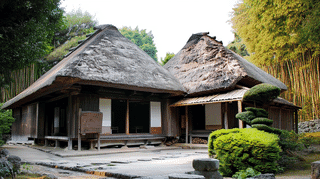
Discover the Nikaido Family Residence, a rare thatched-roof samurai home from 1810 in Kimotsuki, Kagoshima. Explore this Important Cultural Property's unique dual-building design and 800-year family legacy.
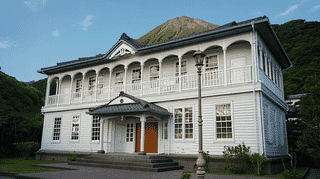
Discover the Former Shimazu Family Serigano Gold Mine Mining Office, a registered tangible cultural property near Kagoshima's Sengan-en Garden. This unique 1904 building blends Western architecture with Japanese roofing, now housing a Starbucks with stunning Sakurajima views. Learn about its gold mining history and the Shimazu clan's legacy.
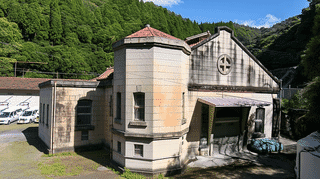
Discover the Ota Power Station in Kagoshima—a rare Meiji-era stone hydroelectric facility built by the Shimazu clan in 1908. This Registered Tangible Cultural Property features unique European-style architecture with an octagonal tower and family crest. Still operational today.

An 1894 stone gate in Yamashitacho, Kagoshima City. Its 3.1-metre opening served a middle school, a library and the prefectural office. Registered 2008; free to see.
A 24 metre wall in Kagoshima City, registered in 2014, stacking coursed welded tuff, English bond brick and pantiles as it bends and changes height with the ground.
A late Meiji wooden house in Kagoshima City, registered in 2014, with three ranges set in staggered echelon and reception rooms fitted in black persimmon wood.
This 1909 timber office in Kagoshima has a curved mukuri porch bearing the Shimazu crest. Moved to the site in 1986, it now houses the Satsuma Kiriko gallery shop.
Tucked into a wooded hillside in Isa City, Kagoshima, the Former Sogi Power Plant Head Tank is a precisely cut-stone reservoir built in 1909. As a key component of Noguchi Shitagau's Sogi Second Power Plant, it represents one of Kyushu's earliest water-channel hydroelectric facilities. Unlike the famous submerged brick main hall, this head tank sits on high ground and remains visible year-round. Now a National Registered Tangible Cultural Property, it stands at the cradle of Japan's electrochemical industry.
Completed in 1909 and drowned by the Tsuruda Dam, this brick hydroelectric station in Isa City rises from the reservoir only from about May to September each year.
Visit the Shirakane Shuzo Stone Warehouse in Aira City, Kagoshima — a Meiji-era stone brewery registered as a national tangible cultural property. Explore traditional shochu-making, Saigo Takamori connections, and the Ishigura Museum.
Discover Shin-Ohashi, a beautifully preserved double stone arch bridge built in 1909 in Iriki, Satsumasendai. This Registered Tangible Cultural Property showcases Kagoshima's rich stone masonry tradition amid samurai heritage landscapes.
The Sedome Catholic Church Presbytery in Tatsugo Town, Kagoshima Prefecture, is a nationally registered tangible cultural property built during the Meiji era. Discover the remarkable story of French missionaries, the growth of Catholic faith on subtropical Amami Oshima, and the community's resilience through persecution in the 1930s.
Discover Sedome Catholic Church in Tatsugo, Amami Oshima — a wooden church built in 1908 that tells the remarkable story of Catholic missionary work on this subtropical island. Registered as a national tangible cultural property, this three-aisled sanctuary preserves Meiji-era craftsmanship amid lush tropical scenery.
Discover the Sono Family Residence Main House in Amami City, Kagoshima — a nationally Registered Tangible Cultural Property featuring the traditional Hikimon typhoon-resistant construction and split-wing layout unique to Amami Oshima.
Moriyama House Storehouse in Kajiki, Aira City, was built in 1904 by iron casters to the Satsuma domain and registered in 2002. Interior visits need booking.
Built in 1897 on Nagata Point, Yakushima Lighthouse marked the sea route to Taiwan. The southernmost surviving Meiji-era brick lighthouse, it blends brick and granite.
Built in 1897 beside Yakushima Lighthouse, this 136-metre wall encloses its compound. Local granite carries three brick courses, finished as a coping against the coast.
A mid-Meiji house in Chiran, Kagoshima, registered in 2007. Its long ridge is hipped at one end and hip-and-gable at the other, with four room zones under one roof.
A mid-Meiji storehouse in Chiran, Kagoshima, registered in 2007. It stands where the farmstead meets the road, lime-plastered walls set on a base of dressed stone.
A mid-Meiji storehouse in Chiran, Kagoshima, registered in 2007. It stands south of its twin, ridge slightly lower, plaster carried to the eaves on the front alone.