
Historic Sites, Places of Scenic Beauty, and Natural Monuments of Kumamoto
熊 本 県 の 史 跡 名 勝 天 然 記 念 物Kumamoto · Historic Sites, Places of Scenic Beauty, and Natural Monuments
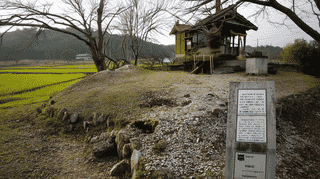
Jomon-period shell mounds in Kumamoto Prefecture. One of the two came to light just where a river in flood had scoured out a paddy field down there.
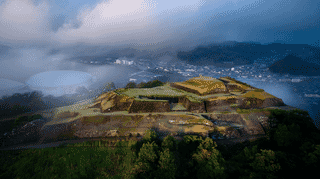
A castle site in Kumamoto Prefecture. Its stone walls were pulled down twice over, the second time because the first had not gone nearly far enough at all.
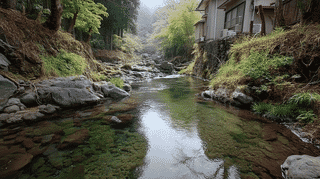
A natural monument in Kumamoto Prefecture: a stretch of river in which a rare freshwater red alga grows upon the very stones of the riverbed down there.
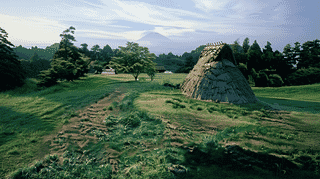
A Jomon-period site in Kumamoto Prefecture. Material and waste abound here but the finished tools are few, because they all went elsewhere in the end.

Discover Odara Kofun, a nationally designated historic site on the Uto Peninsula in Kumamoto Prefecture. This 6th-century decorated tomb features carved shields, quivers, and circle motifs on stone barriers overlooking the Ariake Sea.
Kamao Kofun is a 6th-century circular tomb in Kumamoto City, designated a National Historic Site in 1921. Its horizontal stone chamber preserves rare wall paintings rendered in red, blue, and white pigments, including the enigmatic double-legged ring pattern. As one of Kyushu's most significant decorated tombs, it offers a rare window into the spiritual world of ancient Japan.
A roughly two-kilometre stretch of the Kikuchi River in Yamaga City, Kumamoto Prefecture, was designated a National Natural Monument in 1959 as a rare habitat of chisujinori (Thorea okadae), a freshwater red alga endemic to Japan. One of only two protected sites for this species in the country, it offers visitors a quiet riverside encounter with a living scientific treasure, set against the cultural backdrop of Yamaga Onsen and the historic Yachiyo-za theatre.
Discover the Former Yatsushiro Castle Lord's Hama Tea House (Shohinken) Garden, a nationally designated Place of Scenic Beauty in Yatsushiro, Kumamoto. Built in 1688 by the third Matsui lord for his mother, this 9,000-square-meter pond-stroll garden preserves the refined elegance of an early Edo-period daimyo garden. From late May through mid-June, around 5,000 Higo iris plants bloom in spectacular fashion. The garden also features stone compositions reminiscent of Kyoto's Katsura Imperial Villa and the Matsui Bunko museum with treasures connected to swordsman Miyamoto Musashi.
Goryō Kaizuka in Kumamoto City is the first shell mound in Kyushu to be designated a National Historic Site (1970). At roughly 4 hectares, the Late Jōmon mound is the type locality of Goryō-style polished black pottery — and its shell layer still lies open underfoot.
The Shimoda no Ichō, a giant ginkgo tree believed to be around 700 years old, stands in the former garden of the Shimoda family in Jōnan, southern Kumamoto City. Designated a National Natural Monument in 1937, it is remarkable for its dramatic double-trunk form, its 21-meter height, and a circumference of about nine meters. In November the leaves turn brilliant gold — an unforgettable encounter with one of Kyushu's most venerable living monuments.
Discover the Shimo-no-Jō no Ichō, a thousand-year-old sacred ginkgo tree in Oguni Town, Kumamoto. Designated a National Natural Monument in 1934, this colossal female ginkgo with its famed "chichikobu" (milk-knob) protrusions has been revered as a guardian of mothers and a symbol of life for over a millennium.
A National Place of Scenic Beauty in Kumamoto Prefecture combining the legendary 'Shiranui' mirage of Yatsushiro Bay, the small limestone islet of Mizushima sung about in Japan's earliest poetry, and the seaside Eino-tsurugi Shrine viewing point — a landscape where ancient myth and rare optical phenomenon intertwine.
In Kumamoto, the Jinnouchi Castle Ruins preserve the earthen rampart and wide dry moat of a near-square fortress, likely built by the daimyo Konishi Yukinaga.
Suizenji Jojuen is a Momoyama-style stroll garden begun by the Hosokawa lords of Higo in 1632 and completed by 1671. Fed by Mt. Aso spring water and modeled on the Tokaido Road's scenic views, it was designated a National Place of Scenic Beauty and Historic Site in 1929.
On a slope of Mount Gongen in Kumamoto, this 5th-century decorated tomb holds a stone screen carved with quivers and concentric circles in red, blue and yellow.
A national Place of Scenic Beauty in Kumamoto's Amakusa Matsushima. Senganzan's 162-metre summit gives a sweeping island view; Takabutoyama is famed for its sunsets.
Discover the Tatsutayama Double-Petaled Gardenia Habitat, a nationally designated Natural Monument in Kumamoto City. Learn about this rare wild gardenia, its botanical significance, and how to visit the lush forested hill where it grows.
On a slope of Mt. Kinpo in Kumamoto, Chihenji Temple Ruins preserve a 9th-century hall and 100 stacked-stone pagodas in precise rows, unmatched anywhere in Japan.
Discover Myokenura, a nationally designated Scenic Beauty and Natural Monument on the west coast of Amakusa, Kumamoto. Explore towering sea cliffs, the iconic Elephant Rock, and Japan's first marine park with world-class diving.
Ryugatake, a 470-meter peak in Kamiamakusa City, Kumamoto Prefecture, was designated as a National Scenic Beauty in 1936 for its extraordinary panoramic views. Known as 'Amakusa Fuji,' its summit offers sweeping vistas of the Shiranui Sea islands, Mount Aso, Kirishima, and Unzen. Home to the Myui Observatory — recognized for Japan's finest starry sky — and steeped in dragon deity legends, Ryugatake is a captivating destination for nature lovers and cultural travelers alike.
More from Kumamoto
Kumamoto’s registered properties across designations, with featured heritage and travel notes.
The complete kokuhō catalogue — browse by prefecture, period, and category.
Nationwide jūyō bunkazai — architecture, sculpture, painting, crafts, and documents.