Tofukuji Temple: A Head Temple of Rinzai Zen in Kyoto
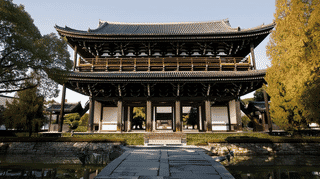
Tofukuji Temple (東福寺, Tōfuku-ji) in Honmachi 15-chome, Higashiyama Ward, Kyoto City, is the head temple of the Tofukuji branch of Rinzai Zen, built for the regent Kujo Michiie between 1236 and 1255. Of its buildings, the Sanmon Gate of 1405 is a National Treasure, 11 others, among them the Zen Hall, the Tosu latrine, the Bathhouse and the Jorakuan founder's precinct, are Important Cultural Properties, and 11 more, led by the Main Hall of 1934, were added as Registered Tangible Cultural Properties on March 6, 2024 (Agency for Cultural Affairs).

The temple says its name joins the first character of Todaiji and the second of Kofukuji, the two great temples of Nara. Its founding abbot was Enni, honored as Shoichi Kokushi, who had trained in Song China under the Chan master Wuzhun Shifan. The precinct spreads north and south of the ravine of the Sannohashi River, and the national listings were made building by building, so this site gives each building its own page and keeps the story of Tofukuji as a whole, with visiting and access information, here.
A Short History of Tofukuji
According to the temple's own history, Kujo Michiie began building in 1236 and saw the complex finished 19 years later, in 1255. Enni was invited as founder in 1243, while work was still under way, and at first the temple housed halls for the study of Tendai and Shingon as well as Zen.
Fires in 1319, 1334 and 1336 destroyed most of the complex. Rebuilding began only four months after the last of them and took a little over 20 years; by then Tofukuji had already been ranked among the Five Mountains (Gozan) of Kyoto, and it re-emerged as a fully Zen monastery. The Sanmon Gate dates from 1405 (Agency for Cultural Affairs); the temple credits its reconstruction to Ashikaga Yoshimochi, the fourth Muromachi shogun.
A fire in December 1881 took the Buddha hall, the Dharma hall, the abbot's quarters and the priests' quarters. The Hojo was rebuilt in 1890 and the priests' quarters in 1910, and the present Main Hall, which serves as both Buddha hall and Dharma hall, was begun in 1917 and completed in 1934. The medieval Zen buildings, including the Sanmon Gate, the Tosu, the Zen Hall and the Bathhouse, survived that fire (Tofukuji Temple).
How the Tofukuji Precinct Is Laid Out
The core of Tofukuji is the Sanmon Gate with the Main Hall to its north. On the map of the Agency for Cultural Affairs database, the Zen Hall and the Tosu stand to the west of the gate and the Bathhouse to the east. The temple describes them as the meditation hall, the latrine and a steam bath, the buildings in which Zen monks practised daily discipline.
North of the Main Hall is the Hojo, its four sides wrapped by gardens completed in 1939 by the designer Shigemori Mirei. Beyond the Hojo, the Tsutenkyo Bridge crosses the Sengyokukan ravine, and on the far side, at the highest point of the precinct, stands the Founder's Hall of the Jorakuan (Tofukuji Temple). The Jorakuan is laid out as a ring of buildings, the Founder's Hall and the guest hall called Fumon-in among them, around a broad garden (Agency for Cultural Affairs), and the temple calls the garden in front of Fumon-in a fine work of the mid-Edo period (Tofukuji Temple). The Engetsukyo Bridge is a covered timber bridge further up the Sannohashi River, and the octagonal Aizen Hall was moved here from Manjuji in 1937 (Tofukuji Temple).
The same map places the Niomon Gate about 500 meters north-northwest of the Sanmon Gate, toward the northern edge of the grounds, and the Rokuharamon Gate to the southwest of the Sanmon Gate. Each building, including the stone Thirteen-Storied Pagoda and the Bell Tower, has its own page describing its structure and what to look for.
Listed Buildings of Tofukuji Temple
The 23 buildings of Tofukuji listed by the national government are below, with dates from the Agency for Cultural Affairs database.
- Sanmon Gate: 1405. National Treasure (designated 1952)
- Rokuharamon Gate: early Kamakura period. Important Cultural Property
- Gekkamon Gate: early Muromachi period. Important Cultural Property
- Zen Hall (Senbutsujo): early Muromachi period. Important Cultural Property
- Tosu (latrine): early Muromachi period. Important Cultural Property
- Sanshoji Aizen Hall: early Muromachi period. Important Cultural Property
- Thirteen-Storied Pagoda (stone): 1343. Important Cultural Property
- Bathhouse: 1459. Important Cultural Property
- Bell Tower: mid-Muromachi period. Important Cultural Property
- Niomon Gate: 1597. Important Cultural Property
- Engetsukyo Bridge: 1603. Important Cultural Property
- Jorakuan, 7 buildings (two-storey gate, Founder's Hall with Shodo, guest hall known as Fumon-in, Tassuryo study hall, priests' quarters, bell tower and rear gate): about 1823 to 1826. Important Cultural Property
- Hojo (abbot's quarters): 1890, enlarged about 1910. Registered Tangible Cultural Property
- Karamon Gate: 1890, enlarged about 1909. Registered Tangible Cultural Property
- Onshimon Gate: 1909. Registered Tangible Cultural Property
- Hojo earthen wall: about 1909. Registered Tangible Cultural Property
- Priests' quarters (kuri): 1910. Registered Tangible Cultural Property
- Tsutenkyo Bridge south corridor: 1911, altered 1963. Registered Tangible Cultural Property
- Tsutenkyo Bridge north corridor: 1912. Registered Tangible Cultural Property
- Main Hall (Hondo): 1934. Registered Tangible Cultural Property
- Tsutenkyo Bridge: 1961. Registered Tangible Cultural Property
- Tsutendai viewing pavilion: about 1961. Registered Tangible Cultural Property
- Tsusho Gate: 1963. Registered Tangible Cultural Property
Seven of the Important Cultural Properties, the Sanmon Gate, the Zen Hall and the Tosu among them, were first listed between 1897 and 1907. The seven buildings of the Jorakuan followed in 1997, and the Main Hall, the Hojo and nine other buildings were registered on March 6, 2024. The Hojo gardens were designated a national Place of Scenic Beauty under the name Tofukuji Honbo Garden in 2014 (Tofukuji Temple).
Opening Hours and Admission at Tofukuji
Tofukuji charges admission at two places: the Honbo Garden around the Hojo, and the Tsutenkyo Bridge together with the Founder's Hall.
From April 1 to November 13 the ticket offices are open from 9:00 a.m. to 4:00 p.m. and the gates close at 4:30 p.m.; from December 7 to March 31 tickets are sold from 9:00 a.m. to 3:30 p.m. and the gates close at 4:00 p.m. In the autumn season, November 14 to December 6, the Tsutenkyo Bridge opens earlier, at 8:30 a.m.
Admission to the Tsutenkyo Bridge and Founder's Hall is 600 yen for adults and 300 yen for elementary and junior high school students (1,000 yen and 500 yen in the autumn season). The Honbo Garden costs 600 yen for adults from November 1, 2026 (500 yen before that) and 300 yen for children. A combined ticket for both is 1,000 yen for adults and 500 yen for children, but is not sold in the autumn season, and re-entry is not allowed (checked November 17, 2026).
The upper floor of the Sanmon Gate opens for the autumn maple-viewing season. In 2026 it is open from November 7 to December 6, 9:00 a.m. to 4:00 p.m. with last entry at 3:30 p.m., for 1,000 yen (adults) or 500 yen (children), showing the crowned Shaka Buddha and the Sixteen Arhats (Tofukuji Temple).
Getting to Tofukuji and Parking
Tofukuji Station, about 3 minutes from Kyoto Station on the JR Nara Line and also a stop on the Keihan Main Line, is about a 10-minute walk from the temple; Toba-kaido Station on the Keihan line is also about 10 minutes on foot. From Kyoto Station, Kyoto City Bus routes 88 and 208 reach the Tofukuji stop in about 15 minutes, 4 minutes' walk from the temple; route 207 takes about 20 minutes from Shijo Kawaramachi, and routes 202 and 207 about 14 minutes from Gion (Tofukuji Temple).
Drivers can use the free car park inside the grounds south of the Zen Hall or the Tofukuji North Car Park. Both are only for visitors to the temple and are closed during the autumn leaf season, from October 25 to December 10. Bicycles and motorbikes of 50 cc or less may be parked inside the grounds (Tofukuji Temple).
Photography and Etiquette at Tofukuji
Tofukuji asks visitors not to eat or drink in the grounds and not to use tripods. Commercial photography needs permission, and sketching or painting in the grounds and on the approach roads is not allowed. During the busy autumn opening, photography from the Tsutenkyo and Gaunkyo bridges may be restricted.
Pets are not welcome in the grounds or on the approaches, and the temple firmly refuses anyone walking a pet past listed buildings such as the Gekkamon Gate and the Rokuharamon Gate (Tofukuji Temple).
References
- Tofukuji Sanmon Gate (Database of National Cultural Properties, Agency for Cultural Affairs)
- https://kunishitei.bunka.go.jp/bsys/maindetails/102/1753
- Tofukuji Rokuharamon Gate (Database of National Cultural Properties, Agency for Cultural Affairs)
- https://kunishitei.bunka.go.jp/bsys/maindetails/102/1761
- Tofukuji Gekkamon Gate (Database of National Cultural Properties, Agency for Cultural Affairs)
- https://kunishitei.bunka.go.jp/bsys/maindetails/102/1757
- Tofukuji Zen Hall (Senbutsujo) (Database of National Cultural Properties, Agency for Cultural Affairs)
- https://kunishitei.bunka.go.jp/bsys/maindetails/102/1754
- Tofukuji Tosu (Database of National Cultural Properties, Agency for Cultural Affairs)
- https://kunishitei.bunka.go.jp/bsys/maindetails/102/1758
- Sanshoji Aizen Hall (Database of National Cultural Properties, Agency for Cultural Affairs)
- https://kunishitei.bunka.go.jp/bsys/maindetails/102/1755
- Tofukuji Thirteen-Storied Pagoda (Database of National Cultural Properties, Agency for Cultural Affairs)
- https://kunishitei.bunka.go.jp/bsys/maindetails/102/1762
- Tofukuji Bathhouse (Database of National Cultural Properties, Agency for Cultural Affairs)
- https://kunishitei.bunka.go.jp/bsys/maindetails/102/1759
- Tofukuji Bell Tower (Database of National Cultural Properties, Agency for Cultural Affairs)
- https://kunishitei.bunka.go.jp/bsys/maindetails/102/1756
- Tofukuji Niomon Gate (Database of National Cultural Properties, Agency for Cultural Affairs)
- https://kunishitei.bunka.go.jp/bsys/maindetails/102/1760
- Tofukuji Engetsukyo Bridge (Database of National Cultural Properties, Agency for Cultural Affairs)
- https://kunishitei.bunka.go.jp/bsys/maindetails/102/1763
- Tofukuji Jorakuan (Database of National Cultural Properties, Agency for Cultural Affairs)
- https://kunishitei.bunka.go.jp/bsys/maindetails/102/1768
- Tofukuji Main Hall (Database of National Cultural Properties, Agency for Cultural Affairs)
- https://kunishitei.bunka.go.jp/bsys/maindetails/101/00014859
- Tofukuji Hojo (Database of National Cultural Properties, Agency for Cultural Affairs)
- https://kunishitei.bunka.go.jp/bsys/maindetails/101/00014860
- Tofukuji Tsutendai (Database of National Cultural Properties, Agency for Cultural Affairs)
- https://kunishitei.bunka.go.jp/bsys/maindetails/101/00014861
- Tofukuji Priests' Quarters (Database of National Cultural Properties, Agency for Cultural Affairs)
- https://kunishitei.bunka.go.jp/bsys/maindetails/101/00014862
- Tofukuji Onshimon Gate (Database of National Cultural Properties, Agency for Cultural Affairs)
- https://kunishitei.bunka.go.jp/bsys/maindetails/101/00014863
- Tofukuji Karamon Gate (Database of National Cultural Properties, Agency for Cultural Affairs)
- https://kunishitei.bunka.go.jp/bsys/maindetails/101/00014864
- Tofukuji Hojo Earthen Wall (Database of National Cultural Properties, Agency for Cultural Affairs)
- https://kunishitei.bunka.go.jp/bsys/maindetails/101/00014865
- Tofukuji Tsutenkyo Bridge (Database of National Cultural Properties, Agency for Cultural Affairs)
- https://kunishitei.bunka.go.jp/bsys/maindetails/101/00014866
- Tofukuji Tsutenkyo Bridge North Corridor (Database of National Cultural Properties, Agency for Cultural Affairs)
- https://kunishitei.bunka.go.jp/bsys/maindetails/101/00014867
- Tofukuji Tsutenkyo Bridge South Corridor (Database of National Cultural Properties, Agency for Cultural Affairs)
- https://kunishitei.bunka.go.jp/bsys/maindetails/101/00014868
- Tofukuji Tsusho Gate (Database of National Cultural Properties, Agency for Cultural Affairs)
- https://kunishitei.bunka.go.jp/bsys/maindetails/101/00014869
- Tofuku-ji Temple Guide (Tofukuji Temple official website, English)
- https://tofukuji.jp/guide/tour/en/
- History (Tofukuji Temple official website, Japanese)
- https://tofukuji.jp/history/
- Honbo Garden (Tofukuji Temple official website, Japanese)
- https://tofukuji.jp/guide/honbo/
- Tsutenkyo Bridge (Tofukuji Temple official website, Japanese)
- https://tofukuji.jp/guide/tsutenkyo/
- Founder's Hall (Tofukuji Temple official website, Japanese)
- https://tofukuji.jp/guide/kaisando/
- Sanmon Gate special opening (Tofukuji Temple official website, Japanese)
- https://tofukuji.jp/special_event/%e5%9b%bd%e5%ae%9d%e4%b8%89%e9%96%80%e3%80%80%e7%89%b9%e5%88%a5%e5%85%ac%e9%96%8b-3/
- Frequently asked questions (Tofukuji Temple official website, Japanese)
- https://tofukuji.jp/contact/qanda/
- Visitor information (Tofukuji Temple official website, Japanese)
- https://tofukuji.jp/guide/
- Access (Tofukuji Temple official website, Japanese)
- https://tofukuji.jp/access/
Last verified: 2026.11.17
Basic Information
| Name | Tofukuji Temple |
|---|---|
| Location | Honmachi 15-chome, Higashiyama Ward, Kyoto City, Kyoto Prefecture |
| Owner | Tofukuji Temple |
| Designation | National Treasure (1) · Important Cultural Property (11) · Registered Tangible Cultural Properties (11) |
| Coordinates | 34.97681, 135.77373 |