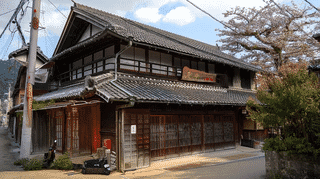
Tamaya Hanare Zashiki — A Pilgrim's Inn Retreat at the Gate of Taima-dera
In the quiet foothills of Mount Nijo in Nara Prefecture, a low wooden building with latticed doors and a tiled roof stands at the very threshold of Taima-dera, one of Japan's most storied ancient temples. This is Tamaya, a former inn that welcomed pilgrims for over 170 years, and at its innermost heart lies the Tamaya Hanare Zashiki — the detached guest room, once reserved for the most honored visitors, and today a nationally Registered Tangible Cultural Property.
To step across its threshold is to slip quietly out of the present. Beyond a small inner courtyard, the hanare sits separated from the main building, its tatami mats, decorative transoms, and soft shadows transporting guests back to the world that pilgrims knew when they paused here before climbing to the temple gate.
What Is Tamaya Hanare Zashiki?
Tamaya (玉や) was a hatago, a type of traveler's inn that served pilgrims and merchants walking the old Katsuragi Kaido highway during the Edo period (1603–1868). The main building was constructed in 1853, the sixth year of the Kaei era, and served guests making the sacred journey to Taima-dera — a temple famed for the legend of Princess Chujo and the miraculous Taima Mandala.
The hanare zashiki (離れ座敷), literally "detached sitting room," is a smaller building set behind the main inn, separated by a courtyard and connected by a short corridor. In traditional inn architecture, such detached rooms were built to give select guests privacy, quiet, and a more refined setting — something closer to the intimacy of a private villa than a bustling public inn. The Tamaya hanare follows this pattern, offering a calm, self-contained space where travelers could rest, dine, and look out into the garden.
Why It Is Recognized as a Cultural Property
Japan's Registered Tangible Cultural Property system was established in 1996 to protect buildings that have shaped the nation's historical landscape but fall outside the narrower category of "Important Cultural Property." Buildings are registered when they have stood for more than fifty years and are recognized as contributing to the historic character of their region, as having design value, or as representing forms that would be difficult to reproduce today.
Tamaya Hanare Zashiki meets these standards on every count. As part of the Tamaya complex, it preserves the layered spatial plan of a late-Edo pilgrim inn — a building type that has become increasingly rare as modern roads and lodging have reshaped Japan's old temple towns. Its quiet, wood-framed construction, the layout of main building and detached guest room around a shared courtyard, and the artisanal details it has kept through careful care all speak to a living continuity with the Edo-period culture of pilgrimage.
Architectural Highlights to Look For
The Tamaya compound is a small museum of late-Edo carpentry, plasterwork, and metalwork that rewards slow attention. Each room carries details that the original innkeepers chose to impress and reassure the traveling guest.
The Plaster Relief on the Main Building
High on the second-floor wall of the main building, a striking kote-e (literally "trowel picture") depicts cranes with pine trees. Kote-e is a specialized technique in which a master plasterer builds up figures in relief using nothing but trowel and lime plaster. The crane-and-pine motif is a classic symbol of longevity and good fortune, and the Tamaya example is considered an unusually accomplished piece for this region of Nara.
Crane-Shaped Nail Concealers
Inside the rooms, small metal ornaments called kugi-kakushi — nail concealers — conceal the heads of the nails fastening beams and posts. At Tamaya many of these take the form of cranes, echoing the plasterwork outside and giving the interior a quietly unified auspicious theme.
Decorative Transoms
The ranma, or transoms, set between rooms above the sliding doors, are carved and cut in several different patterns throughout the complex. Some are openwork lattices, others relief carvings. In the hanare, these transoms help give the detached rooms their lighter, more refined feel compared with the more robust main building.
The Courtyard Garden
Between the main building and the hanare lies a small inner garden. Such courtyards were an essential part of the traditional hatago: they brought light and air deep into a long narrow building, offered a view from guest rooms, and gave travelers a moment of contemplative calm. Sitting in the hanare today, watching the garden through the open doors, is the best way to experience what an Edo-period pilgrim would have felt on the evening before climbing to the temple.
Visiting Tamaya Today
The Tamaya building is presently operated as a restaurant specializing in kamameshi — individual servings of rice cooked with seasonal ingredients in small iron pots over an open flame. The kitchen makes strict use of Nara-produced ingredients, including Yamato pork, Yamato chicken, and Yamato beef, with rice, soy sauce, and eggs also sourced locally.
Dining here offers visitors something rarely available at historic buildings: the chance to sit inside the cultural property itself, not merely to view it from behind ropes. The detached hanare zashiki is often used as a quieter seating area, so those who wish to experience it specifically are encouraged to ask when making a reservation. Each kamameshi is cooked to order and takes around thirty minutes — a pause that guests are invited to spend walking up to the temple gate and back.
Around Tamaya — What to See Nearby
Tamaya stands at the very entrance of Taima-dera, a temple whose origins reach back to the seventh century. Taima-dera is the only temple in Japan that preserves both of its original three-storied pagodas, east and west, dating respectively from the late Nara and early Heian periods. Its main hall (National Treasure) houses the Taima Mandala, said to have been woven in a single night from lotus thread by Princess Chujo to reveal the Western Pure Land.
Along the approach to the temple you will find the Taima Kehaya Tsuka, the stone marker traditionally said to commemorate the legendary sumo wrestler whose match against Nomi no Sukune is remembered as the origin of the sport. The adjoining Katsuragi City Sumo Museum (Kehaya-za) tells this story in depth. In season, Taima-dera's famous peonies and the surrounding temple sub-halls — Nakano-bo, Okunoin, Gonen-in, and Sainan-in — each open their gardens to visitors, making the area a full-day destination in its own right.
- 📍 Plan Your Visit to Nara
- Find tours, activities & transport passes near Tamaya Detached Room
- [ Todaiji Great Buddha & Nara Park Deer Experience ]
Q&A
- Can I stay overnight at Tamaya?
- Tamaya no longer operates as an inn. Today it functions as a restaurant, so you can visit for a meal but not for accommodation. Many visitors combine a meal here with a day trip to Taima-dera.
- How old is the building?
- The main building of Tamaya was constructed in 1853, during the late Edo period. Together with its detached zashiki, it has stood for more than 170 years on the approach to Taima-dera.
- Do I need a reservation?
- Reservations are strongly recommended, especially on weekends and during peony season in late spring. Each kamameshi is cooked to order and takes roughly thirty minutes, so booking ahead helps time your meal with a visit to the temple.
- How do I get there from Osaka or central Nara?
- The nearest station is Taimadera Station on the Kintetsu Minami-Osaka Line, about a 15-minute walk from Tamaya. From Osaka Abenobashi, the ride takes around 40 minutes. From central Nara, travel via Yamato-Yagi with a change of lines.
- Are the interiors really original?
- Some parts of the floor and fixtures have been sensitively renovated to function as a restaurant, but the major structural timbers, the plaster relief, the transoms, the nail concealers, and the courtyard layout are original to the Edo-period building, which is why the property has been registered as a Tangible Cultural Property.
Basic Information
| Name | Tamaya Hanare Zashiki (玉や離れ座敷) |
|---|---|
| Designation | Registered Tangible Cultural Property (Building), Japan |
| Location | 1242 Taima, Katsuragi City, Nara Prefecture |
| Historical Period | Late Edo period (main building: 1853 / Kaei 6) |
| Building Type | Former inn (hatago), detached guest room |
| Structure | Wooden, two-story main building with detached single-story zashiki; tiled roof; inner courtyard |
| Nearest Station | Taimadera Station, Kintetsu Minami-Osaka Line (approx. 15 min on foot) |
| Current Use | Restaurant (Kamameshi Tamaya) |
| Nearby Attractions | Taima-dera Temple, Taima Kehaya Tsuka, Katsuragi City Sumo Museum (Kehaya-za), Mount Nijo |
References
- National Cultural Properties Database (Agency for Cultural Affairs)
- https://kunishitei.bunka.go.jp/
- Cultural Heritage Online (Agency for Cultural Affairs / NII)
- https://bunka.nii.ac.jp/
- Taima-dera Temple Official Site
- https://www.taimadera.org/
- Katsuragi City Official Site — About Taima
- https://www.city.katsuragi.nara.jp/soshiki/kikakuseisakuka/19/2250.html
- Nara Kanko Official Tourism Site — Taima-dera
- http://yamatoji.nara-kankou.or.jp/01shaji/02tera/02west_area/taimadera/
- Narakko! — Kamameshi Tamaya Feature
- https://www.narakko.jp/tamaya/
- Takenouchi Kaido Official Site — Tamaya
- https://takenouchikaidou.jp/釜めし-玉や/
Last verified: 2026.04.22