A Temple on Kinugasayama with Seven Registered Buildings
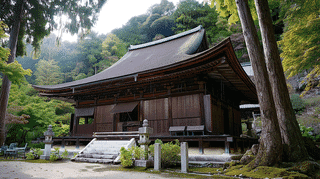
Kannonshoji is a temple at Kinugasayama 2, Ishidera, Azuchi, Omihachiman City, Shiga Prefecture, where 7 buildings were entered on the register of tangible cultural properties on 14 October 2021. They are registered properties rather than designated ones. The oldest, the study, was built in 1796.
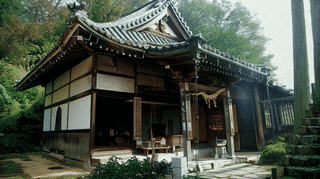
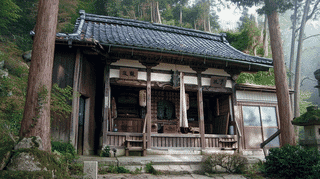
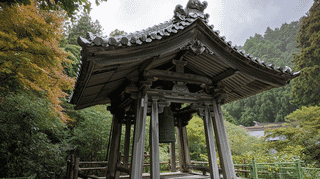
The 7 are the study, the Jizo hall, the goma hall, the fuda hall, the bell house, the garden gate and the water pavilion. All belong to the temple.
Kuwanomidera stands on the same mountain. Its main hall was designated by the state in 1904, under a different system and far earlier.
Seven Buildings Registered on One Day
The buildings of the precinct were entered together.
All 7 carry the same registration date, 14 October 2021.
At Ikinariya, 10 buildings are registered; at the Shigeta residence, 8; at Kasuga Shrine, 8 or more. Those, however, went on the register in different years, the Ikinariya storehouse in 2000 and the Shigeta main building in 2001.
Here everything was entered at once. The years of building span 132, yet the registration is a single day.
Three Periods of Building
The dates of the 7 fall into the Edo, Meiji and Showa periods.
The study is Edo, 1796, and the oldest. The garden gate is Edo as well, 1844. The Jizo hall is Meiji, 1881, the only Meiji building among them.
The water pavilion, the bell house, the goma hall and the fuda hall are all early Showa, 1928. Four buildings share one year.
From 1796 to 1928 is 132 years: 48 between the study and the garden gate, 37 between the garden gate and the Jizo hall, and 47 between the Jizo hall and the four Showa buildings.
The goma hall reuses the members of a hall of the Anei era, which runs from 1772 to 1781. Timbers older than any of these buildings stand within one of 1928.
How the Buildings Stand
Where each building stands is recorded.
The study stands at the centre of the precinct, a little to the south, facing west. South of the main hall stands the Jizo hall, also facing west. South of that the goma hall, and south again the fuda hall, all three facing west.
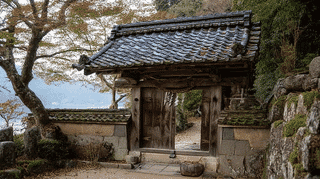
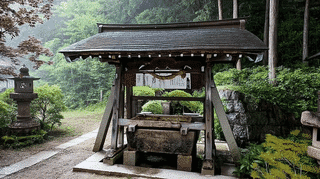
The water pavilion stands north of the garden gate, ridged north to south and facing west. The bell house stands at the southern edge of the precinct.
The garden gate opens on the west face of the earthen wall that turns at a right angle around the garden north of the study.
Three halls run southward in a line, each facing west. The water pavilion and the garden gate stand about the study, and the bell house at the southern edge.
Three Ways of Stating Size
How large a building is depends on which word the record uses.
The water pavilion and the bell house are given an area: 1.5 square metres and 10 square metres. The study is given a floor area of 231 square metres, the largest of the 7.
The Jizo hall, the goma hall and the fuda hall are given a floor area: 11, 43 and 19 square metres.
The water pavilion and the bell house have no walls, being posts and a roof; the three halls each enclose a single room. Whether a structure is walled appears to decide which word is used.
The garden gate is given neither, but a frontage of 2.2 metres, since a gate is measured by the width one passes through.
The largest is the study at 231 square metres and the smallest the water pavilion at 1.5 square metres, a difference of roughly 154 times.
Pilgrimage, a Word That Recurs in the Assessments
The same word appears again and again among the reasons given.
Of the water pavilion, the record closes that it sets in order the historic setting of a pilgrimage temple.
Of the Jizo hall, that it conveys the character of a pilgrimage temple.
Of the fuda hall, that it formerly enshrined the thirty-three forms of Kannon and is a hall characteristic of a pilgrimage temple.
Three assessments turn on that word, which follows the registration criterion about contributing to the historic landscape.
The bell house is said to share its structure with the bell tower at Enryakuji; the garden gate to carry an unusual joint where its posts pass through the lintel; the goma hall to be valuable for what it shows of how the precinct changed; the study to keep the character of the later Edo period and show the standing of a great mountain temple. Those turn on the making of the buildings themselves.
Visiting
The temple is at Kinugasayama 2, Ishidera, Azuchi, Omihachiman City, Shiga Prefecture, and owns all 7 buildings.
It lies in the hills, and whether and when it may be visited follows its own arrangements. All 7 stand within the precinct.
Access to the buildings and whether their interiors are open differ from one to another, and are noted on each building's page.
Conditions can change, so check before travelling.
References
- Cultural Heritage Online: the Kannonshoji water pavilion
- https://bunka.nii.ac.jp/heritages/detail/520194
- Cultural Heritage Online: the Kannonshoji garden gate
- https://bunka.nii.ac.jp/heritages/detail/553925
- Cultural Heritage Online: the Kannonshoji Jizo hall
- https://bunka.nii.ac.jp/heritages/detail/592040
- Agency for Cultural Affairs, National Cultural Properties Database
- https://kunishitei.bunka.go.jp/
Last verified: 2026.09.13
Basic Information
| Name | Kannonshoji |
|---|---|
| Location | Kinugasayama 2, Ishidera, Azuchi, Omihachiman City, Shiga Prefecture |
| Owner | Kannonshoji Temple |
| Designation | Registered Tangible Cultural Properties (7) |
| Coordinates | 35.14483, 136.16085 |