
Important Cultural Property of Shizuoka
静 岡 県 の 重 要 文 化 財Shizuoka’s Important Cultural Properties — designated for their value to the nation’s cultural history.
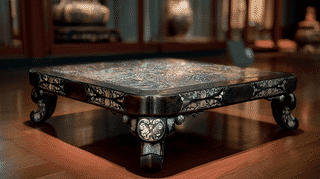
A Kamakura-period dais held at the MOA Museum of Art in Atami, Shizuoka. Its own length and its own width there are recorded as one single figure only.

Built in 1628 as the main gate of Hodai-in, a Tokugawa mortuary temple in Sunpu, this vermilion gate moved to Oshokyoin in 1918 and is now under restoration.
Lit in 1874 on Cape Omaezaki in Shizuoka, this brick tower carried Japan's first rotating first-order lens. Designated in 2021, it remains open to climb.
Built in 1874 beside the tower at Omaezaki, Shizuoka, this brick house held keepers for 125 years. Designated in 2021, it now displays a rediscovered machine.
Kakegawa Castle Goten, rebuilt from 1855 to 1861, is one of just four daimyo palaces left on castle grounds in Japan, with halls, quarters and offices nearly intact.
Discover the Former Tōtōmi Province Hōtokusha Public Hall in Kakegawa, Shizuoka — a nationally designated Important Cultural Property built in 1903. This unique Japanese-Western hybrid wooden hall embodies the Hōtoku philosophy of Ninomiya Sontoku.
Rebuilt in bare zelkova after the 1854 Tokai earthquake and carved by the Izu Ozawa school, the linked halls of Mishima Taisha are an Important Cultural Property.
A vermilion three-story pagoda on a wooded slope at Yusan-ji, Fukuroi. Built from 1574 to 1611, it blends Japanese and continental styles, a noted Momoyama pagoda.
Yusanji's gate was raised in 1659 at Kakegawa Castle and moved here in 1873. Listed as castle architecture, it is the only castle gate of its era left in Shizuoka.
A gilded miniature shrine in Yusan-ji's hillside Yakushi hall, this Important Cultural Property of about 1588 holds a hidden Medicine Buddha opened once a century.
Rinzai-ji's main hall in Shizuoka, a Zen abbot's hall 22.7 meters wide, became an Important Cultural Property in 1983 and once taught the young Tokugawa Ieyasu.
Reizan-ji Niōmon, a thatched 1516 gate on Mount Ōuchi above Shimizu, is the prefecture's second-oldest building. Its Niō statues returned in 2026 after restoration.
Explore the Important Cultural Property clay products excavated from the Akezima Kofun Group in Iwata, Shizuoka. Over 1,064 miniature ritual objects reveal the rich spiritual world of Japan's Kofun period.
Discover the Cross and Manji Karakusa Mother-of-Pearl Inlay Box, an Important Cultural Property of Japan housed at the MOA Museum of Art in Atami, Shizuoka. This Momoyama-era black-lacquer box fuses Japanese, Korean, Chinese, Christian, and Nanban motifs in a single dazzling raden composition.
Held by the Shizuoka Prefectural Museum of Art, this Important Cultural Property is a fragment of an annual tax register prepared in 732 CE for Otagi District in Yamashiro Province, the area of present-day northern Kyoto. Preserving fifty-nine lines of original Nara-period writing, it is the most substantial keichō document surviving outside the Shōsōin treasury — a precious primary source for understanding ancient Japanese administration and society.
Held at Hie Shrine in Numazu, Shizuoka, the Sannō Reigenki is a Kamakura-period illustrated handscroll dated 1288. Designated an Important Cultural Property, it is the oldest surviving work in its tradition, recording the shrine's founding legend and the spread of Sannō belief.
More from Shizuoka
Shizuoka’s registered properties across designations, with featured heritage and travel notes.
The complete kokuhō catalogue — browse by prefecture, period, and category.
Nationwide jūyō bunkazai — architecture, sculpture, painting, crafts, and documents.