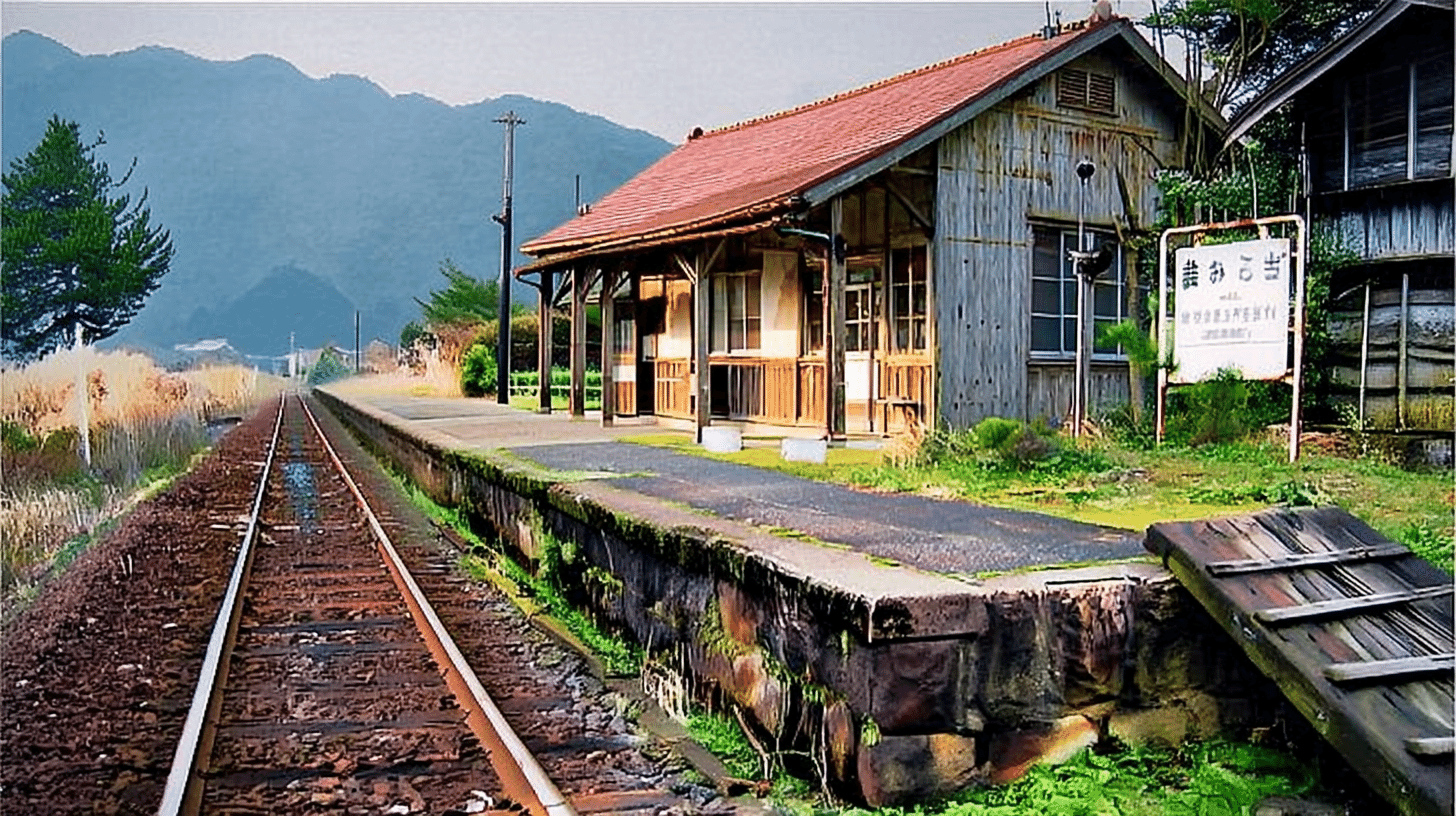
Hayabusa Station: Japan's Historic Wooden Station Where Railway Heritage Meets Motorcycle Culture

Discover Hayabusa Station, a 1929 wooden railway station in Tottori Prefecture designated as a Registered Tangible Cultural Property. This nostalgic Showa-era station on the Wakasa Railway has become a sacred pilgrimage site for Suzuki Hayabusa motorcycle enthusiasts worldwide, hosting an annual festival attracting thousands of riders.

A Nostalgic Wooden Station Where Railway Heritage Meets Motorcycle Culture

Nestled in the rural landscapes of Yazu Town in Tottori Prefecture, Hayabusa Station stands as a remarkable testament to Japan's early Showa-era railway architecture. This charming wooden station, preserved almost exactly as it appeared when built in 1929, has evolved from a quiet rural stop into an internationally recognized pilgrimage site that bridges two seemingly unrelated worlds: vintage railway heritage and modern motorcycle culture.

As one of 23 facilities along the Wakasa Railway designated as Registered Tangible Cultural Properties in 2008, Hayabusa Station offers visitors a rare opportunity to step back in time while experiencing a vibrant community that celebrates both historical preservation and contemporary passion.

Historical Background and Cultural Property Designation

Hayabusa Station opened on January 20, 1930, as part of the Japanese Government Railways' Wakasa Line. For approximately eleven months, from January to December 1930, the station served as the temporary terminus before the line was extended to Wakasa Station. This brief period as a terminal station left an important architectural legacy: unlike other intermediate stations along the line, Hayabusa Station was equipped with crew rest facilities and other infrastructure typically found only at major terminals.

The station's main building is a single-story wooden structure featuring a traditional gable roof with metal roofing. Spanning approximately 11 meters in length and 4.6 meters in width, with a total building area of 56 square meters, the station exemplifies the practical yet elegant design principles of early Showa-era railway architecture. The exterior showcases different construction techniques on each face: the north side features wainscoting with vertical board paneling in the traditional shinkabe style, while the east, west, and south facades display classic weatherboard siding.

The concrete platform extends 97 meters and connects seamlessly to the north side of the main building, creating a unified architectural composition. Inside the waiting room, the original U-shaped wooden benches and other fixtures remain intact, allowing visitors to experience the station exactly as passengers did nearly a century ago.

On July 23, 2008, Hayabusa Station was registered as a Tangible Cultural Property of Japan, recognized for its exceptional preservation of original features both inside and out. The designation was part of a larger registration that included 23 facilities along the Wakasa Railway, marking the first time an entire railway line received such comprehensive cultural heritage recognition.

Why Hayabusa Station Earned Cultural Heritage Status

The registration of Hayabusa Station as a Tangible Cultural Property reflects several key factors that make it historically and architecturally significant.

First, the exceptional state of preservation stands out among railway heritage sites nationwide. While many rural stations have undergone extensive renovations or have been replaced entirely, Hayabusa Station retains its original exterior appearance, interior layout, and even many of its fixtures. The waiting room's wooden benches, ticket window, and platform areas remain largely unchanged from the 1929 construction.

Second, the station holds unique historical importance as a former temporary terminus. The additional facilities that were built to serve terminal operations, including crew rest areas, provide architectural evidence of early railway operational practices that have been lost at most other stations.

Third, Hayabusa Station represents an important example of the standardized yet regionally adapted design language used for rural railway stations during the early Showa period. The building demonstrates how Japanese railway architects balanced national construction standards with local materials and building traditions.

Finally, the station's continued active use while maintaining its historical integrity demonstrates a sustainable model for heritage preservation that allows communities to maintain living connections with their architectural past.

The Sacred Site for Hayabusa Motorcycle Riders

In a serendipitous twist of fate, Hayabusa Station has become internationally famous not only for its heritage value but also as a pilgrimage destination for owners of Suzuki's legendary GSX1300R Hayabusa motorcycle. The connection began in August 2008 when a motorcycle magazine called for Hayabusa owners to gather at the station on August 8, playfully designated as "Hayabusa Day" (8/8 in Japanese can be read as "Ha-ya," similar to "Haya" in Hayabusa).

Despite the magazine being published just two days before the event, seven motorcycles arrived from Osaka, Kobe, and Okayama. The riders made a promise to return the following year, and local residents, seeing an opportunity to revitalize their community, cleaned up the previously neglected station area and began welcoming the visiting riders.

In March 2009, the "Hayabusa Station Preservation Society" was established by local volunteers. The first official "Hayabusa Station Festival" was held on August 8, 2009, attracting 250 motorcycles. Former racing champion Keiichi Kitagawa made a surprise appearance, further energizing the growing community. Since then, the festival has grown exponentially, with recent years seeing over 2,500 motorcycles and 2,700 visitors from across Japan and internationally, including participants from Korea and Taiwan.

The Wakasa Railway has embraced this unique cultural phenomenon, operating special "Hayabusa Wrapping Trains" featuring the iconic motorcycle's imagery. In August 2012, Hayabusa Station established a sister station relationship with Jitan Station on South Korea's KORAIL system, reflecting the international reach of the community.

Inside the station, a shop called "Baiku" (a creative spelling using the characters 把委駆) sells official Suzuki Hayabusa merchandise, railway goods, and "Sacred Pilgrimage Certificates." The shop operates primarily on weekends, with winter closures.

Exploring the Station and Surrounding Area

A visit to Hayabusa Station offers multiple layers of experience for travelers interested in heritage architecture, railway history, or motorcycle culture.

At the station itself, take time to appreciate the weathered wooden exterior, noting the different construction techniques visible on each facade. Step inside the waiting room to see the original benches and ticket window, now decorated with Hayabusa motorcycle posters and stickers left by visiting riders. The platform provides excellent photographic opportunities with the scenic mountain backdrop.

Just a three-minute walk from the station, Hayabusa Lab. occupies the renovated former Hayabusa Elementary School. This community complex houses a stylish café, coworking spaces, shops, and event areas within the nostalgic school building. The grassy former schoolyard offers a peaceful spot for relaxation, with equipment for children and hammocks available for visitors.

Adjacent to the station entrance, HOME8823 serves as a community facility, and a display of the actual Suzuki Hayabusa motorcycle allows visitors unfamiliar with the bike to see what draws thousands of riders to this rural station each year. The nearby Hayabusa Shrine, dedicated to Susanoo and other deities, has become a popular spot for riders seeking blessings for safe travels.

For families, the Mini SL Museum at Funaoka Bamboo Forest Park, about five minutes by car from the station, features 18 miniature steam locomotives including working models that visitors can ride.

Extending your journey along the Wakasa Railway reveals additional cultural properties including the atmospheric Abe Station, used as a filming location for the beloved "Otoko wa Tsurai yo" film series, and the terminal Wakasa Station with its historic turntable, water tower, and preserved steam locomotive.

Experiencing the Wakasa Railway

Hayabusa Station is one stop along the Wakasa Railway, a charming local line connecting Koge Station to Wakasa Station across 19.2 kilometers of scenic Tottori countryside. The railway itself is a living museum, with 23 of its facilities designated as cultural properties, including stations, platforms, and historic steel bridges.

The "Showa-go" (Showa Era Train), introduced in 2018, features a nostalgic interior with wooden seats and flooring that evokes the atmosphere of early railway travel. Riding this train through the mountain valleys while stopping at wooden stations preserved from the 1930s creates an immersive journey into Japan's railway past.

At Wakasa Station, the line's terminus, visitors can explore the manually-operated turntable and water tower, witness occasional steam locomotive demonstrations, and experience the authentic atmosphere of a pre-war railway terminal. The station complex offers hands-on experiences including operating the historic turntable.

Practical Information for Visitors

Hayabusa Station is accessible via the Wakasa Railway from Koge Station, which connects to JR Inbi Line services from Tottori Station. The journey from central Tottori takes approximately 30 minutes by train or car.

The station is unmanned, though the nearby HOME8823 shop sells tickets and provides tourist information. The "Baiku" shop inside the station operates on weekends only, with winter closures.

For those planning to attend the annual Hayabusa Station Festival, note that it is typically held on a Sunday in early August near August 8. The event attracts thousands of visitors, so advance accommodation arrangements are recommended. The main festival venue is Funaoka Bamboo Forest Park, approximately 2 kilometers south of the station, with shuttle services typically available.

Visitors traveling by motorcycle should note the scenic riding routes through the surrounding mountains, though the winding roads require careful navigation.

📍 Plan Your Visit to Tottori
Find tours, activities & transport passes near Wakasa Railway Hayabusa Station Bookstore and Platform
[ Tottori Sand Dunes & Camel Riding Experience ]

Q&A

QWhy is Hayabusa Station famous among motorcycle riders?
AThe station shares its name with Suzuki's iconic GSX1300R Hayabusa motorcycle. In 2008, a motorcycle magazine called for Hayabusa owners to gather at the station on August 8 ("Hayabusa Day"), sparking a tradition that has grown into an annual festival attracting thousands of riders from across Japan and internationally. The station has become a "sacred site" where enthusiasts gather to celebrate their shared passion.
QWhat makes Hayabusa Station architecturally significant?
ABuilt in 1929, the wooden station preserves its original exterior and interior almost completely intact. The building showcases traditional early Showa-era railway architecture, including weatherboard siding, original waiting room benches, and the connected concrete platform. It was designated a Registered Tangible Cultural Property in 2008 as part of a comprehensive registration of 23 facilities along the Wakasa Railway.
QWhen is the Hayabusa Station Festival held?
AThe festival is typically held on a Sunday in early August, close to August 8. The event features local products, traditional performances, motorcycle exhibitions, and merchandise from Suzuki. The main venue is Funaoka Bamboo Forest Park, about 2 kilometers from the station, though the station itself also hosts activities throughout the day.
QWhat else can I see along the Wakasa Railway?
AThe entire Wakasa Railway line is a heritage experience, with 23 registered cultural properties including multiple wooden stations, historic steel bridges, and the terminal Wakasa Station with its preserved turntable, water tower, and steam locomotive. The "Showa-go" observation train offers a nostalgic journey through the scenic mountain valleys.
QIs the station accessible for non-Japanese speakers?
AWhile the station area and surrounding facilities are primarily in Japanese, the visual experience and atmosphere transcend language barriers. The nearby Hayabusa Lab. complex offers a welcoming space for international visitors. Basic English information may be available at the HOME8823 community facility near the station entrance.

Basic Information

Official Name Wakasa Railway Hayabusa Station Main Building and Platform (若桜鉄道隼駅本屋及びプラットホーム)
Cultural Property Designation Registered Tangible Cultural Property of Japan (July 23, 2008)
Construction Year 1929 (Showa 4)
Opening Date January 20, 1930
Structure Main Building: Single-story wooden structure, metal roofing, 56 m²; Platform: Concrete, 97m length
Address 175-2 Mitsugi-naka, Yazu-cho, Yazu-gun, Tottori Prefecture 680-0404
Railway Line Wakasa Railway Wakasa Line
Distance from Koge Station 4.4 km
Access Approximately 30 minutes from Tottori Station by train (via JR Inbi Line to Koge, transfer to Wakasa Railway)
Annual Event Hayabusa Station Festival (early August)

References

若桜鉄道隼駅本屋及びプラットホーム - 文化遺産オンライン
https://bunka.nii.ac.jp/heritages/detail/198299
登録有形文化財ご紹介 - 若桜鉄道株式会社
https://wakatetsu.co.jp/bunkazai
隼駅 - Wikipedia
https://ja.wikipedia.org/wiki/隼駅
隼駅まつりの歴史 - 鳥取市観光サイト
https://www.torican.jp/feature/hayabusa_fes_history
おでかけ!「隼」の歩き方 - 鳥取市観光サイト
https://www.torican.jp/feature/hayabusa
沿線各駅情報 - 若桜鉄道株式会社
https://wakatetsu.co.jp/station
隼ライダー聖地!鳥取県八頭町「隼駅特集」
https://www.hayabusa-yazu.jp/

Last verified: 2025.12.05

Nearby heritages
