
Important Cultural Property of Toyama
富 山 県 の 重 要 文 化 財Toyama’s Important Cultural Properties — designated for their value to the nation’s cultural history.
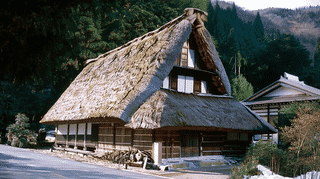
Explore Hamba Family Residence, an Important Cultural Property preserving the earliest form of gasshō-zukuri architecture near the UNESCO World Heritage Gokayama region. Discover its 300+ year history, unique architectural features, and authentic rural Japan experience.

Discover the Iwase Family Residence in Gokayama, Toyama — Japan's largest surviving gasshō-zukuri farmhouse. Designated as an Important Cultural Property, this five-story thatched-roof masterpiece reveals the secrets of Edo-period saltpeter production and mountain village life.
The Main Hall of Oyama Shrine Maedate Shadan in Tateyama Town, Toyama, is a magnificent late-Muromachi sanctuary in the five-bay flowing-roof style with cypress-bark thatching, and is the largest shrine honden in the entire Hokuriku region. Designated a National Important Cultural Property in 1906, it embodies thirteen centuries of devotion to sacred Mount Tate, one of Japan's Three Sacred Mountains.
On a wooded hillside in Fushiki, Takaoka City, stands Keta Shrine, the first-ranked shrine of ancient Etchu Province. Its Main Hall, rebuilt in the Eiroku era (1558-1570) after fires set during the Warring States period, is a three-bay flowing-roof structure (sanken-sha nagare-zukuri) with a cypress-bark shingle roof, and preserves the bold timber proportions and carving styles of the Late Muromachi period. Designated a National Important Cultural Property in 1931, it sits within a landscape steeped in history: the shrine's inner precinct marks the traditional site of the Etchu Sōsha, the auxiliary Ōtomo Shrine honors the Man'yōshū poet Ōtomo no Yakamochi, and nearby are the National Treasure Shōkōji Temple, the Takaoka City Man'yō Historical Museum, the ruins of the Etchu provincial capital, and the celebrated coastal view of Amaharashi.
A Heian-period bronze staff-head found atop Mt. Dainichi in 1893, with twin dragons and a lotus-pedestal vase — one of fewer than a dozen survivors. Tateyama Museum.
Five figures emerge from a tuff boulder at Nisseki-ji in Toyama. The Fudō Myōō at the centre, over three metres tall, is Hokuriku's largest rock-carved Buddha image.
More from Toyama
Toyama’s registered properties across designations, with featured heritage and travel notes.
The complete kokuhō catalogue — browse by prefecture, period, and category.
Nationwide jūyō bunkazai — architecture, sculpture, painting, crafts, and documents.