
Edo
Wakayama · 江戸Browse Wakayama’s cultural heritage from the Edo period (1603 – 1868). Filter by type and keyword, with concise stories, maps, and travel tips.
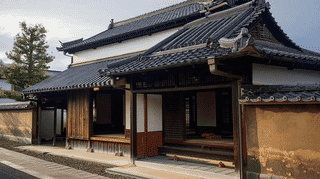
Three mid-Edo-period buildings in Kinokawa in Wakayama Prefecture. The place name bracketed in its own title there is still an older one even now today.

The Main House of the Former Yanagawa Residence, an 1807 townhouse built by a Kishu lacquer wholesaler in Kuroe, now stands at Kii Fudoki no Oka in Wakayama City.
The Kongobuji Temple designation covers nine Danjo Garan halls on Mount Koya, from the 1834 Saito pagoda to the 1883 Juntei-do, with notes on access to the Mieido.
The Kongobuji Temple Daimon Gate, rebuilt in 1705 at Mount Koya's western edge, stands 25.1 meters tall with giant Nio guardians. Free to view; see what to look for.
Two ornate spirit halls for Ieyasu and Hidetada form the Kongobuji Temple Tokugawa Family Mausoleum on Mount Koya. Dates, decoration, fees and opening hours.
Built in 1785 for a village headman in Aridagawa, Wakayama, the Suzuki Residence is dated by its ridge tag and its four-room plan, an Important Cultural Property.
A 1749 fishing household from Shiotsu, built in thick earthen-wall storehouse construction and relocated to the Kii Fudoki no Oka park in Wakayama City.
The 1852 estate of the Nakasuji district headmen in Wasa, Wakayama City: six Important Cultural Property buildings, a 20-mat hall and a third-floor lookout room.
The 1652 hall for Sugawara no Michizane at Hirohachiman Shrine in Hirokawa, Wakayama, listed in 1947, carries a lion strut that reads differently from behind.
A gable-entry worship hall at Hirohachiman Shrine in Hirokawa, Wakayama, dated 1704 and listed in 1947, roofed in split shingles and still used for the autumn rite.
A small karamon gate at Fugen-in on Kōyasan, once part of a Tōshōgū shrine for Tokugawa Ieyasu, moved here in 1892. Vermilion posts, vivid early-Edo carvings.
Wakayama Castle's Okaguchi Gate, a 1621 turret gate, survived the 1945 firebombing that razed the keep. Its wall holds twelve gun ports cut from single stones.
On the easternmost cliff of Kii Oshima Island in Wakayama, the Kashinozaki Lighthouse — designed by Scottish engineer Richard Henry Brunton and first lit in 1870 — stands as Japan's oldest working stone lighthouse. In the waters below, the Ottoman frigate Ertuğrul sank in 1890, and the islanders' selfless rescue became the cornerstone of an enduring Japan-Türkiye friendship. Designated a National Historic Site in 2021, the lighthouse, shipwreck reef, landing site, and memorial cemetery together tell a remarkable story of modernization, maritime tragedy, and cross-cultural compassion.
Ichiki Ryokan Main Building is a late Edo town house on the road to Chohoji in Kainan, Wakayama, with an earthen passage, low tiled eaves and formal rear rooms.
A late Edo farmhouse moved to Kitano, Wakayama City in 1941, with castle-like plastered walls and a tiled irimoya roof; No. 30-0001 in the first 1996 register.
The oldest building on a Kinokawa farm estate: a late Edo 2-storey storehouse with an okiyane roof and torii-framed door, its outer walls joined to the estate wall.
On the river side of the Ueda estate in Hashimoto, Wakayama, two joined late-Edo earthen storehouses survive as the oldest buildings on this former headman's grounds.
An early 18th-century farmhouse and former teahouse in Kimino, Wakayama, with an oshiita alcove, a tokozashi ceiling and adze-marked beams; registered in 2019.
A late Edo gatehouse in Kimino, Wakayama, with a gable at one end and a hip-and-gable at the other, that held the farm's cow shed and kitchen; registered in 2019.
Three late-Edo storehouses joined under one L-shaped roof in Hirogawa, Wakayama, registered in 2021. Namako tiled walls, three door bays, a rafterless roof frame.