
Heian
Wakayama · 平安Browse Wakayama’s cultural heritage from the Heian period (794 – 1185). Filter by type and keyword, with concise stories, maps, and travel tips.
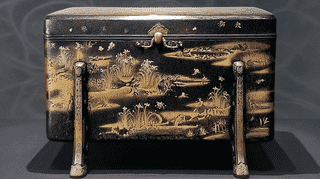
A Heian-period chest owned by Kongobuji in Wakayama Prefecture. Marsh and plovers on the outside, and wild grasses and butterflies within its own lid.
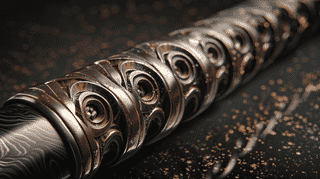
A Heian tachi mounting of Niutsuhime Shrine, spiral-wrapped in silver-plated copper with gilt fittings; the blade is lost. National Treasure, 1955; kept in Tokyo.

Held by Nachisan Seigantoji Temple in Nachikatsuura, Wakayama Prefecture, this small gilt-bronze thin-relief plaque of Ratnasambhava is part of a three-dimensional Vajra Realm Mandala buried by the monk Gyoyu in 1130 in hope of rebirth in the Pure Land of Nachi. Excavated in 1918 and designated an Important Cultural Property in 1937, it stands as a singular example of a metalwork mandala in Japan and a precious witness to the flourishing of Kumano faith in the late Heian period.
A National Treasure at Tomobuchi Hachiman Shrine in Wakayama: a portable shrine sent from Kyoto's Iwashimizu in 1228, among the oldest surviving in Japan.
Kongōbu-ji on Mount Kōya holds 4,296 scrolls of a Buddhist canon written on indigo paper in alternating gold and silver lines, commissioned by Fujiwara no Kiyohira.
A National Treasure preserved at Koyasan Reihokan Museum in Wakayama. This monumental three-scroll triptych from the late Heian period depicts Amida Buddha and over thirty bodhisattvas descending from the Western Pure Land—universally considered the supreme masterpiece of the raigō genre.
Three wrathful bodhisattvas on Mount Koya, painted around the tenth century as ritual icons protecting the realm. Two of the original five burned in 1888.
Held by Fumon-in Temple on Mount Kōya, the National Treasure 'Portrait of High Priest Gonsō on Silk' is a 12th-century Heian masterpiece depicting Kūkai's tonsure master with strikingly lifelike realism. The painting bears an inscribed eulogy traditionally attributed to Kūkai himself. The original is preserved at Kōyasan Reihōkan museum, where it is occasionally shown in special exhibitions of the mountain's treasures.
A National Treasure at Kongōbuji on Mt. Kōya, painted by the monk Jōchi in 1145. This rare dated work shows the rain-bringing dragon king as a deity in court robes.
A National Treasure at Ryukoin on Mount Koya. This late Heian painting shows the Kannon said to have calmed a storm during Kukai's sea voyage to Tang China.
Held by Kongobu-ji on Mount Koya in Wakayama Prefecture, the National Treasure Silk-Colored Buddha's Nirvana Painting bears an ink inscription dated to 1086 and is the oldest nirvana painting in Japan whose date of creation is confirmed. Depicting Shakyamuni entering final nirvana beneath the sala trees with the elegance and refined coloring of Heian aristocratic culture, it is one of the supreme masterpieces of Japanese Buddhist painting. It is housed at the Koyasan Reihokan Museum and shown during special exhibitions.
The Red Fudo of Myoo-in on Mount Koya is one of Japan's Three Great Fudo, a painting linked by legend to the monk Enchin and carried into exile by Emperor Go-Daigo.
At Jison-in, the Women's Koya, this worn late-Heian scroll is the only single-figure Maitreya painting from the period, its halo ringed by forty-nine Buddhas.
Zoku Hokanshu, a National Treasure on Mount Koya, binds 77 scrolls and 6 booklets of medieval documents, from imperial edicts to a farmer's katakana petition.
Held on Mount Koya, these three handwritten scrolls of the core esoteric sutras carry rare Heian reading marks prized as evidence for the history of Japanese.
An Important Cultural Property at Ryūkōin on Mount Kōya: a 1058 Heian manuscript of the Mahāvairocana Sūtra, a foundational scripture of Shingon esoteric Buddhism.
Held by Kishu Toshogu, the tachi signed Yasutsuna is among Japan's oldest signed blades. Forged in Heian-period Hoki, it is an Important Cultural Property.
A Heian handscroll at Ryuko-in on Koyasan: an annotated Sutra for Humane Kings, a state-protection scripture, designated an Important Cultural Property in 1930.
A bronze five-pronged vajra bell at Shochi-in on Koyasan, made in Tang China and designated in 1928. An esoteric Buddhist implement, paired with a vajra in ritual.
Held by Hōju-in on Mount Kōya, this upper volume of the Nihon Hokke Genki is a 1153 copy of a Heian collection of Buddhist miracle tales about the Lotus Sutra.