
Kofun
Ehime · 古墳Browse Ehime’s cultural heritage from the Kofun period (300 – 538). Filter by type and keyword, with concise stories, maps, and travel tips.
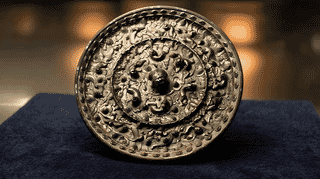
A Tang bronze mirror at Oyamazumi Shrine in Ehime, 26.8 centimetres across. A grapevine forms the ground beneath birds and beasts. National Treasure since 1953.

Tucked away on a hilltop in Matsuyama City, Ehime Prefecture, Hasaike Kofun is an elongated oval burial mound built between the mid-6th and early 7th centuries. Designated a National Historic Site, it is exceptionally rare in Japan because two of its horizontal stone chambers were found completely undisturbed by ancient grave robbers. Discovered by chance in 1992 and investigated through five excavation campaigns, the tumulus has yielded extraordinary insights into late Kofun-period funerary rites, including physical evidence of the ancient practice of 'mogari.' Today, visitors to Hasaike Kofun Park can view Stone Chamber No. 1 up close and learn about ancient Japanese views of death and burial through the on-site guidance facility.
Located in Fujiyama Health and Culture Park in Imabari City, Ehime, Myokenzan Kofun is a 55.2-meter keyhole-shaped tumulus built in the early 4th century and designated a National Historic Site in 2010. Visitors can view its preserved stone burial chamber through glass and enjoy panoramic views of the Seto Inland Sea — a rare encounter with Japan's earliest Kofun-period culture.