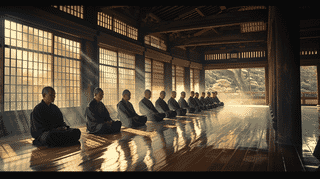
Eiheiji Temple: The Living Heart of Zen Buddhism in Japan

Nestled deep within a pristine valley of towering ancient cedar trees in Fukui Prefecture, Eiheiji—the "Temple of Eternal Peace"—stands as one of the most spiritually significant Buddhist monasteries in all of Japan. Founded in 1244 by Zen Master Dogen, who brought Soto Zen Buddhism from China to Japan, Eiheiji remains a fully active training monastery where approximately 100 monks practice rigorous Zen discipline to this day. The sprawling complex of over 70 buildings, 19 of which are designated as Important Cultural Properties of Japan, offers visitors an extraordinarily rare opportunity to witness authentic Zen monastic life in an architectural setting of breathtaking beauty and historical depth.

A Legacy Born from Devotion: The History of Eiheiji

The story of Eiheiji begins with Dogen Zenji (1200–1253), a young monk who traveled to Song Dynasty China at the age of 24, seeking the essence of Buddhist truth. Under the guidance of Master Rujing at Tiantong Temple, Dogen immersed himself in the practice of shikantaza—"just sitting"—a form of seated meditation that would become the cornerstone of Soto Zen Buddhism. Upon returning to Japan, Dogen first established himself in Kyoto before seeking a more secluded location for his monastery, far removed from the political entanglements of the capital.

In 1244, Dogen accepted the invitation of his patron, the local lord Hatano Yoshishige, and founded Daibutsuji Temple in the remote mountains of Echizen Province (present-day Fukui Prefecture). Two years later, in 1246, the temple was renamed Eiheiji, drawing its name from the Chinese era "Yongping" (永平), when Buddhism first arrived in China during the Eastern Han Dynasty. The name carries the beautiful meaning of "eternal peace."

Throughout its nearly 800-year history, Eiheiji has endured numerous devastating fires, including major conflagrations in 1340 and 1473, as well as attacks during the turbulent Sengoku period. As a result, the oldest surviving structure on the grounds—the Sanmon Gate—dates from 1749. The temple received official recognition as a head temple equal in status to Sojiji in 1615 under the Tokugawa shogunate, solidifying its position as one of the two great headquarters of Soto Zen Buddhism in Japan.

The Shichido Garan: Seven Sacred Halls of Zen Practice

At the heart of Eiheiji lies the Shichido Garan—the "Seven-Hall Complex"—an architectural arrangement essential to Zen monastic life. These seven buildings represent the fundamental spaces required for Zen training, and every aspect of daily life within them is considered part of spiritual practice. The seven halls are the Sanmon (Main Gate), Butsuden (Buddha Hall), Hatto (Dharma Hall), Sodo (Monks' Hall), Daikuin (Kitchen and Administration), Yokushitsu (Bath), and Tosu (Lavatory). Connected by covered corridors that wind up the mountainside, these buildings form an integrated environment where the sacred and the mundane merge seamlessly in the Zen tradition.

The 19 Important Cultural Properties: An Architectural Treasury

In 2019, a total of 19 structures within the Eiheiji complex were designated as Important Cultural Properties of Japan, recognizing their outstanding architectural, historical, and cultural significance. Each building tells a unique story spanning from the mid-Edo period to the early Showa era, showcasing the exceptional craftsmanship of the Eiheiji carpenters—a hereditary guild of master builders who have maintained and expanded the temple for generations.

Sanmon (Main Gate)

The Sanmon, completed in 1749, is the oldest surviving structure at Eiheiji. This magnificent two-story gate in the Tang Chinese architectural style serves as the official entrance to the monastery. The upper level houses statues of Shakyamuni Buddha and the Sixteen Arhats (Rakan), while the ground level is flanked by imposing statues of the Four Heavenly Kings (Shitenno), guardian deities who protect the temple from evil. Every decorative carving on the gate—from the kobushi (fist-shaped brackets) to the grip-lotus handrail ornaments—features a unique design, with no two being identical. Monks are permitted to pass through the Sanmon only twice during their time at Eiheiji: upon entering and upon completing their training.

Butsuden (Buddha Hall)

Rebuilt in 1902 during the major renovation marking the 650th memorial anniversary of Dogen's passing, the Butsuden stands at the physical and spiritual center of the complex. Its distinctive double-layered roof follows the Song Dynasty Chinese style, while the stone-paved floor creates an atmosphere of dignified solemnity. The hall enshrines the Three Buddhas representing past, present, and future: Amida Buddha, Shakyamuni Buddha, and Maitreya Buddha. Twelve exquisitely carved transom panels depicting scenes from Zen teachings adorn the interior, demonstrating the remarkable skill of the Eiheiji master carpenters.

Hatto (Dharma Hall)

Reconstructed in 1843, the Hatto is the largest ceremonial hall at Eiheiji, with an expansive floor area equivalent to approximately 380 tatami mats. Situated at the highest point within the Seven-Hall Complex, it commands magnificent views of the surrounding mountains and temple grounds through all four seasons. The hall serves as the venue for the abbot's Dharma talks and all major ceremonies, including the daily morning service. The principal image enshrined here is a statue of Sho-Kannon (Avalokitesvara), the Bodhisattva of Compassion, and a pair of white guardian lions stands at the base of the entrance stairway.

Sodo (Monks' Hall)

Also rebuilt in 1902, the Sodo is the very essence of Zen monastic life. This is where resident monks eat, sleep, and practice zazen meditation—all within a single tatami mat's worth of personal space. The interior is organized with the inner hall for sleeping and the outer hall for meditation and meals. The Sodo is generally closed to visitors as it remains in active daily use by the training monks, but its exterior architecture and the glimpses visible from the corridors convey the austerity and discipline of Zen practice.

Daikuin (Great Kitchen and Administration Hall)

Built in 1930 as a modern three-story wooden structure with one underground level, the Daikuin serves as both the kitchen where all monastic meals are prepared and the administrative center of the temple. In Zen Buddhism, the preparation and serving of food is itself a form of spiritual practice, making the Daikuin far more than a mere utility building. A remarkable feature of this structure is its elevator, installed during the original construction and still in operation today—believed to be one of the oldest functioning elevators in Japan. The building skillfully blends reinforced concrete foundations with traditional wooden architectural aesthetics.

Joyoden (Founder's Hall): Main Hall and Worship Hall

The Joyoden is the most sacred space within Eiheiji, housing the ashes, memorial tablet, and devotional portrait of Dogen Zenji, along with wooden images of the first five successive head priests of the temple. Originally established as a modest memorial chapel called Joyoan by Dogen's disciple Ejo in the 13th century, the current structure was rebuilt in 1881 following a fire in 1879. The architecture features extraordinarily refined carvings, particularly the kibana (ornamental bracket carvings) on the pillars. The monks attend to this hall as though Dogen himself were still living within it—a testament to the unbroken spiritual lineage of nearly 800 years.

Joyomon (Founder's Hall Gate)

This gate marks the formal entrance to the sacred precinct of the Joyoden and, together with the connecting corridors, creates a clear boundary separating the founder's sanctuary from the rest of the complex.

Chujaku-mon (Inner Gate)

Located directly in front of the Butsuden, the Chujaku-mon was built during the 600th memorial anniversary of Dogen's death around 1852. Positioned at the center of the corridor connecting the Daikuin and the Sodo, this gate serves as an important transitional threshold within the Seven-Hall Complex.

Daikomyozo (Great Light Hall)

Constructed in 1929, the Daikomyozo is the hall where the abbot of Eiheiji delivers sermons and meets with lay followers and affiliated temple priests. Located near the abbot's private quarters (Furōkaku), this building represents the important connection between the monastic community and the broader Soto Zen congregation.

Kanin-ryo (Administrative Quarters)

Built in 1930 during the 650th memorial anniversary of the second patriarch Ejo, the Kanin-ryo serves as the residence and office of the kanin, the monk responsible for overseeing the overall administration of the temple.

Kairo (Covered Corridors) — Five Structures

The five designated corridor sections—east and west of the Sanmon, east and west of the Chujaku-mon, and east of the Butsuden—were constructed in 1930. These covered walkways are far more than simple passageways; they are architectural arteries that connect the various halls into a unified spiritual complex. Their covered design is particularly vital in Fukui Prefecture's climate, protecting monks and visitors from the region's heavy snowfall and rain. The polished wooden floors of these corridors, maintained daily by the monks' cleaning practice (samu), gleam with a deep luster that embodies the Zen principle that even the most mundane task is a pathway to enlightenment.

Kyozo (Sutra Repository)

Situated on elevated ground to the east of the Sanmon, the Kyozo houses a rinzo—a rotating sutra bookcase—containing Buddhist scriptures. The current structure is believed to have been rebuilt around 1851 in preparation for the 600th memorial anniversary of Dogen's passing.

Matsudaira-ke Byosho-mon (Matsudaira Clan Mausoleum Gate)

Originally constructed in 1647 for the mausoleum of Matsudaira Tadamasa, the third lord of the Fukui Domain, this gate is a tangible reminder of the powerful feudal patronage that sustained Eiheiji through the centuries. The Matsudaira clan, a branch of the ruling Tokugawa family, maintained a strong connection with the temple throughout the Edo period.

Shariden and Shidoden (Relic Hall and Memorial Hall)

The Shidoden, built in 1930, is the hall where memorial services and prayers are conducted on behalf of lay followers. Thousands of memorial tablets (ihai) dedicated by devotees across Japan are enshrined within. The adjacent Shariden, a hip-roofed structure rebuilt around 1863, serves as a repository for cremated remains and enshrines a statue of Jizo Bosatsu (Ksitigarbha), the bodhisattva protector of travelers and the deceased.

Chokushi-mon (Imperial Envoy Gate)

This elaborately decorated gate, also known as the Kara-mon (Chinese-style Gate), is reserved exclusively for imperial envoys and the most distinguished visitors. It cannot be entered by regular visitors, but its ornate carvings and elegant proportions can be admired from outside the temple's main entrance area, providing a stunning visual introduction to the grandeur within.

Why Eiheiji Is Designated as an Important Cultural Property

The 19 buildings of Eiheiji received their Important Cultural Property designation in 2019 (Reiwa 1) in recognition of several exceptional qualities. The temple's architectural ensemble represents the most complete and best-preserved example of a Zen Buddhist monastic complex in Japan, with buildings ranging from the mid-18th century to the early 20th century. The arrangement follows the classical Zen monastic layout—with the Sanmon, Chujaku-mon, Butsuden, and Hatto aligned along a central axis and connected by corridors to the surrounding halls—creating a spatial composition that has served as the model for Zen temple architecture throughout Japan.

The buildings also showcase extraordinary craftsmanship, from the intricately carved transoms of the Butsuden to the massive structural engineering of the Daikuin. The hereditary Eiheiji carpentry tradition, which traces its origins to Chinese master builders invited by Dogen himself in the 13th century, has produced structures of remarkable quality and ingenuity across many generations. Furthermore, the seamless integration of these buildings with the natural mountain landscape creates what experts describe as an outstanding sacred environment that continues to serve as the definitive standard for Zen Buddhist temple architecture.

Experiencing Eiheiji: Highlights for Visitors

A visit to Eiheiji is unlike any other temple experience in Japan. As an active training monastery, the entire complex pulses with the rhythm of Zen practice—from the resonant tones of the great bronze bell that rings four times daily, to the sight of robed monks moving swiftly and silently through the corridors.

Begin your visit at the modern Kichijokaku reception hall, where you may receive an orientation about temple etiquette. From here, covered corridors lead you upward through the temple grounds. Do not miss the Sanshokaku (Umbrella Pine Pavilion), whose second floor features a spectacular room with 230 painted ceiling panels created by 144 renowned Japanese artists in 1930. Among the predominantly floral and nature designs, five special paintings depict a carp, a Chinese lion, and squirrels—finding them all is considered good luck.

The covered walkways themselves are a highlight, their polished wooden floors reflecting centuries of devoted care. In winter, when snow blankets the surrounding mountains and icicles hang from the eaves, the corridors frame scenes of ethereal beauty. Autumn brings vivid foliage that contrasts magnificently with the dark timber of the buildings, while summer offers cool refuge beneath the cathedral-like canopy of ancient cedars.

For those seeking a deeper experience, Eiheiji offers zazen meditation sessions and overnight stays (sanzen) where participants follow the monks' schedule—rising before dawn, chanting sutras, eating traditional Buddhist vegetarian cuisine (shojin ryori), and sitting in meditation. These experiences require advance reservation and are subject to availability.

Surroundings and Nearby Attractions

The temple's gateway village offers a charming collection of shops and restaurants along its main street, where visitors can sample local specialties such as Eiheiji soba noodles, goma-dofu (sesame tofu—a staple of Buddhist vegetarian cuisine), and various Zen-inspired sweets. The area was revitalized through a major redevelopment project that thoughtfully blends traditional atmosphere with modern amenities.

Within easy reach of Eiheiji, the Ichijodani Asakura Clan Historic Ruins, located approximately 10 kilometers away, offer a fascinating glimpse into the life of a medieval Japanese castle town. This archaeological site preserves the remains of five generations of the Asakura daimyo clan's capital, which flourished until its destruction by Oda Nobunaga's forces in 1573. For nature lovers, a mountain hiking trail connects Eiheiji with Kippoji Temple (Yoshimine-dera), another Zen temple associated with Dogen's early years in the region. The nearby Awara Onsen hot spring resort provides a relaxing complement to a culturally immersive day at the temple.

📍 Plan Your Visit to Fukui
Find tours, activities & transport passes near Eiheiji Temple
[ Eiheiji Temple & Tojinbo Cliffs Day Trip ]

Q&A

QHow do I get to Eiheiji Temple from Fukui Station?
AThe most convenient option is the direct "Eiheiji Liner" express bus from Fukui Station East Exit, which takes approximately 30 minutes and costs 750 yen one way. Alternatively, you can take the Echizen Railway from Fukui Station to Eiheijiguchi Station and transfer to a Keifuku Bus bound for Eiheiji (approximately 45 minutes total). By car, take the Chubu Jukan Expressway (free section) from Fukui-Kita IC on the Hokuriku Expressway, exit at Eiheiji Sando IC, and drive about 15 minutes via National Route 364.
QCan I participate in zazen meditation or stay overnight at Eiheiji?
AYes, Eiheiji offers both day-visit zazen meditation sessions and overnight stays (sanzen) that include zazen practice, Buddhist vegetarian meals (shojin ryori), morning services, and cleaning practice (samu). Overnight stays are available on limited dates and require advance reservation. Please check the temple's official website or contact them directly for current availability and booking procedures. Accommodations for those who have difficulty sitting in the traditional seiza position may also be available.
QIs English-language support available at the temple?
AEnglish signage is available at major points throughout the temple. Guided tours in English may be available depending on translator availability—it is advisable to inquire in advance. English-language pamphlets are typically provided at the reception. The self-guided walking route through the covered corridors is well-marked and intuitive even without language assistance.
QAre there any etiquette rules visitors should be aware of?
AVisitors are expected to dress modestly and maintain a quiet, respectful demeanor throughout the temple. Photography of training monks is strictly prohibited, and some interior areas also restrict photography. Shoes must be removed before entering the buildings; slippers are provided. Please follow the designated visitor route and avoid entering areas marked as off-limits to the public. Remember that Eiheiji is an active monastery, so encountering monks going about their daily practice is a privilege that should be respected.
QWhat is the best season to visit Eiheiji?
AEach season offers a distinct experience. Late October to mid-November is especially popular for autumn foliage, which creates stunning contrasts against the temple's wooden architecture. Spring (April–May) brings cherry blossoms and fresh green leaves. Summer offers cool, refreshing shade under the towering cedar canopy. Winter transforms the temple into a serene snow-covered landscape reminiscent of an ink wash painting, offering the most atmospheric and contemplative experience—though heavy snowfall should be expected in this region from December through March.

Basic Information

Official Name Daihonzan Eiheiji (大本山永平寺)
Mountain Name Kisshozan (吉祥山)
Religious Affiliation Soto Zen Buddhism (曹洞宗)
Founder Dogen Zenji (道元禅師), 1200–1253
Year of Foundation 1244 (Kangen 2)
Principal Image The Three Buddhas: Shakyamuni (present), Amida (past), Maitreya (future)
Cultural Property Designation 19 buildings designated as Important Cultural Properties of Japan (2019)
Address 5-15 Shihi, Eiheiji-cho, Yoshida-gun, Fukui Prefecture 910-1228
Admission Fee Adults: 700 yen / Elementary and junior high school students: 300 yen / Preschool children: Free / Persons with disability certificate: 300 yen
Visiting Hours 8:30 AM – 4:30 PM (last entry at 4:00 PM)
Access Eiheiji Liner bus from Fukui Station (approx. 30 min); or Echizen Railway to Eiheijiguchi Station + Keifuku Bus (approx. 45 min total)
Owner Religious Corporation / Daihonzan Eiheiji

References

Eiheiji – Wikipedia (English)
https://en.wikipedia.org/wiki/Eihei-ji
永平寺 – Wikipedia (Japanese)
https://ja.wikipedia.org/wiki/%E6%B0%B8%E5%B9%B3%E5%AF%BA
永平寺の伽藍と建造物 – Komazawa University Zen Culture and History Museum
https://www.komazawa-u.ac.jp/facilities/museum/eiheiji-garan.html
永平寺 法堂 – Cultural Heritage Online (bunka.nii.ac.jp)
https://bunka.nii.ac.jp/heritages/detail/444383
Eiheiji Temple – Japan Guide
https://www.japan-guide.com/e/e6601.html
Eiheiji Temple – Discover Fukui Official Travel Guide
https://www.fuku-e.com/en/attractions/detail_1089.html
永平寺の主な伽藍 – 禅の里まちづくり実行委員会
http://zen-eiheiji.jp/eiheiji/garan/
見どころ満載の「大本山永平寺」で禅の世界を体験! – ふくいドットコム
https://www.fuku-e.com/feature/detail_334.html
Eiheiji Temple – Japan National Tourism Organization
https://www.japan.travel/en/spot/1385/

Last verified: 2026.03.08

Cultural Treasures in the Same Area

All are within walking distance in the same area, so we recommend visiting them together.

  1. Eiheiji Temple corridor 0.00 km
  2. Eiheiji Temple Shoyoden main hall and worship hall 0.00 km
  3. Eiheiji Temple Joyomon Gate 0.00 km
  4. Eiheiji Temple scripture repository 0.00 km
  5. Eiheiji Temple Matsudaira Mausoleum Gate 0.00 km
  6. Eiheiji Temple Reliquary Hall and Shrine Hall 0.00 km
  7. Eiheiji Temple Imperial Envoy Gate 0.00 km
  8. Eiheiji Temple Buddhist temple 0.00 km
  9. Eiheiji Temple Dharma hall 0.00 km
  10. Eiheiji Temple Sanmon 0.00 km
  11. Eiheiji Temple Nakajakumon 0.00 km
  12. Eiheiji Temple monastery 0.00 km
  13. Eiheiji Temple Daikuin 0.00 km
  14. Eiheiji Temple Daikomyozo 0.00 km