
Heian
Fukuoka · 平安Browse Fukuoka’s cultural heritage from the Heian period (794 – 1185). Filter by type and keyword, with concise stories, maps, and travel tips.
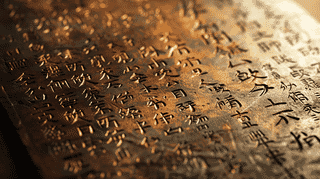
Heian copper plates found on Mount Kubote in Fukuoka, now at the Kyushu National Museum. Made in 1142; the images on their box are a rare pictorial source.

Housed in the Kyushu National Museum in Dazaifu, Fukuoka, the Tahō Senbutsu Sekitō is a 5.5-meter-tall, 3.5-ton octagonal stone Buddhist banner-pillar carved in northern China in 1084 CE under the Khitan-ruled Liao dynasty. Densely covered with buddhas, bodhisattvas, celestial musicians, kalavinka birds and Sanskrit dharani inscriptions, it is a benchmark masterpiece of Liao-period Buddhist sculpture and Japan's only stone banner-pillar of Chinese origin designated as an Important Cultural Property.
Beneath Fukuoka's Maizuru Park lies the Kōrokan, ancient Japan's only excavated foreign guesthouse, where imported ceramics mark four centuries of exchange.
Preserved at Seiganji Temple in Imazu, Fukuoka, this National Treasure scroll was brushed by Myōan Eisai — the monk who would go on to introduce Rinzai Zen and green tea culture to Japan — on the fifteenth day of the seventh month in 1178. Dedicated to the temple's Urabon (Obon) ceremony, the scroll records Eisai's sponsorship of a copy of the Lotus Sutra and survives as one of the earliest autograph works of this pivotal figure. Executed in bold Song-influenced calligraphy on sheets of red, white, and indigo paper decorated with mica-printed clouds and birds, the scroll was designated a National Treasure in 1953 and is entrusted to the Kyushu National Museum.
Made in 1142, this gilt-bronze casket held 33 copper plates engraved with the Lotus Sutra and was buried on Mount Kubote. Its four faces carry fine Buddhist figures.
A Heian Eleven-Headed Kannon at Hase-dera in Kurate, Fukuoka. Carved from one camphor block, about 187 cm tall, with a stern long face and a rare painted halo.