
Edo
Hiroshima · 江戸Browse Hiroshima’s cultural heritage from the Edo period (1603 – 1868). Filter by type and keyword, with concise stories, maps, and travel tips.
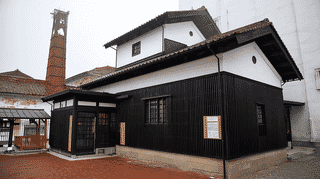
An Edo-period storehouse in Saijo, Higashihiroshima, Hiroshima Prefecture, Japan. An inscription on its window grille dates it to 1836, the oldest in the area.

Mid-Edo thatched house of the priests of Moriwaki Hachimangu in Shobara, Hiroshima, with a cattle stable, earth floor and a raised takama room for the gods.
The estate of a village headman family in Miyoshi, Hiroshima, whose 1788 main house became an Important Cultural Property in 1978, with a rare internal storehouse.
Dated to 1665 by an inscribed ridge tile, the Former Kihara Family Residence in Hiroshima housed sake-brewing salt merchants and keeps a rare early townhouse plan.
Kibitsu Shrine's main hall in Fukuyama, an Important Cultural Property rebuilt in 1648 by lord Mizuno Katsunari, is nearly 18.5 m wide with a Buddhist-hall interior.
Six Edo-period buildings at Jodoji Temple, Onomichi: the 1690 Hojo, Karamon, guest hall, storehouse, rear gate and the Rotekian tea house linked to Hideyoshi.
A mid-eighteenth-century thatched farmhouse in Miyoshi, Hiroshima, an Important Cultural Property since 1978, moved and restored when a dam flooded its site.
A late Edo storehouse facing the harbour of Tomo, Fukuyama, registered in 1997, now displaying artefacts from Sakamoto Ryoma's ship Iroha-maru.
A late Edo stone check dam high in a Dodogawa side valley in Fukuyama, Hiroshima: 3.8 metres of dry random walling, quoined corners and diagonal courses.
A late Edo storehouse on a Shiraichi lane, plastered white right up over its eaves, with a heavy clay door, few windows and a double-beamed roof frame upstairs.
Dating from around 1782, the only Edo-period building at this hilltop shrine is an eight-legged gate with an open central passage and guardians behind lattice.
Shorinbo's 1744 bell tower in Miyoshi, Hiroshima, is an open one-bay belfry on a stone base with inward-leaning round posts and two-step brackets. Listed in 2011.
Shorinbo's 1752 sutra storehouse in Miyoshi, Hiroshima, is a 3.8-metre-square plastered store whose walls carry timber brackets and carvings. Registered in 2011.
Shorinbo's priests' quarters in Miyoshi, Hiroshima, built in 1801, is a 22-by-14-metre gable-entry kuri with an earthen entrance hall, registered in 2011 as a model.
Shorinbo's main gate in Miyoshi, Hiroshima, dates from 1665 and is the temple's oldest building: a copper-roofed four-legged gate with cusped eaves, listed in 2011.
Shorinbo's 1852 main hall in Miyoshi, Hiroshima, is a 629-square-metre Shin Buddhist hall with a tiled hip-and-gable roof, registered in 2011 as a model of its type.
This late Edo corridor at Shorinbo in Miyoshi, Hiroshima, links hall and residence; a plaster wall with bell windows splits it into two lanes. Registered in 2011.
The lowest Edo-period check dam on the Dodogawa in Fukuyama, Hiroshima: a surviving 9.6-metre east wing of dry-laid granite with stepped split stone. Registered 2006
An 8.8-metre stone check dam of about 1835 on the Dodogawa in Fukuyama, Hiroshima, with stepped granite, an arched plan and a sagging crest. Registered 2006.
A 36-metre stone check dam of about 1832 on the Dodogawa in Fukuyama, Hiroshima, with stepped granite, an arched plan and a 1996 dig down to its bedrock.