— Prefecture · Hokkaido · 北 海 道 —

Registered Tangible Cultural Properties of Hokkaido
北 海 道 の 登 録 有 形 文 化 財

Hokkaido · Registered Tangible Cultural Properties

155 total Hokkaido
Showing 1 – 20 of 155
Former Japan National Railways Nekita Line Koshikawa Bridge
Hokkaido 昭和前 Registered Tangible Cultural Properties
Former Japan National Railways Nekita Line Koshikawa Bridge

Discover the Koshikawa Bridge, Hokkaido's largest unreinforced concrete railway bridge. A Registered Tangible Cultural Property that stands as a testament to wartime engineering and a poignant memorial to those who built it.

Edwin Dun Memorial Hall (former Hokkaido Government
Hokkaido 明治 Registered Tangible Cultural Properties
Edwin Dun Memorial Hall (former Hokkaido Government

A Meiji-era wooden office in southern Sapporo, built in 1887, honoring Edwin Dun, the Ohio rancher who founded Hokkaido's dairy industry from Makomanai in 1876.

Takamatsu Overpass, Former Hokutan Yubari Coal Mine Railway
Hokkaido 昭和前 Registered Tangible Cultural Properties
Takamatsu Overpass, Former Hokutan Yubari Coal Mine Railway

A single-arch reinforced-concrete overpass carrying a footpath over the Hokutan colliery's coal railway at Yubari, its deck tilted to clear larger rolling stock.

Former Hokutan Yubari Coal Mine Takamatsu Tailings Disposal
Hokkaido 昭和中 Registered Tangible Cultural Properties
Former Hokutan Yubari Coal Mine Takamatsu Tailings Disposal

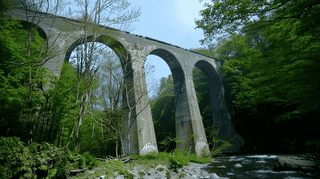
A reinforced-concrete viaduct of seven semicircular arches, each spanning six metres, built in 1951 to carry the Takamatsu waste-rock line at the Yubari colliery.

Former Hokutan Yubari Coal Mine Takamatsu Tailings Disposal
Hokkaido 昭和中 Registered Tangible Cultural Properties
Former Hokutan Yubari Coal Mine Takamatsu Tailings Disposal

A straight concrete tunnel seventy-three metres long, built in 1951 for the skip cars that hauled waste rock along the Takamatsu line, with portals at each end.

Former Hokutan Yubari Coal Mine Takamatsu Waste Disposal
Hokkaido 昭和中 Registered Tangible Cultural Properties
Former Hokutan Yubari Coal Mine Takamatsu Waste Disposal

The west portal of the belt-conveyor tunnel on the Takamatsu waste-rock line: a concrete face nearly nine metres wide framing a modest semicircular opening.

Former Hokutan Yubari Coal Mine Tenryu Mine Materials
Hokkaido 明治 Registered Tangible Cultural Properties
Former Hokutan Yubari Coal Mine Tenryu Mine Materials

The brick portal of the Tenryu pit's material-haulage incline of 1900, its walls five bricks thick framing a semicircular arch with pilasters and a name plaque.

Former Hokutan Yubari Coal Mine Tenryu Pit Mancart Inclined
Hokkaido 明治 Registered Tangible Cultural Properties
Former Hokutan Yubari Coal Mine Tenryu Pit Mancart Inclined

The brick portal of the Tenryu pit's man-car incline, where carriages took miners underground, eleven metres wide with a conical keystone, pilasters and wing walls.

Former Hokutan Yubari Coal Mine Mock Tunnel
Hokkaido 明治 Registered Tangible Cultural Properties
Former Hokutan Yubari Coal Mine Mock Tunnel

Step inside Japan's only publicly walkable coal mine: a 180-metre brick-arched tunnel in Yubari, Hokkaidō, with a real coal seam to touch, vintage shearers, and an 1888 origin story.

Kobayashi Sake Brewery No. 5
Hokkaido 明治 Registered Tangible Cultural Properties
Kobayashi Sake Brewery No. 5

The Fifth Storehouse is the smallest in the row. Built in 1900 of stone over timber, with a stone belt course and doorways on both gable ends. Registered in 2006.

Kobayashi Sake Brewery No. 3
Hokkaido 大正 Registered Tangible Cultural Properties
Kobayashi Sake Brewery No. 3

The Third Storehouse closely resembles its neighbour the Second, yet its king-post roof truss and raised upper floor set it apart. Built in 1921, registered in 2006.

Kobayashi Sake Brewery Koji Making Room
Hokkaido 大正 Registered Tangible Cultural Properties
Kobayashi Sake Brewery Koji Making Room

The Koji-Making House is the newest of the registered buildings, built in 1922. A plain brick structure, it holds the koji room in one corner. Registered in 2006.

Kobayashi Sake Brewery No.2
Hokkaido 大正 Registered Tangible Cultural Properties
Kobayashi Sake Brewery No.2

The largest brick warehouse at the Kobayashi Brewery in Hokkaido. Built in 1921, its gable windows, dentils and ridge tiles lend quiet ornament. Registered in 2006.

Kobayashi Sake Brewery Rice Distillery
Hokkaido 明治 Registered Tangible Cultural Properties
Kobayashi Sake Brewery Rice Distillery

The Rice-Steaming House is a single-story brick hall where brewing rice was steamed. A brick chimney rises at the north gable. Built in 1900, registered in 2006.

Kobayashi Sake Brewery No. 4
Hokkaido 明治 Registered Tangible Cultural Properties
Kobayashi Sake Brewery No. 4

The Fourth Storehouse is the only one roofed with pantiles. Built in 1900 of Sapporo soft stone over timber, with stone eaves and gable verge. Registered in 2006.

Kobayashi Sake Brewery No.6
Hokkaido 明治 Registered Tangible Cultural Properties
Kobayashi Sake Brewery No.6

The Sixth Storehouse ends the row, its only single-story warehouse. Built in 1900 of stone over timber, with sliding doors front and back. Registered in 2006.

United Church of Christ in Japan Sapporo Church (former
Hokkaido 明治 Registered Tangible Cultural Properties
United Church of Christ in Japan Sapporo Church (former

Rising along the Sosei River in central Sapporo, the Sapporo Church of the United Church of Christ in Japan (formerly Sapporo Methodist Episcopal Church) is a Registered Tangible Cultural Property completed in 1904. Built of local Sapporo soft stone over a wooden frame, its charming octagonal bell tower blends Romanesque and Gothic elements. This guide traces the church's origins in the Meiji era, when students inspired by William S. Clark founded Hokkaido's first Methodist community, and introduces its architectural highlights and nearby attractions.

Hakodate Otemachi House (former Asano Cement Hakodate Sales
Hokkaido 大正 Registered Tangible Cultural Properties
Hakodate Otemachi House (former Asano Cement Hakodate Sales

Built in 1918 as the Hakodate sales office of Asano Cement, led by the legendary industrialist Asano Soichiro known as Japan's Cement King, this Western-style wooden building features an elegant European-inspired facade with tower-like projections, a fanlight entrance, and a balcony. Constructed by master carpenter Muraki Jinzaburo, who also built the Old Hakodate Ward Public Hall, the building was faithfully restored from a single historical photograph after years of abandonment, earning registration as a National Tangible Cultural Property in 2005.

Hakodate Park Children's World Aerial Ferris Wheel
Hokkaido 昭和中 Registered Tangible Cultural Properties
Hakodate Park Children's World Aerial Ferris Wheel

Built in 1950, the Hakodate Park Kodomo no Kuni Aerial Ferris Wheel is Japan's oldest operating Ferris wheel, designated as a National Registered Tangible Cultural Property in 2019. Standing 10 meters tall with an octagonal wheel and open-air bench-style gondolas, it offers views of the Tsugaru Strait and Mount Hakodate. Experience the nostalgic charm of the Showa era at this beloved retro amusement park within historic Hakodate Park.

Hakodate Chinese Hall
Hokkaido 明治 Registered Tangible Cultural Properties
Hakodate Chinese Hall

Discover the Hakodate Chinese Memorial Hall, a Registered Tangible Cultural Property and the only remaining late Qing Dynasty-style building in Japan. Built in 1910 by overseas Chinese merchants, this brick Guandi temple features exquisite nail-free construction and lavish interiors.