
Kamakura
Hyogo · 鎌倉Browse Hyogo’s cultural heritage from the Kamakura period (1185 – 1333). Filter by type and keyword, with concise stories, maps, and travel tips.
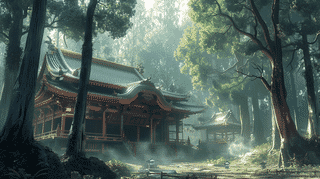
A late Kamakura-period hall in Kobe, Hyogo Prefecture. Another hall of exactly the same name over in Ehime is also a National Treasure in its own right.

This unsigned katana is an Important Cultural Property attributed to the Ichimonji school of Kamakura-period Bizen, famed for its bold clove-shaped temper line.
This Tang dynasty manuscript (7th–8th century) is the oldest surviving copy of Volume 6 of the Shishuo Xinshu (Shishuo Xinyu), a celebrated Chinese anecdote collection. Designated as a National Treasure, this fragment features elegant Tang calligraphy, Heian-period reading marks, and esoteric Buddhist texts on the verso — a testament to over a millennium of Sino-Japanese cultural exchange.
Held by the Osaka Aoyama Historical Literature Museum in Kawanishi, Hyogo, the National Treasure Tosa Nikki is the manuscript copy made by Fujiwara no Tameie in 1236, who transcribed Ki no Tsurayuki's lost autograph 'without altering a single character.' The closest surviving witness to Japan's first kana diary, it preserves the tenth-century spelling and calligraphic forms of Tsurayuki's original — a literary treasure set in Kawanishi, the legendary birthplace of the Seiwa Genji clan.
The oldest of three guardian shrines behind Ichijoji's main hall, this single-bay Kasuga-style shrine houses Bishamonten. Bracket details date it to late Kamakura.
A rhyolite five-ring stupa 155 cm tall near Ichijoji's entrance steps, cut with the date 1321 and Sanskrit syllables on every face. It came from a lost cemetery.
Jōdo-ji Jōdō-dō (Amida Hall) in Ono City, Hyōgo Prefecture, is a National Treasure built in 1192 and completed around 1197 by the priest Chōgen as part of his campaign to rebuild Tōdai-ji Temple after the Genpei War. It is the only surviving Buddhist hall in Japan that preserves the Daibutsu-yō (Great Buddha Style), an architectural idiom imported from Song China. Inside stands the Amida Triad, carved by the master sculptor Kaikei and also designated a National Treasure — the central Amida image reaching 5.3 metres in height. On clear afternoons from mid-summer to autumn, sunset light floods through the western lattice shutters and ignites the golden statues, staging the Buddhist vision of Amida descending from the Western Paradise.
A small bell tower stands by Chōkō-ji's National Treasure main hall in Kato City. Its late-Kamakura hip roof on a flared hakamagoshi base is rarely seen.
Nyoi-ji's Amida Hall in Kobe, an early Kamakura building regarded as the city's oldest, has a lattice-shuttered front and an Amida statue of the same age inside.
A Kamakura-period scroll at Ichijō-ji in Kasai, Hyōgo, in colour on silk, shows Amida Nyorai. An Important Cultural Property since 1908, it is rarely shown.
A Kamakura-period scroll at Tōsen Shrine in Arima near Kobe, this Kumano mandala maps the gods and buddhas of Kumano's three shrines onto silk. Protected since 1904.
A 69.1 cm Kamakura tachi at the Kurokawa Institute, Nishinomiya, signed only 'Ichi' and showing the bright clove temper of Bizen's Yoshioka Ichimonji school.
A signed early-Kamakura tachi by Kanetsugu of Bitchu's Ko-Aoe school, its high curve and crepe-like steel with dark sumihada spots typical of the line.
A late-Kamakura tachi by the Bizen master Kagemitsu at Hyogo's Kurokawa Institute, with an engraved vajra-hilted ritual sword half hidden by later shortening.
A complete English-language guide to the National Treasure tantō known as 'Fushimi Sadamune,' housed at the Kurokawa Institute of Ancient Cultures in Nishinomiya, Hyōgo. This 30.2-cm Kamakura-period dagger, attributed to the master smith Sadamune of the Sōshū tradition and bearing a vermilion-inscribed appraisal by the Hon'ami family, is celebrated for its crisp temper line, Sanskrit invocations to Fudō Myōō and Bishamonten, and its remarkable provenance from Fushimi Castle through the Katō family to the Kurokawa collection. Includes visiting hours, access, and surrounding sights.
A National Treasure tantō by the master Kyoto smith Rai Kunitoshi (active 1278–1321), preserved at the Kurokawa Institute of Ancient Cultures in Nishinomiya, Hyōgo. This 24.5 cm masterpiece, gifted by the fifth Tokugawa shogun Tsunayoshi to the daimyō Yanagisawa family in 1691, displays a luminous straight temper line, a perfectly preserved tang, and lavish hollyhock-crested mountings — viewable only during the institute's spring and autumn exhibitions.
In Jodo-ji's Pure Land Hall in Ono, Hyogo stands a National Treasure Amida triad attributed to Kaikei, its 5.3 m central Buddha lit from behind by the late-day sun.