
Meiji
Hyogo · 明治Browse Hyogo’s cultural heritage from the Meiji period (1868 – 1912). Filter by type and keyword, with concise stories, maps, and travel tips.
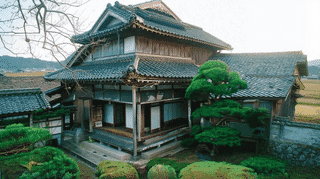
Discover the Akagi Family Residence, one of Japan's best-preserved Meiji-era farmhouse complexes with 16 registered cultural properties. Explore traditional architecture, silkworm-rearing rooms, and authentic rural heritage near Kinosaki Onsen in Hyogo Prefecture.
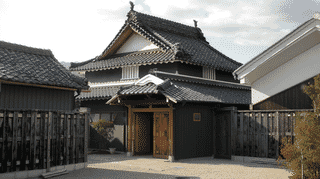
Discover the Iwasake Residence Storehouse, a nationally registered cultural property in Akashi City. This beautifully preserved 1904 Meiji-era farmhouse features distinctive black and white stucco walls amidst modern urbanization.

Standing at the northern tip of Awaji Island in Hyogo Prefecture, Esaki Lighthouse was designed by the British engineer R. H. Brunton and first lit in 1871, making it one of Japan's earliest Western-style lighthouses and the third-oldest still in service. Designated a National Important Cultural Property in 2022, the lighthouse offers sweeping views of the Akashi Kaikyo Bridge and preserves moving traces of the 1995 Great Hanshin-Awaji Earthquake. This guide explores its history, highlights, and visitor information.
A late-Meiji brick stable with a round corner tower in Kobe's Sorakuen garden. One of few Western-style stables left in Japan, it is an Important Cultural Property.
An 1902 colonial ijinkan in Kobe, moved to Sorakuen in 1963 as an Important Cultural Property. Note its arcaded ground floor and acanthus-capped veranda columns.
Discover the Former Kobe Foreign Settlement Building No. 15, the sole surviving structure from Kobe's historic foreign settlement era. This Important Cultural Property, once the American Consulate, features colonial-style architecture, seismic isolation technology, and now houses a stylish restaurant.
Discover Kobayashi House (Former Sharp Residence), a nationally designated Important Cultural Property in Kobe's Kitano Ijinkan district. Built in 1903 for U.S. Consul General Hunter Sharp, this colonial-style mansion known as "Moegi no Yakata" features arabesque staircases, ornate bay windows, and sweeping harbor views.
Completed in 1900 and still in use, Kobe's Gohonmatsu Dam was Japan's first gravity concrete water-supply dam, the core of nine Meiji structures listed in 2006.
The Former Hunter House, located within the Kobe Oji Zoo in Nada Ward, is the largest surviving foreign residence (ijinkan) in Kobe and a nationally designated Important Cultural Property. Originally built around 1889 and extensively renovated by British industrialist Edward Hazlett Hunter in 1907, this Victorian-era timber-and-brick mansion features a stunning colonnade veranda with diamond-lattice windows, marble mantelpieces, teak floors, and English stained glass.
A Meiji earthen storehouse on the flood-proof Akagi estate in Toyooka, Hyogo, once held tribute rice behind white plaster walls and a placed roof.
Wall One of the Akagi estate in Toyooka, Hyogo, runs 68 meters under a tiled roof, its charred-cedar base rising to openwork lattice by the garden and plaster within.
Wall Two of the Akagi estate in Toyooka, Hyogo, runs 40 meters under a metal roof. Plain boards and middle-coat plaster bound a flood-proof 900-tsubo compound.
Inaoka Family Residence Main Building, Kasai, Hyogo: a late Meiji brewer's house that doubled as the brewery office, with mushiko windows over the tsushi loft.
The only Meiji building among the nine, this two-storey annex north-west of the main house holds a small room, bath and privy, and links to the house by a corridor.
The back gate of the Ogawa Family Residence, a small udegimon at the southwest of the grounds. Barely 1.3 meters across, it carries about 13.8 meters of attached wall.
The front gate of the Ogawa Family Residence, a late-Meiji villa in Miki. At the center of the north frontage, it opens onto a garden path up to the main house.
The main house of the Ogawa Family Residence, a late-Meiji villa in Miki with a formal porch and a raised guest chamber, built with fine timber and Kunikane joinery.
The plain maid's quarters of the Ogawa Family Residence, between the main house and storeroom. With a bath and privy, it is a rare late-Meiji record of staff space.
The outer wall enclosing the Ogawa Family Residence, broken on the north by the front gate. It defines the long north-south lot and screens the garden from the street.
The storehouse of the Ogawa Family Residence, a thick-walled dozo near the inner courtyard, built to guard household goods from fire and damp among the courtyard buildings.