
Heian
Iwate · 平安Browse Iwate’s cultural heritage from the Heian period (794 – 1185). Filter by type and keyword, with concise stories, maps, and travel tips.
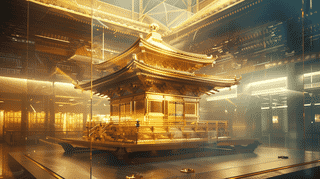
The Golden Hall of Chusonji in Iwate, built in 1124, is lacquered and gilded inside and out, with four Fujiwara coffins beneath its altars. A National Treasure.
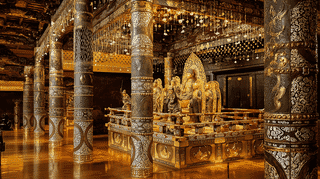
Heian ritual objects in the Golden Hall of Chusonji, Iwate, listed as fourteen items. What is designated is the equipment inside, not the hall itself.

Tucked beside the Mine no Yakushidō at Chūsonji Temple in Hiraizumi, the Ganjōjuin Hōtō is a delicate andesite stone pagoda just 125.7 cm tall. Its cylindrical body carries Sanskrit seed-syllables of the Four Buddhas of the Vajra Realm, embodying the refined late Heian-period stone craftsmanship of the Ōshū Fujiwara golden age. Designated an Important Cultural Property of Japan in 1957.
Discover the National Treasure statues and canopies inside Chūson-ji's Golden Hall in Hiraizumi, Iwate. Explore 33 gilded Buddhist sculptures from the 12th century, learn about the Ōshū Fujiwara legacy, and plan your visit to this UNESCO World Heritage masterpiece.
The Konshi Kinji Issaikyō at Chūsonji Temple in Hiraizumi, Iwate Prefecture, is a National Treasure collection of 2,739 Buddhist sutra scrolls from the Heian period. Commissioned by the Ōshū Fujiwara clan, these luminous scrolls feature sacred texts in gold and silver ink on indigo paper, with exquisite frontispiece paintings unparalleled in Japanese calligraphic history. Discover the history, artistry, and visitor information for this extraordinary treasure at the UNESCO World Heritage site of Hiraizumi.
At Tendai-ji in northern Iwate, this Heian-period Important Cultural Property — about 170 cm tall and carved from a single trunk of katsura wood — stands beside the temple's celebrated Sho-Kannon as a survival of Japan's northernmost ancient Buddhist sculpture.
Enshrined in Senju-do at Kannon-in, a sub-temple of Chuson-ji in Hiraizumi, Iwate Prefecture, this 171.2-centimeter wooden statue of Senju Kannon (the Thousand-Armed Bodhisattva of Compassion) is a celebrated late-Heian masterpiece. Carved in the joined-block technique with lacquer and gold-leaf finish, it features eleven faces above the main head and currently thirty-two arms. Designated an Important Cultural Property in 1929, it embodies the gentle Fujiwara-style aesthetic of the UNESCO World Heritage Site of Hiraizumi.
The Wooden Standing Statue of Tobatsu Bishamonten at Asai-Chifuku Atago Shrine (Fujisato Bishamondo) in Oshu, Iwate is a nationally designated Important Cultural Property. Carved from a single block of Japanese horse chestnut and standing 175 cm tall, it features an extraordinary horizontal round-chisel technique with very few parallels in Japan. It is one of the finest provincial Tobatsu Bishamonten figures of the Heian period preserved in Tohoku.
Housed at Kokuseki-ji Temple in Oshu City, Iwate, this seated statue of Yakushi Nyorai bears an ink inscription dated 862 CE inside its body, making it the oldest dated wooden Buddhist sculpture in Japan and a National Important Cultural Property. Carved from a single block of katsura wood and standing 126 cm tall, the statue features a striking, severe expression and a powerfully sculpted body, serving as a touchstone for the study of early Heian-period sculpture. Discover this rare witness to the meeting of imperial Buddhist culture and the ancient northern frontier.
Discover the Raden Hakkaku Shumidan, a National Treasure octagonal Buddhist altar platform at Chūson-ji Temple in Hiraizumi, Iwate. Created in the late Heian period, this masterpiece features luminous mother-of-pearl inlay, hammered gilt-bronze kalavinka panels, and exquisite lacquerwork — a pinnacle of Ōshū Fujiwara Buddhist art.
The National Treasure Jeweled Pagoda Mandala of the Golden Light Sutra, held by Daichōjuin at Chūsonji Temple in Hiraizumi, Iwate Prefecture, is a set of ten extraordinary Heian-period Buddhist paintings from the 12th century. Created under the patronage of the Ōshū Fujiwara clan, each scroll features a nine-story pagoda formed entirely from sutra text in gold ink on deep indigo paper, surrounded by colorful narrative scenes—the only complete set of its kind in the world.