
Kamakura
Kanagawa · 鎌倉Browse Kanagawa’s cultural heritage from the Kamakura period (1185 – 1333). Filter by type and keyword, with concise stories, maps, and travel tips.
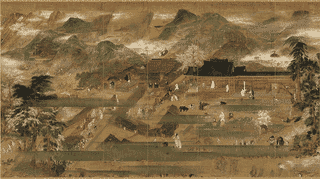
A Kamakura-period handscroll set at Shojokoji in Kanagawa. Its seventh scroll alone is held in Tokyo and recorded there as a wholly separate property.
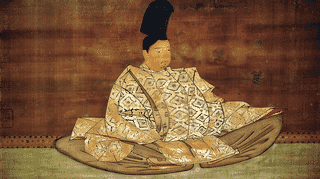
A Kamakura-period portrait at Shomyoji in Yokohama, showing the fourth and last of the four generations among the commanders that are all kept there today.
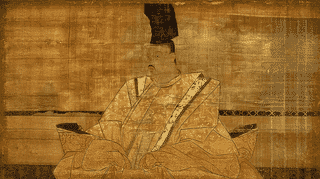
A Kamakura-period portrait at Shomyoji in Yokohama, one of the four scrolls that together span four generations of a single warrior house in Kamakura.
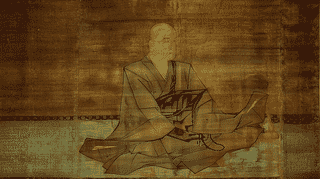
A Kamakura-period portrait at Shomyoji in Yokohama, one of the four scrolls that together span four generations of a single warrior house in Kamakura.
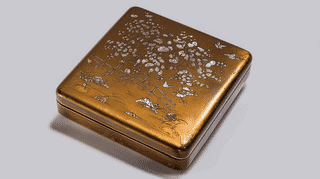
A Kamakura-period inkstone box at Tsurugaoka Hachimangu in Kanagawa. Its own design reaches even a floor that is seen only when the tray is lifted out.
Two Kamakura-period handscrolls at Komyoji in Kanagawa Prefecture. A document dated to the year 1793 is designated alongside them here as an appendage.

Carved in 1308, the Anyo-in Hokyoin-to is Kamakura's oldest dated stone pagoda, an Important Cultural Property whose base records both its patron and its stonemason.
Discover the Main Hall of Egara Tenjin Shrine in Kamakura, an Important Cultural Property dating back to the 14th century. Originally built as part of Tsurugaoka Hachimangu, this remarkable shrine honors Sugawara no Michizane, the deity of learning.
The Kaisantō (Founder's Pagoda) stands in the inner graveyard of Kakuonji Temple in Nikaidō, Kamakura, Kanagawa Prefecture. Raised in 1332 as a memorial for the temple's founder Chikai Shinne (d. 1306), it is a masterpiece of the "Kantō-style" stone hōkyōintō pagoda, with a base inscription precisely dating the work and naming its sculptor, the master stonemason Mitsuhiro. Designated an Important Cultural Property in 1934, the pagoda is a key reference for medieval Japanese stone sculpture, and the ritual objects discovered inside it — including a yellow-glazed Seto-ware jar — are themselves nationally designated. Though the pagoda itself sits in a non-public area, a visit to Kakuonji offers access to fifteen Important Cultural Property statues and one of Kamakura's most atmospheric temple landscapes.
The Daito-to at Kakuonji Temple in Kamakura is a stone hōkyōintō (jewel-casket pagoda) erected in 1332 as a memorial to the temple's second abbot, Daitō Genchi. Designated an Important Cultural Property in 1934, it is one of the largest surviving Kamakura-period stone pagodas. Sacred artifacts discovered inside during a 1965 restoration—including a crystal gorintō and ceramic jars—are separately designated Important Cultural Properties, offering invaluable insights into medieval Japanese funerary customs and craftsmanship.
Held at Kenchoji, this 1271 portrait of Lanxi Daolong is Japan's oldest dated Zen-master portrait. The monk inscribed it himself, and his eyes are ringed in gold.
Explore the silk portrait of Hojo Sanetoki at Shomyo-ji, Yokohama — a rarely-shown National Treasure depicting the Kamakura samurai-scholar who founded Kanazawa Bunko, Japan's oldest samurai library.
Five Kamakura-period silk court robes and lacquered arms, kept together at Tsurugaoka Hachimangu. Complete court dress of that age survives almost nowhere else.
Sacred arms offered to the war god Hachiman at Tsurugaoka Hachimangū: a vermilion bow, arrows, and gold-ground quivers and swords inlaid with mother-of-pearl.
Issued in January 1294 by Hōjō Sadatoki, ninth regent of the Kamakura shogunate, this ink-on-paper edict regulated the conduct of monks at Engaku-ji and other Zen monasteries. Designated an Important Cultural Property, it offers a rare window into the close ties between samurai power and Zen Buddhism in medieval Kamakura.
Preserved at Kenchō-ji in Kamakura, the National Treasure Daikaku Zenji Bokuseki (Hōgo Kisoku) is a pair of hanging scrolls written by Rankei Dōryū, the Chinese Chan master invited from Southern Song to found Japan's first pure Zen monastery in 1253. One scroll admonishes monks to devote themselves to practice; the other lays out the monastery's daily rules in remarkable detail. Executed in a calligraphic style derived from the Southern Song master Zhang Jizhi, the scrolls are both an unparalleled document of Kamakura-era Zen and a work of art.
Preserved at Tsurugaoka Hachimangu Shrine in Kamakura, this National Treasure tachi was forged by Masatsune of the Ko-Aoe school in Bitchu Province during the Kamakura period. Offered to the shrine in 1736 by the eighth Tokugawa shogun, Yoshimune, at the rededication of its halls, the sword is admired for its distinctive chirimen-hada steel and graceful curvature, and is shown with its ornate silk-wrapped mounting in periodic special exhibitions at the Kamakura Museum of National Treasures.
Kōtoku-in's Great Buddha is a bronze Amida cast from 1252, about 11.3 m tall and 121 tonnes. Once housed in a hall, it has stood outdoors for over five centuries.
Discover the Bokuzeisho Volume 23 Fragment, an Important Cultural Property held by Shomyo-ji Temple and preserved at Kanagawa Prefectural Kanazawa Bunko. Explore how this rare divination manuscript reveals the scholarly world of medieval Japanese Buddhist learning.
A National Treasure bell cast in 1255 for Kamakura's Kencho-ji. Its inscription names patron Hojo Tokiyori, abbot Rankei Doryu, and founder Mononobe Shigemitsu.