
Intangible Folk Cultural Properties Requiring Documentation of Kyoto
京 都 府 の 記 録 作 成 等 の 措 置 を 講 ず べ き 無 形 の 民 俗 文 化 財Kyoto · Intangible Folk Cultural Properties Requiring Documentation
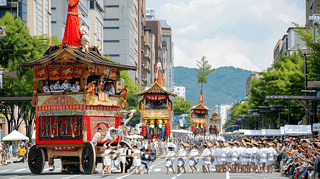
A festival at Yasaka Shrine in Kyoto, selected in 1959 as an intangible folk property whose record should be made and kept for the future. Not designated.

Saeki Tōrō is an Important Intangible Folk Cultural Property held annually on August 14 in Kameoka City, Kyoto Prefecture. This joint festival of four shrines combines Obon ancestral rites with harvest prayers, featuring elaborately crafted agricultural lanterns and a rare solo-operator puppet theater that preserves performing arts traditions predating Bunraku.
At Seiryoji temple in Kyoto, this masked folk drama is performed without words, enacted by local townspeople to gong, drum, and flute in a centuries-old tradition.
On the western shore of Wakasa Bay, Tango carried a rare mix of fishing traditions: set-net yellowtail, organized whaling, and the seaweed divers of Sodeshi village.
Yasurai-bana is a folk ritual in northern Kyoto where crimson-robed oni dancers strike gongs and drums to calm plague spirits said to scatter with spring blossoms.
Designated in 1983 and transmitted in fifteen Kyoto districts, Rokusai Nenbutsu is a folk dance ranging from Buddhist chant to acrobatic lion dances at Obon.
More from Kyoto
Kyoto’s registered properties across designations, with featured heritage and travel notes.
The complete kokuhō catalogue — browse by prefecture, period, and category.
Nationwide jūyō bunkazai — architecture, sculpture, painting, crafts, and documents.