
Important Cultural Property of Kyoto
京 都 府 の 重 要 文 化 財Kyoto’s Important Cultural Properties — designated for their value to the nation’s cultural history.
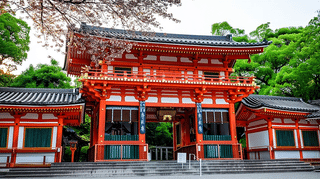
A shrine in Gion, Kyoto, where twenty-nine structures were designated together in December 2020, from its gates and fences to its subsidiary shrine halls.
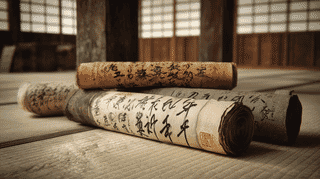
An autograph record at the Yomei Bunko in Kyoto Prefecture. The body of it copies out those very court documents that were designated alongside them all.
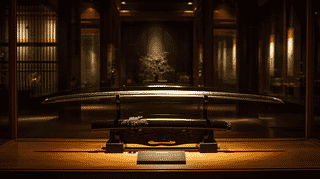
A Muromachi-period tachi at Kitano Tenmangu in Kyoto. Its title copies out the blade's own inscription, which can be read only as far as the year itself.
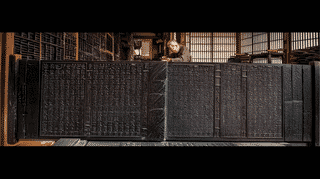
48,275 Edo-period printing blocks at Hozoin in Kyoto, counted to the single block. The scriptures printed from them are recorded apart from these ones.

Old documents at Yasaka Shrine in Kyoto Prefecture. The title counts 2,205 separate pieces, while the quantity field counts the scrolls that hold them.
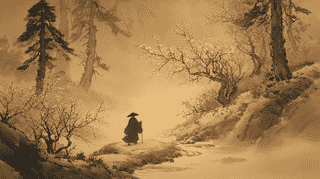
Six Edo-period handscrolls owned by the state and kept in Kyoto. Picture and text alike are attributed quite separately in the official record itself.

An Important Cultural Property preserved in Kyoto, this silk-mounted hanging scroll portrays Bai Juyi (Hakurakuten), the Tang dynasty Chinese poet whose verse most profoundly shaped Heian-period Japanese literature. Famous for the Song of Everlasting Sorrow and the Song of the Pipa, Bai Juyi inspired masterpieces such as The Tale of Genji and The Pillow Book. The painting embodies refined silk-painting craftsmanship and the deep cultural dialogue between East Asian civilizations, complemented by the Kyoto National Museum and the Gion Festival's Hakurakuten-yama float.
Discover the Hōrōkaku Mandala (Color on Silk), a rare esoteric Buddhist painting linked to Kyoto's Shingon tradition. Explore its symbolism, the Pavilion of Treasures, and how to experience this spiritual heritage.
The Koogimi-shu copies a Heian poet's verse in a Kamakura hand. Named an Important Cultural Property in 1939, it is now missing. Where her calligraphy survives.
Discover Kano Sansetsu's Snowy Shore with Waterfowl, an Important Cultural Property of Japan held on deposit at the Kyoto National Museum. This pair of six-panel folding screens by the second-generation head of the Kyo Kano school depicts a moonlit winter coast where silver-leaf waves and countless waterfowl create one of the most haunting visions of early Edo painting.
Held in a private Kyoto collection, this Important Cultural Property is a fragment from the early thirteenth-century Satake Version of the Thirty-Six Immortal Poets handscrolls. The hanging scroll depicts the Heian-period priest-poet Sosei Hōshi in the realistic nise-e style, with painting traditionally attributed to Fujiwara no Nobuzane and calligraphy to Gokyōgoku Yoshitsune. Famous for the 1919 division of the original scrolls, this fragment stands as a landmark of Kamakura court portraiture.
Discover the Cloud Dragon Ink Painting (Unryūzu) by Edo-period master Maruyama Ōkyo, an Important Cultural Property of Japan. Learn about its powerful sumi-ink technique and how to view it at the Kyoto National Museum.
Discover the National Treasure "Prayer Text of Kujō Michiie by Jien," a 1221 ink manuscript revealing the political hopes and masterful calligraphy of one of Japan's greatest medieval monks, written just months before the Jōkyū War.
A personal letter handwritten in ink on paper by Emperor Go-Kōgon, the fourth sovereign of the Northern Court during Japan's Nanboku-chō period (14th century). Designated as an Important Cultural Property, this hanging scroll reveals the refined calligraphic skill of an emperor who ascended the throne without the Sacred Treasures, offering a rare and intimate glimpse into medieval Japanese court culture. Housed at the National Museum of Japanese History in Sakura City, Chiba Prefecture.
Discover the cultural significance of the ink-on-paper imperial letter (shinkan) by Emperor Go-Kōgon, a designated cultural property from the turbulent Nanbokuchō period, preserved in Kyoto Prefecture.
The 'Letter by Konoe Kanesune, Dated the 24th Day' is a rare autograph letter by one of the most powerful nobles of 13th-century Japan. Designated as an Important Cultural Property, this ink-on-paper correspondence offers a direct connection to the refined calligraphic traditions and daily life of the Kamakura-period imperial court. Discover the historical significance and cultural context of this remarkable document preserved among the treasures of the Yōmei Bunko archives in Kyoto.
An authenticated handwritten letter by Emperor Go-Fukakusa (1243–1304), dated 1298, featuring his powerful brushwork and personal cipher. Designated as an Important Cultural Property, this document offers rare insight into Kamakura-period court politics and imperial calligraphy. Deposited at the Kyoto National Museum.
Discover the National Treasure imperial letter (shinkan) written by Emperor Go-Yōzei to Shōren-in Temple in Kyoto. Learn about its historical significance, exquisite calligraphy, and the dramatic events of 1596 Japan.
Discover the Persian Manuscript in Japan, a remarkable 13th-century document brought from Song-dynasty Quanzhou by the monk Keisei. This Important Cultural Property contains Persian poetry and reveals the vibrant maritime Silk Road connections between medieval Japan, China, and Persia.
The Suhama-u Raden Suzuribako is a Heian-period writing box designated as an Important Cultural Property of Japan. Adorned with mother-of-pearl inlay depicting cormorants on a sandbar motif, this exquisite lacquerwork masterpiece showcases the extraordinary craftsmanship and refined aesthetic of Heian-era artisans. Discover the beauty of this rare treasure held in a private collection in Kyoto Prefecture, and explore the world of classical Japanese lacquer arts.
More from Kyoto
Kyoto’s registered properties across designations, with featured heritage and travel notes.
The complete kokuhō catalogue — browse by prefecture, period, and category.
Nationwide jūyō bunkazai — architecture, sculpture, painting, crafts, and documents.