
Historic Sites, Places of Scenic Beauty, and Natural Monuments of Nagano
長 野 県 の 史 跡 名 勝 天 然 記 念 物Nagano · Historic Sites, Places of Scenic Beauty, and Natural Monuments
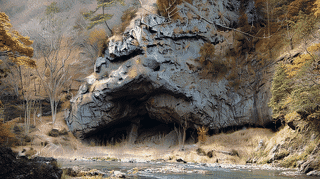
Discover Tobayama Cave, a National Historic Site in Ueda City, Nagano Prefecture. This remarkable archaeological site preserves rare "bakusō" exposure burial practices from the 5th century Kofun period, offering insights into ancient seafaring cultures that migrated to inland Japan. Explore the cave, learn about its mysterious artifacts, and plan your visit to this hidden treasure near Kakeyu Onsen.
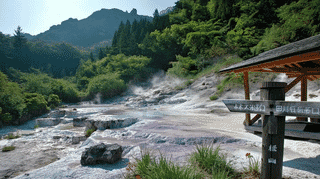
Discover the remarkable Colloidal Silica and Siliceous Sinter at Nakabusa Onsen—a rare National Natural Monument in the Japanese Alps where ancient thermophilic bacteria create mineral formations in real-time. Complete visitor guide with access, hot spring info, and surrounding attractions.

The Aku Site in Hara Village, Nagano, is a 7,000-year-old Early Jomon settlement and ceremonial complex featuring Japan's oldest known annular stone arrangement and a central standing stone aligned with sacred Mt. Tateshina. Preserved beneath the Chuo Expressway, its remarkable artifacts can be viewed at the nearby Yatsugatake Museum of Art.
Mato-iwa, the "Target Rock" of Mount Azumaya, is a National Natural Monument straddling the Nagano-Gunma border at an elevation of around 1,770 meters. This spectacular andesite dike extends roughly 400 meters along the ridge, with its most prominent screen-shaped section reaching up to 15 meters in height. Its remarkable hexagonal columnar jointing and the natural window at its center, said to mark where the medieval warlord Minamoto no Yoritomo's arrow pierced the stone, draw geology enthusiasts and history lovers alike. Reached by a 30–40 minute walk from the Torii Pass trailhead within Joshin'etsu-Kogen National Park, it offers a rare encounter with both volcanic geology and samurai-era legend.
Set in the wooded hills of Matsushiro in Nagano City, the Omuro Kofun Group is a National Historic Site of more than 500 burial mounds built between the 5th and 8th centuries. It is Japan's largest concentration of stone-piled tumuli (tsumiishizuka) and rare 'joined-hands' stone chambers, offering a striking window onto early cross-sea exchange with the Korean Peninsula.
Discover Ono no Shidareguri Jiseichi in Tatsuno Town, Nagano—Japan's largest natural grove of mutant weeping chestnut trees. Designated a National Natural Monument in 1920, this 3.4-hectare hillside hosts around 800 gnarled, umbrella-shaped chestnut trees once feared by villagers as the dwelling of tengu mountain spirits.
The Gonga Kanga Site in Iida holds the buried offices and storehouses of the ancient Ina district government, in use from the late 7th to early 10th century.
A National Natural Monument in Nagano's Shiga Kogen, where Genji fireflies live at 1,580–1,620 m—Japan's highest altitude for the species, fed by hot-spring warmth.
Seven Takashima Domain lords lie beneath 3-meter stone markers above Lake Suwa, the founder in a vermilion mausoleum nearby. National Historic Site, 2017.
Takato Castle Ruins in Ina, Nagano keeps the dry moats and ramparts of a Sengoku-era Takeda fortress, a rare surviving domain school, and 1,500 famed cherry trees.
In Neba, Nagano, the Great Cedar of Tsukize is Nagano's largest tree, about 13.8 m around and some 1,800 years old, a Natural Monument twice saved by its village.
Komoro's Tera-no-ura Stone Age Dwelling Site, a Late Jomon settlement excavated in 1930 below Mount Asama, was designated a National Historic Site in 1933.
More from Nagano
Nagano’s registered properties across designations, with featured heritage and travel notes.
The complete kokuhō catalogue — browse by prefecture, period, and category.
Nationwide jūyō bunkazai — architecture, sculpture, painting, crafts, and documents.