
Edo
Nagasaki · 江戸Browse Nagasaki’s cultural heritage from the Edo period (1603 – 1868). Filter by type and keyword, with concise stories, maps, and travel tips.
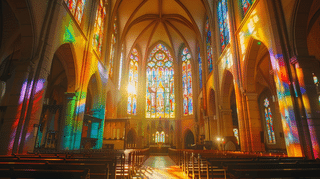
Discover Oura Cathedral, Japan's oldest existing Catholic church and National Treasure. Learn about the miraculous "Discovery of Hidden Christians" in 1865 and explore this Gothic-style UNESCO World Heritage site overlooking Nagasaki harbor.
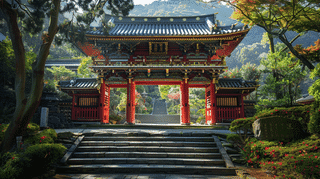
Discover the architectural marvel of Sofukuji Temple's First Peak Gate (Daiippomon), a National Treasure featuring unique Chinese craftsmanship from 1695. Experience the fusion of Ming Dynasty architecture and Japanese culture in historic Nagasaki.
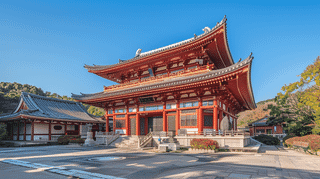
Discover the Daiyu Hoden Main Hall of Sofukuji Temple, a 1646 National Treasure showcasing authentic Chinese Ming Dynasty architecture. Experience Nagasaki's unique cultural heritage where East meets East.

Discover the Essel Telegraaf, the only surviving domestically-made telegraph from Japan's Edo period. Housed at Isahaya Museum of Art & History in Nagasaki Prefecture, this Important Cultural Property reveals how late-Edo innovators adapted Dutch technology.
Discover the Main Hall of Kiyomizu-dera in Nagasaki, an Important Cultural Property blending Japanese Shingon Buddhist tradition with Chinese Ōbaku architectural styles, built in 1668 by a Chinese merchant family.
Saiwai Bridge (also known as the Dutch Bridge) spans the Kagami River in Hirado, Nagasaki Prefecture. Built in 1702 using stone arch techniques derived from the Dutch Trading Post, this Important Cultural Property stands as a testament to the East-West cultural exchange during Hirado's era as Japan's international trading port.
A gabled, tile-roofed late-Edo farmhouse in Tsutsu on southern Tsushima, designated an Important Cultural Property in 1969 for its regional plan and frame.
An Important Cultural Property of 1731 at Nagasaki's Sōfukuji, where Kannon, the deified general Guan Yu, and the guardian Idaten share one Ōbaku-style hall.
Sōfukuji's vermilion outer gate in Nagasaki, rebuilt in 1849 by Japanese carpenters. The Dragon Palace Gate is the temple's most Chinese-looking building.
Built in 1728 at Nagasaki's Sofukuji temple, this two-story tower holds both a bell and a drum. Its frame is Chinese carpentry; its roof follows Japanese design.
Built in 1666, the Maso Gate of Sōfukuji temple in Nagasaki leads to the hall of Maso, the Chinese sea goddess once enshrined there by visiting trading ships.
The Former Honda Family Residence in Nakazato-machi, Nagasaki City, is a mid-Edo period thatched farmhouse designated as a nationally Important Cultural Property — the oldest surviving residential structure in Nagasaki Prefecture. Featuring a traditional three-room floor plan, scissor-truss roof structure, and the distinctive locally-named momozuki thatching style, it offers a rare glimpse into rural Japanese life over 250 years ago. Free admission, open year-round.