
Meiji
Oita · 明治Browse Oita’s cultural heritage from the Meiji period (1868 – 1912). Filter by type and keyword, with concise stories, maps, and travel tips.
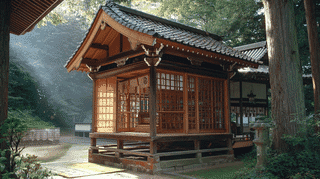
A very small Meiji-period timber shrine building in Bungo-Takada, Oita Prefecture, Japan. It is registered there rather than being designated even now.
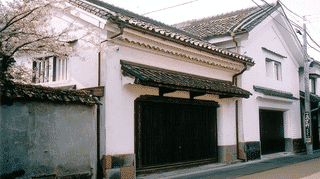
Explore the Yoshikawa Family Residence Storehouse (Yoshikawa-ke Jutaku Dozo), a Registered Tangible Cultural Property from 1878 in Taketa City, Oita Prefecture. This beautifully preserved earthen storehouse reveals the authentic atmosphere of a historic sake brewery in Japan's castle town.

Discover the Kajiwara Family Residence Storehouse, a nationally Registered Tangible Cultural Property built around 1907 in the historic castle town of Hiji, Oita Prefecture. Explore its Meiji-era dozo architecture, the merchant heritage of Beppu Bay, and nearby attractions.
An 1877 machiya on Usuki's Hatcho Oji arcade, with four latticed windows in white plaster and an earth-floored shop below. Kagiya has brewed here since 1600.
Built in 1894 at the Nishinoseki brewery in Kunisaki, Oita, the Kayashima Shuzo Kyu-Muromae cooled freshly made koji. Registered in 1998, it is the oldest here.
Discover the Former Arinaga Residence Annex in Kunisaki, Oita Prefecture—a Meiji-era wooden building registered as a national tangible cultural property. Explore its elegant architecture, Rokugo Manzan Buddhist heritage, and the story of Petro Kasui Kibe nearby.
Jodoji Dai-Benzaiten Sekigu is a 2.3-square-metre stone shrine of 1911 at Jodo-ji, Oita City, carved from local tuff with brackets, rafters and a gable pendant.
The main hall of the Higashi Betsuin in Usa, rebuilt in 1880 after fire. One of Kyushu's largest Shin Buddhist halls, with a broad plan and a decorated inner sanctuary.
First lit in 1901, Sekizaki Lighthouse is Oita Prefecture's oldest lighthouse and one of only four all-iron lighthouses still active in Japan. Registered as a national Tangible Cultural Property in 2022, it stands at the tip of the Saganoseki Peninsula overlooking the Hoyo Strait, surrounded by 800 wild camellia trees.
Built in 1872 by local carpenter Higashi Hidezo, this small Usuki townhouse carries deep eaves on projecting brackets above latticed windows. A private home.
The Bungo Channel Maritime Museum in Saiki City, Oita Prefecture, is a Western-style brick building constructed in 1904 as a rest house for the keepers of the Mizunokojima Lighthouse. Designated as a Registered Tangible Cultural Property, this Meiji-era structure now houses fascinating exhibits including a Fresnel lens formerly used in the lighthouse and a unique collection of migratory bird specimens, preserving the maritime heritage of the Bungo Channel.
A 172-meter stone perimeter wall built in 1904 on the Tsurumi Peninsula in Saiki City, Oita Prefecture. Originally enclosing the rest house compound of lighthouse keepers who maintained the Mizunokojima Lighthouse in the Bungo Strait, the wall features distinctive concrete cap stones and has been a Registered Tangible Cultural Property since 1998. The adjacent Maritime Museum displays the lighthouse's Fresnel lens and exhibits on the lives of the keepers.
Myojuji Hondo in Bungotakada, Oita, was built around 1902 to drawings by Sasaki Iwajiro, an Imperial Household Artist, and was registered nationally in 2018.