
Meiji
Okinawa · 明治Browse Okinawa’s cultural heritage from the Meiji period (1868 – 1912). Filter by type and keyword, with concise stories, maps, and travel tips.
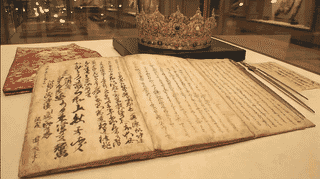
The Sho family's material at the Naha City Museum of History, 1,292 items. Other archives burned or were destroyed; what had been kept in Tokyo survived.

Moved from Izena Island, this late-Meiji house keeps the rare separated-building (bunmunē) form, its kitchen a wing of its own. Now an indigo studio.
One of Okinawa World's largest relocated houses, this late-Meiji home survived the 1945 battle, shell scars on its pillars. Now a bingata workshop.
Built at Shuri from timber of a demolished Naha mansion, this late-Meiji house has an unusual plan with no back rooms. Now a papermaking studio.
A fūru is an old Okinawan privy-and-pigsty. Built of cut Ryukyu limestone, this rare survivor records a rural custom that local hygiene law ended around 1917.
A coral-limestone wall built in 1909 rings the Kamiyama Residence on Kuroshima, running 87.4 meters of dry-laid stone shaped with care at its gate and corners.
A dug well from 1909 at the southwest corner of the Kamiyama Residence on Kuroshima runs about 4.2 meters deep, with a curb cut from local coral limestone.
Built in 1902 and moved to a Nago high school campus in 1965, this 9.4 sq m porch with a curved karahafu gable and Ryukyuan red tiles is a rare Meiji survivor.
Discover the Tōgē Family Residence Ichitarai on Yonaguni, Japan's westernmost inhabited island. This Registered Tangible Cultural Property preserves the traditional water-management heritage of Yaeyama domestic architecture.