— Prefecture · Wakayama · 和 歌 山 県 —

Registered Tangible Cultural Properties of Wakayama
和 歌 山 県 の 登 録 有 形 文 化 財

Wakayama · Registered Tangible Cultural Properties

386 total Wakayama
Showing 1 – 20 of 386
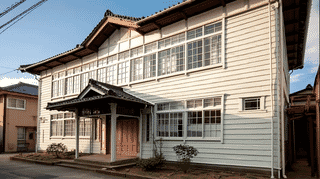
Former Hane Gakuen Kumano High School of Accounting
Wakayama 昭和前 Registered Tangible Cultural Properties
Former Hane Gakuen Kumano High School of Accounting

Discover the Former Hane Gakuen Kumano Higher Commercial School Building, a newly registered tangible cultural property in Shingu City, Wakayama. This 1937 Western-style school features a unique abacus-decorated entrance, representing Japan's pre-war commercial education heritage.

Izumi Family Residence Tatami Room
Wakayama 明治 Registered Tangible Cultural Properties
Izumi Family Residence Tatami Room

The Izumi Family Residence Zashiki in Hirogawa Town, Wakayama Prefecture, is a Nationally Registered Tangible Cultural Property completed in 1904. Built by the eighth-generation head of the Izumi maritime merchant family, this elegant guest hall features exceptional craftsmanship and high-quality materials, with its white plastered gable walls contributing to the historic Hiro district townscape. It is a constituent cultural property of the Japan Heritage site 'Hyakusei no Ando.'

Ikanya House Line Perfume Car Shed
Wakayama 大正 Registered Tangible Cultural Properties
Ikanya House Line Perfume Car Shed

Discover the Itani Family Residence Incense Waterwheel Shed in Susami, Wakayama Prefecture—a National Registered Tangible Cultural Property preserving the vanishing tradition of waterwheel-powered incense production in Japan's Kii Peninsula.

Ueda Family Main Building
Wakayama 昭和前 Registered Tangible Cultural Properties
Ueda Family Main Building

The Ueda family's main house, built around 1929 on the Kinokawa's south bank in Hashimoto, Wakayama, pairs a traditional hipped roof with a quietly modernised plan.

Ueda Family Rice Storehouse and Middle Storehouse
Wakayama 江戸 Registered Tangible Cultural Properties
Ueda Family Rice Storehouse and Middle Storehouse

On the river side of the Ueda estate in Hashimoto, Wakayama, two joined late-Edo earthen storehouses survive as the oldest buildings on this former headman's grounds.

Ueda Family Residence Detached Room
Wakayama 明治 Registered Tangible Cultural Properties
Ueda Family Residence Detached Room

At the western edge of the Ueda estate in Hashimoto, Wakayama, this late-Meiji detached parlour holds three eight-mat guest rooms, raised on walls of Kishu blue stone.

Kii Fudoki No Oka Matsushita Memorial Museum
Wakayama 昭和後 Registered Tangible Cultural Properties
Kii Fudoki No Oka Matsushita Memorial Museum

Completed in 1971 as the centerpiece of Kii Fudoki no Oka archaeological park in Wakayama City, the Matsushita Memorial Museum was funded by Panasonic founder Konosuke Matsushita and designed by architect Shizutaro Urabe. This modernist concrete building features walls clad in local Kishu blue stone and window grilles inspired by ancient dotaku bronze bells, earning its designation as a nationally Registered Tangible Cultural Property in 2022. Set among approximately 500 ancient burial mounds of the Iwase Senzuka Kofun Cluster, a designated Special Historic Site, the museum offers visitors a unique journey through Wakayama's millennia of history.

Former Katsuragi Hall
Wakayama 明治 Registered Tangible Cultural Properties
Former Katsuragi Hall

Discover the Former Katsuragi-kan (Kyū Katsuragi-kan), a striking three-story wooden inn built in the late Meiji period at JR Kōyaguchi Station in Wakayama Prefecture. Now a Registered Tangible Cultural Property and charming café, this architectural gem blends temple-style roofing with full-glass façades.

Former Kamiakitsu Elementary School Building (Akitsuno
Wakayama 昭和中 Registered Tangible Cultural Properties
Former Kamiakitsu Elementary School Building (Akitsuno

Built in 1953 in Tanabe City, Wakayama Prefecture, this wooden schoolhouse features advanced fire-prevention design including reinforced concrete walls and a hillside evacuation route, earning its status as a National Registered Tangible Cultural Property. Now reborn as Akizuno Garten through community initiative, it offers a farmers' restaurant, hands-on workshops, accommodation, and serves as a gateway to the Kumano Kodo pilgrimage trails.

Former Kanda Family Villa (Inamuratei)
Wakayama 明治 Registered Tangible Cultural Properties
Former Kanda Family Villa (Inamuratei)

The Former Kanda Family Villa (Toson-tei) in Kushimoto, Wakayama Prefecture, is a Registered Tangible Cultural Property built in 1874. Constructed from a massive cedar log that drifted ashore — a gift of gratitude from a fisherman saved during a famine — this heritage building now operates as part of NIPPONIA HOTEL Kushimoto Kumano Kaido, offering guests an immersive stay within living history.

Former JNR Kisei Line Kii-Yuasa Station Bookstore
Wakayama 昭和前 Registered Tangible Cultural Properties
Former JNR Kisei Line Kii-Yuasa Station Bookstore

Discover the former Kii-Yuasa Station building, a Registered Tangible Cultural Property built in 1927 along the Kisei West Line. Now a dining venue in Yuasa, Wakayama — the birthplace of Japanese soy sauce.

Former Chapman House
Wakayama 大正 Registered Tangible Cultural Properties
Former Chapman House

Standing in the Tankaku district of Shingu City, Wakayama, the Former Chapman House Main Building is a two-story wooden Western-style residence completed in 1926. It was designed by Shingu native Nishimura Isaku for the American Presbyterian missionary E.N. Chapman, embodying the architect's pioneering 'living-room-centered' home philosophy. Registered as a national Tangible Cultural Property in 2020, it is now freely open to visitors and pairs beautifully with nearby Kumano Hayatama Taisha and the Shingu Castle Ruins.

Former Hashimoto Honjin Ikenaga Family Residence Main
Wakayama 江戸 Registered Tangible Cultural Properties
Former Hashimoto Honjin Ikenaga Family Residence Main

Discover the Former Hashimoto Honjin Ikenaga Family Residence, a nationally registered tangible cultural property in Hashimoto, Wakayama. This early 18th-century machiya once served as an official inn for feudal lords on the road to Koya-san.

Former Hashimoto Honjin Ikenaga Family Residence Storehouse
Wakayama 江戸 Registered Tangible Cultural Properties
Former Hashimoto Honjin Ikenaga Family Residence Storehouse

Discover the historic storehouse of the Former Hashimoto Honjin Ikenaga Family Residence, a Registered Tangible Cultural Property in Hashimoto City, Wakayama. This late Edo-period dozo preserves the heritage of a post town that thrived at the crossroads of the Ise Highway and the Koya pilgrimage route.

Former Hashimoto Honjin Ikenaga Family Residence, Detached
Wakayama 江戸 Registered Tangible Cultural Properties
Former Hashimoto Honjin Ikenaga Family Residence, Detached

The detached drawing room of the former Hashimoto Honjin Ikenaga Residence in Hashimoto City, Wakayama Prefecture, is a nationally registered tangible cultural property built around 1803. Once a guest room where Kishū Domain lord Tokugawa Shigenori stayed, this Edo-period honjin overlooks the Kinokawa River and preserves the heritage of a historic post town on the gateway to Mount Kōya.

Back Gate of the Former Matsui Family Villa (Ganko
Wakayama 大正 Registered Tangible Cultural Properties
Back Gate of the Former Matsui Family Villa (Ganko

A reinforced-concrete gate on the estate's southern edge, west of the bath building, where two piers carry a segmental arch and keystone in pared-down Western style.

Former Matsui Family Villa (Ganko Rokusanen) Front Gate
Wakayama 大正 Registered Tangible Cultural Properties
Former Matsui Family Villa (Ganko Rokusanen) Front Gate

The estate's main entrance, a nagaya-mon of 1925, sets a room in its north bays against a tiled passage in the south, fronted by a long approach with a stone lion.

Former Matsui Family Villa (Ganko Rokusanen) North
Wakayama 大正 Registered Tangible Cultural Properties
Former Matsui Family Villa (Ganko Rokusanen) North

A two-story earthen storehouse in the northwest corner, pairing plastered walls with a Western king-post truss and lane-side boarding. Now used as a dining room.

Water Tower at the Former Matsui Family Villa (Ganko
Wakayama 大正 Registered Tangible Cultural Properties
Water Tower at the Former Matsui Family Villa (Ganko

A brick, two-story water tower north of the main house, with sash windows, a cornice and white tile banding, its modern utility shown openly among timber buildings.

Former Matsui Family Villa (Ganko Rokusanen) Main Building
Wakayama 大正 Registered Tangible Cultural Properties
Former Matsui Family Villa (Ganko Rokusanen) Main Building

Built in 1920 by speculator Matsui Isuke, this timber main house links three blocks around its garden, known for a Yakusugi-cedar ceiling. Now a restaurant.
