
Muromachi
Yamaguchi · 室町Browse Yamaguchi’s cultural heritage from the Muromachi period (1336 – 1573). Filter by type and keyword, with concise stories, maps, and travel tips.
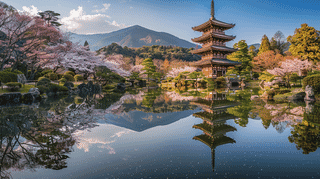
The pagoda at Rurikoji in Yamaguchi dates from about 1442. Slender above the third tier, it holds a circular altar platform found in no other pagoda in Japan.
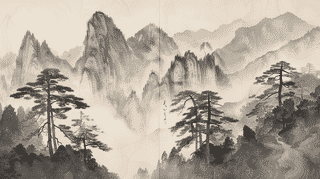
A handscroll by Sesshu in Yamaguchi Prefecture. A scroll held in Kyoto calls this one the long landscape scroll and calls itself the shorter of the two.

A silk sea pass issued in 1581 by Murakami Takeyoshi, with letters tracing the Noshima Murakami's path to Mori vassalage. Important Cultural Property, 2015.
Ima Hachiman Shrine Worship Hall in Yamaguchi joins gate and main hall on one axis, an early form of gongen-zukuri. A late Muromachi building designated in 1907.
Ima Hachiman Shrine Main Hall in Yamaguchi, said to be rebuilt in 1503, is a nagare-zukuri sanctuary with rare carvings of sun, moon and fish; designated in 1907.
Ima Hachiman Shrine Tower Gate in Yamaguchi has floored wings that make it a worship hall, a type copied across the region; designated 1907, Ouchi crests on top.
On the wooded summit of Mount Iwaki in Yamaguchi, this Shinto hall dates to 1469. Its hip-and-gable front, gable rear, and carved struts show late Muromachi craft.
The 1539 worship hall of Sumiyoshi Shrine in Shimonoseki, said to be a gift of Mori Motonari: a three-by-one-bay, gable-fronted hall roofed in cypress bark.
Ouchi Hiroyo's 1370 main hall at Sumiyoshi Shrine, Shimonoseki: five one-bay sanctuaries linked into a nine-bay nagare-style hall with five gables on its roof.