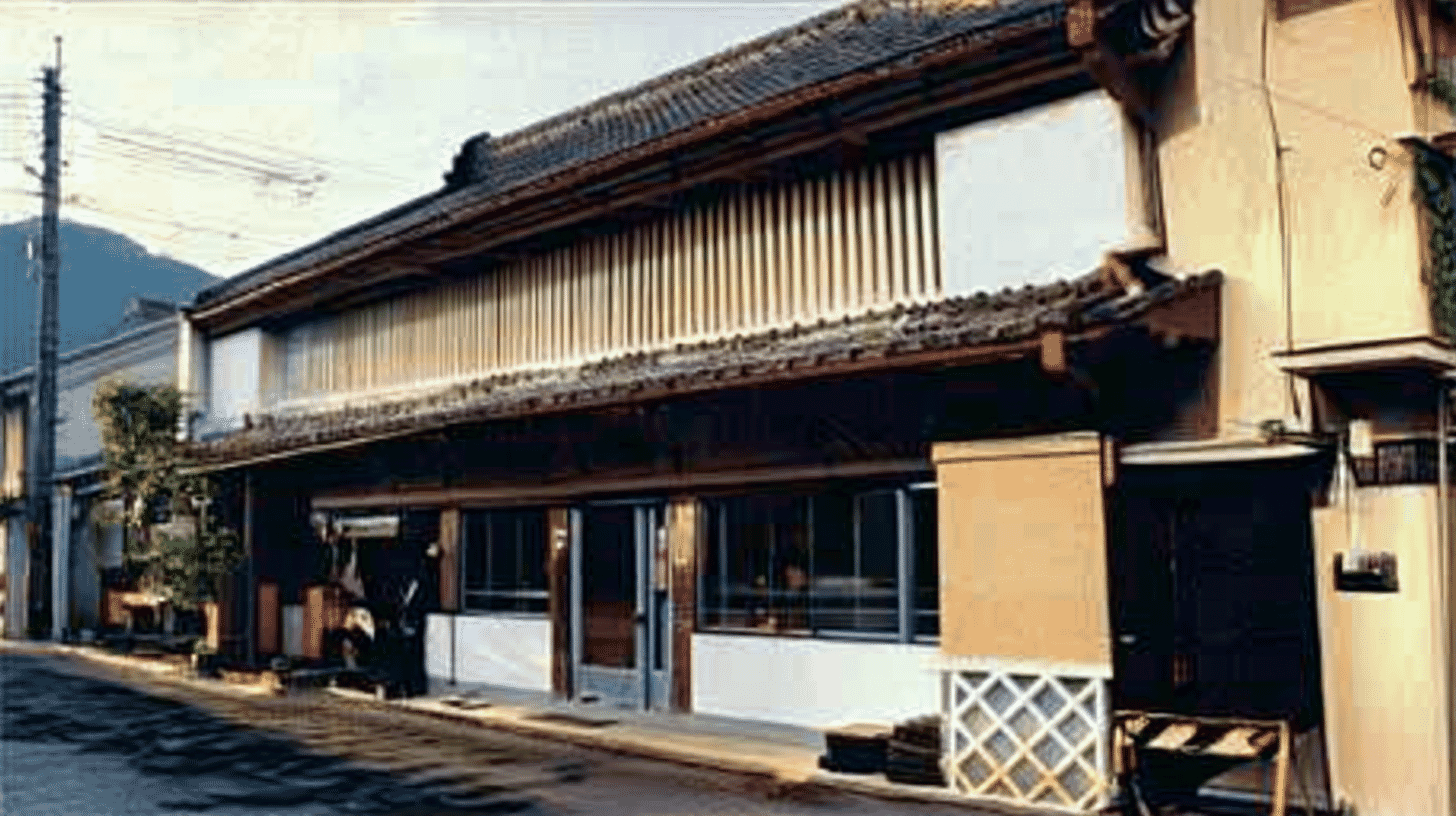
Obaraya Harada Shoten Misegura: A Salt Merchant's Warehouse from Japan's Edo River Trade Era in Yamanashi

Discover Obaraya Harada Shoten Misegura, a Registered Tangible Cultural Property in Fujikawa Town, Yamanashi. This 1856 merchant warehouse tells the story of the Fuji River boat transport and salt trade that connected inland Japan to the sea during the Edo period.

Obaraya Harada Shoten Misegura: Where Salt, Rivers, and History Converge

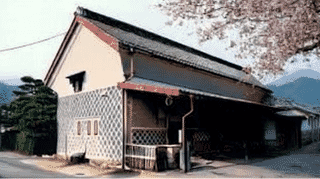
Nestled in the quiet streets of Kajikazawa in Fujikawa Town, Yamanashi Prefecture, stands a weathered two-story warehouse that once played a vital role in one of Japan's most fascinating commercial networks. The Obaraya Harada Shoten Misegura (小原屋原田商店店蔵) is not merely an old building—it is a tangible connection to the era when the Fuji River served as the lifeline of trade between the mountains of Kai Province (modern Yamanashi) and the Pacific coast.

Obaraya Harada Shoten Misegura - Traditional merchant warehouse with white earthen walls

The Story of Fuji River Boat Transport

To understand the significance of Obaraya Harada Shoten, one must first appreciate the remarkable history of Fuji River boat transport (富士川舟運). In 1607, under orders from Tokugawa Ieyasu, the legendary Kyoto merchant Suminokura Ryōi opened a navigable route along the Fuji River, connecting the inland region to the port of Iwabuchi in Suruga (present-day Fuji City, Shizuoka).

Kajikazawa, situated at the confluence of major overland routes—the Shinshu Kaido leading to Nagano and the Sunshu Kaido heading toward Shizuoka—became the most important river port in the region. From here, high-prow takase boats could reach the sea in just half a day, traveling approximately 72 kilometers downstream.

The commerce that flowed through Kajikazawa was characterized by an evocative phrase: "sage-gome, age-shio" (下げ米、上げ塩)—"rice going down, salt coming up." Tribute rice from Kai and Shinano provinces was shipped downstream to Edo, while essential goods like salt and seafood were laboriously hauled upstream by teams of boatmen.

The Obaraya Legacy: Merchants of Salt

The Obaraya Harada Shoten was established in 1846 (Kōka 3) as a salt brokerage house. For generations, the Harada family served as intermediaries in the salt trade, receiving shipments that had traveled up the Fuji River from the sea and distributing them throughout the Kōshū region and beyond.

The salt handled at Kajikazawa became so renowned that in the distant town of Takatō in Nagano Prefecture, people referred to salt simply as "Kajikazawa." This linguistic tribute speaks to the profound connection between this small river town and the essential commodity that preserved food and sustained life in Japan's mountainous interior.

Salt arrived in special straw bales called kikyō-dawara and was stored in dedicated warehouses with ingenious bamboo flooring designed to drain excess moisture. From Kajikazawa, the salt was repacked and transported by pack horse along the mountain trails of the "Salt Road" (塩の道).

Architectural Features and Cultural Value

The Misegura (店蔵), or "store warehouse," that survives today was constructed around 1856 (Ansei 3), during the turbulent final years of the Tokugawa shogunate. Built in the traditional dozo-zukuri (土蔵造) style with thick earthen walls designed to resist fire and protect valuable goods, the building exemplifies the architectural wisdom of Edo-period merchants.

The structure features several notable characteristics. The ground floor originally served as the shop front, where customers would conduct business. The second floor, accessed from within, was used as living quarters and features elegant fine-lattice windows (細格子窓) along the front facade—a hallmark of traditional merchant architecture that allowed ventilation while maintaining privacy and security.

Originally facing the main street of Kajikazawa, the building was carefully relocated in 1960 (Shōwa 35) when the road was widened. This hikiya (曳き屋) process—moving an entire building intact—preserved both the structure and its historical integrity.

Traditional lattice windows (mushiko-mado) on the second floor of the merchant warehouse

Why Was It Designated a Cultural Property?

The Obaraya Harada Shoten Misegura was registered as a Tangible Cultural Property (登録有形文化財) on June 7, 1999, recognized for its contribution to Japan's historical landscape. The registration criteria specifically cite its role in preserving the visual and cultural heritage of the nation.

The building is significant for several reasons. It represents one of the few surviving physical testimonies to the prosperity of Fuji River boat transport. Its traditional construction methods and design elements provide valuable insight into Edo-period commercial architecture. Additionally, the warehouse maintains its connection to the salt trade that once made Kajikazawa second only to Kōfu in commercial importance within Kai Province.

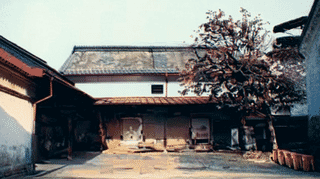
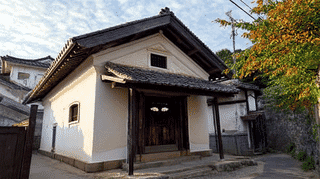
The Obaraya complex originally included several other structures: a bunko-gura (文庫蔵) for storing documents and valuables, a shio-gura (塩蔵) specifically for salt storage, and an abura-gura (油蔵) for oil—reflecting the diversification of the family business into kerosene sales during the Meiji period.

Highlights and Points of Interest

When visiting the Obaraya Harada Shoten Misegura, take time to observe the craftsmanship evident in its construction. The thick earthen walls, designed to maintain stable temperatures and protect against fire, showcase traditional building techniques that have withstood over 160 years. The delicate lattice work of the second-floor windows demonstrates the aesthetic sensibility of Edo-period artisans who balanced functionality with beauty.

The surrounding Kajikazawa shopping district, though quieter than in its heyday, still retains traces of its prosperous past. Walking these streets, visitors can imagine the bustling activity when boats arrived from downstream laden with salt and seafood, and when the distinctive Kajikazawa festival floats—influenced by both Kyoto's Gion festival and Tokyo's Asakusa traditions—paraded through town.

Exploring the Surrounding Area

A visit to the Obaraya Harada Shoten Misegura can be combined with several other attractions in Fujikawa Town that illuminate the region's rich history and natural beauty.

The Fujikawa Town History and Culture Museum "Shio no Hana" (富士川町歴史文化館 塩の華), opened in February 2023, offers comprehensive exhibits on the Fuji River boat transport, including a 1/10 scale model of a takase boat and actual artifacts from the trade era. This museum provides essential context for understanding the Obaraya's historical significance.

Ōboshi Park (大法師公園), designated as one of Japan's Top 100 Cherry Blossom Viewing Spots, offers spectacular spring scenery with approximately 2,000 cherry trees. From its hilltop location, visitors can enjoy panoramic views of Mount Fuji, the Yatsugatake mountains, and the Kōfu Basin below.

For those interested in natural scenery, the Ōyanagawa Valley (大柳川渓谷) features 10 suspension bridges and 8 waterfalls, making it a popular destination for hiking enthusiasts. The hot spring facility Kajika no Yu (かじかの湯) offers a relaxing conclusion to a day of exploration.

Cherry blossoms at Oboshi Park with Mount Fuji in the background

Visiting Information

The Obaraya Harada Shoten Misegura is a privately owned property, so visitors should observe from the public street and maintain respectful behavior. The exterior of the building can be viewed and photographed from the roadway.

To reach the area, take the JR Minobu Line to Kajikazawa-guchi Station. From there, local buses operated by Yamanashi Kōtsū run to the Kajikazawa area. The building is located in the historic shopping district of Kajikazawa. Those arriving by car can access the area via National Route 52, with the Masuko Interchange on the Chūbu-Ōdan Expressway being the nearest highway exit.

The best seasons to visit are spring, when cherry blossoms paint the town in delicate pink, and autumn, when the surrounding mountains display brilliant foliage. Summer visitors can enjoy the cool mountain air, while winter offers clear views of snow-capped Mount Fuji.

📍 Plan Your Visit to Yamanashi
Find tours, activities & transport passes near Obara-Ya Harada Shoten Storehouse
[ Mt. Fuji & Lake Kawaguchiko Day Tours ]

Q&A

QWhat was the Obaraya Harada Shoten Misegura used for?
AThe building served as both a store and warehouse for a salt brokerage business. The ground floor functioned as the shop where merchants conducted trade, while the second floor provided living quarters for the family. The Harada family primarily dealt in salt that was transported up the Fuji River from the Pacific coast and distributed throughout the mountainous inland regions.
QCan visitors go inside the building?
AThe Obaraya Harada Shoten Misegura is privately owned and not generally open to the public for interior viewing. However, the exterior and architectural features can be appreciated from the public street. For those wishing to learn more about the Fuji River boat transport and salt trade, the nearby Fujikawa Town History and Culture Museum "Shio no Hana" offers comprehensive exhibits and historical context.
QWhy is this building historically significant?
AThe building represents the commercial prosperity of Kajikazawa during the Edo period, when Fuji River boat transport made this small town the second most important trading center in Kai Province after Kōfu. It stands as physical evidence of the "Salt Road" trade network that connected Japan's mountainous interior to coastal salt production. The traditional dozo-zukuri construction and fine lattice windows also provide valuable examples of merchant architecture from the late Edo period.
QWhat is the best way to reach this cultural property?
AThe most convenient access is by JR Minobu Line to Kajikazawa-guchi Station, followed by a local bus to the Kajikazawa area. For those driving, take National Route 52 from Kōfu or use the Chūbu-Ōdan Expressway and exit at Masuko Interchange. Highway buses also connect the area directly to Shinjuku Station in Tokyo.
QWhat other attractions can be visited nearby?
AThe area offers several compelling attractions: the Fujikawa Town History and Culture Museum "Shio no Hana" for understanding local history, Ōboshi Park for cherry blossom viewing (one of Japan's Top 100 spots), Ōyanagawa Valley for hiking among waterfalls and suspension bridges, and the hot spring Kajika no Yu for relaxation. The historic Minobusan Kuonji Temple is also accessible via the JR Minobu Line.

Basic Information

Official Name Obaraya Harada Shoten Misegura (小原屋原田商店店蔵)
Cultural Property Designation Registered Tangible Cultural Property (Building)
Registration Date June 7, 1999
Registration Number 19-0033
Construction Period Circa 1856 (Ansei 3), Late Edo Period
Architectural Style Dozo-zukuri (earthen storehouse construction), 2 stories, tile roof
Building Area 78 square meters
Business Established 1846 (Kōka 3)
Location 1714 Kajikazawa, Fujikawa Town, Minamikoma District, Yamanashi Prefecture
Nearest Station Kajikazawa-guchi Station (JR Minobu Line)
Registration Criteria Contributing to the historical landscape of the nation

References

Cultural Heritage Online - Obaraya Harada Shoten Misegura
https://bunka.nii.ac.jp/heritages/detail/114187
Agency for Cultural Affairs - National Designated Cultural Properties Database
https://kunishitei.bunka.go.jp/bsys/maindetails/101/00001107
YBS Yamanashi Broadcasting - Retro Modern: Obaraya Harada Shoten
https://www.ybs.jp/retro/2016/10/18/第29回「小原屋-原田商店」10月18日放送/
Fujikawa Town Official Website - Fuji River Boat Transport
https://www.town.fujikawa.yamanashi.jp/docs/2023090600071/
Fujikawa Town History and Culture Museum - Shio no Hana
https://fujikawa-shionohana.com/museum/river-transport/
Wikipedia - Kajikazawa River Port
https://ja.wikipedia.org/wiki/鰍沢河岸
National Association of Towns and Villages - Fujikawa River Transport Town Kajikazawa
https://www.zck.or.jp/site/essay/5503.html

Last verified: 2026.01.27

Nearby heritages