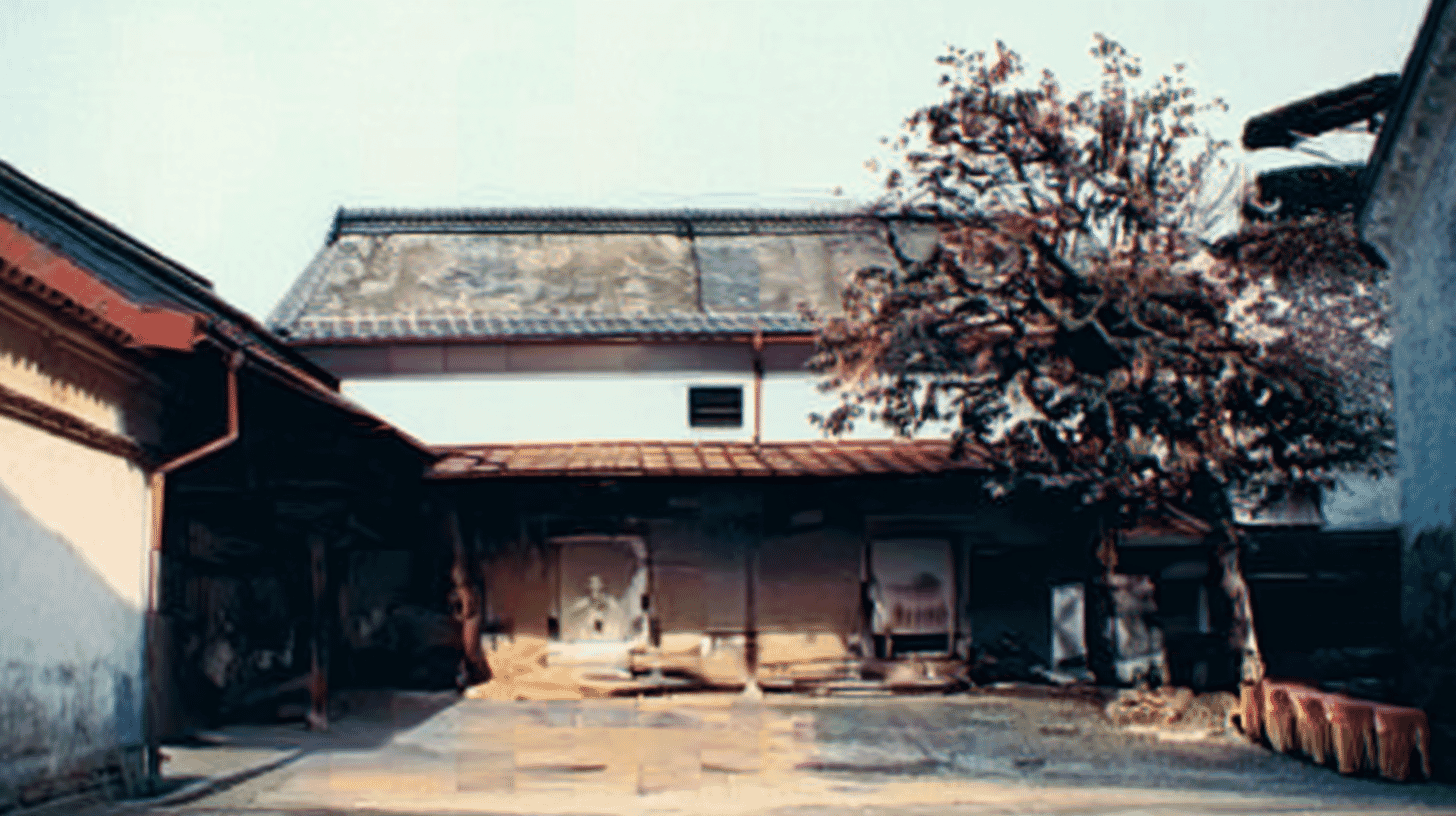
Obaraya Harada Shoten Salt Storehouse: A Testament to Japan's River Trade History
Tucked away in the historic merchant district of Kajikazawa in Fujikawa Town, Yamanashi Prefecture, stands an unassuming yet historically significant structure known as the Obaraya Harada Shoten Shiokura (Salt Storehouse). This Edo-period earthen warehouse, registered as a Tangible Cultural Property of Japan, offers visitors a rare glimpse into the prosperous era of Fujikawa River commerce that once made this small mountain town the second-largest trading center in Kai Province after Kofu.
The Legacy of Fujikawa River Trade
To understand the significance of this salt storehouse, one must first appreciate the vital role that Fujikawa River transport played in Japanese history. In 1607, the renowned merchant Suminokura Ryōi, under orders from Tokugawa Ieyasu, successfully opened the Fujikawa River for commercial navigation. This 72-kilometer waterway connected the inland provinces of Kai (modern Yamanashi) and Shinano (modern Nagano) with the coastal region of Suruga (modern Shizuoka), transforming the regional economy.
The river trade operated on a simple yet crucial principle known as "sage-mai, age-shio" — literally "down-rice, up-salt." Boats heading downstream carried annual tribute rice from the mountain provinces to Edo (Tokyo), while returning vessels brought essential commodities from the coast, most importantly salt. This arrangement made Kajikazawa, positioned at the confluence of major land and water routes, an indispensable hub of commerce.
The Obaraya Harada Shoten: Merchants of Salt
The Obaraya Harada Shoten was established in 1846 (Kōka 3) as a wholesale merchant specializing in salt and other goods transported via the Fujikawa River trade. The business name "Obaraya" became synonymous with quality and reliability in the region. At its peak, the merchant house dealt primarily in salt wholesale, but also handled vegetable oils, candles, and other daily necessities that arrived by boat from the coast.
So extensive was the reach of Kajikazawa's salt trade that in the Takato region of Shinano Province (modern Nagano Prefecture), locals used to call salt itself "Kajikazawa" — a testament to how thoroughly the town dominated the inland salt distribution network.
Architectural Features of the Salt Storehouse
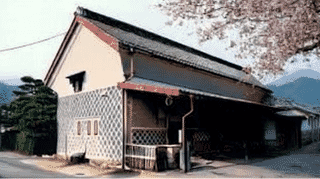
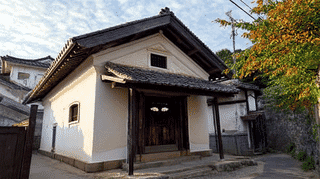
The Shiokura (Salt Storehouse) is a two-story earthen storehouse (dozō) constructed sometime between 1830 and 1867 during the late Edo period. Built using traditional dozō-zukuri techniques, the structure features thick earthen walls designed to maintain stable interior temperatures and humidity levels — essential conditions for preserving salt.
The building covers approximately 86 square meters and features a tiled roof with an attached earthen awning (tsuchihisashi) at the front entrance. The first floor is divided by partition walls into two distinct rooms. The western room served as the actual salt storage area, from which the building takes its name. The eastern room, equipped with a staircase leading to the second floor, functioned as a general storage space.
One particularly fascinating feature is the bamboo flooring in the salt storage room. This design choice was deliberately made to facilitate drainage, as salt naturally attracts and releases moisture. The bamboo lattice allowed excess water to drain away, keeping the stored salt in optimal condition.
The overall design is notably austere, with openings only on the front and rear facades. This simplicity reflects the building's purely functional purpose — protecting valuable salt cargo from the elements while maintaining the controlled environment necessary for long-term storage.
Why It Became a Registered Cultural Property
The Obaraya Harada Shoten Salt Storehouse was registered as a Tangible Cultural Property on June 7, 1999. The building is valued not merely for its architectural merit, but for what it represents: a tangible link to the prosperous era of Fujikawa River commerce and the vital salt trade routes that sustained inland Japan for over 300 years.
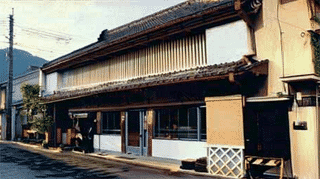
The Shiokura is part of a complex of four registered cultural properties belonging to the Obaraya Harada Shoten, including the Misegura (Shop Storehouse), Bunkogura (Document Storehouse), and Aburagura (Oil Storehouse). Together, these structures form one of the best-preserved merchant complexes from the Fujikawa River trade era, offering invaluable insights into commercial architecture and practices of the period.
Visiting the Salt Storehouse
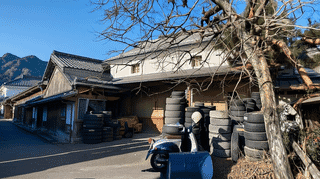
While the Obaraya Harada Shoten remains a private property and continues to operate as a business (now a gas station), visitors can appreciate the exterior of these historic buildings from the public street. The complex is located in the heart of Kajikazawa's former merchant district, where the atmosphere of the old river port town still lingers in the narrow streets and traditional architecture.
For those seeking a deeper understanding of the Fujikawa River trade history, the nearby Fujikawa Town History and Culture Museum "Shio no Hana" (Salt Flower) offers comprehensive exhibits on river transport, including authentic ferry boats from the era and detailed explanations of the salt trade routes.
The Transition to Modernity
The Obaraya Harada Shoten adapted remarkably well to changing times. In 1881 (Meiji 14), the business began dealing in petroleum — specifically kerosene imported from Yokohama for use in lamps. This early adoption of new energy sources demonstrated the merchant family's business acumen. In the early Showa period, they installed Yamanashi Prefecture's first underground fuel tank, pioneering the modern gas station industry in the region.
Today, the property still operates as a gas station, making it a living example of how traditional Japanese merchant families evolved with the times while preserving their historical heritage.
Surrounding Attractions
The Kajikazawa area offers several attractions that complement a visit to the Obaraya Harada Shoten complex. Ōboshi Park, located on Mt. Ōboshi overlooking the town, is famous for its approximately 2,000 cherry trees and has been selected as one of Japan's Top 100 Cherry Blossom Spots. During late March to early April, the entire mountainside transforms into a sea of pink blossoms.
The Fujikawa Town History and Culture Museum "Shio no Hana" provides excellent context for understanding the river trade era. The museum features exhibits on Fujikawa River transport, including a preserved ferry boat and a 1/10 scale model of a takase-bune cargo vessel. The Takashita area of Fujikawa Town is also known for its stunning views of "Diamond Fuji" during the winter solstice season.
For those interested in traditional crafts and local products, the Tsukutabekan facility offers hands-on experiences in making local specialties. The area is also known for its hot springs, with facilities like Kajikazawa Onsen "Kajika no Yu" and "Mahora no Yu" offering relaxing soaks after a day of historical exploration.
- 📍 Plan Your Visit to Yamanashi
- Find tours, activities & transport passes near Obara-Ya Harada Shoten Salt Store
- [ Mt. Fuji & Lake Kawaguchiko Day Tours ]
Q&A
- Can visitors enter the Obaraya Harada Shoten Salt Storehouse?
- The buildings are private property and not open for interior viewing. However, visitors can appreciate the exterior architecture from the public street. The building complex remains in use as a gas station.
- What is the best time to visit Fujikawa Town?
- Spring (late March to early April) is particularly beautiful when the cherry blossoms at Ōboshi Park are in full bloom. The winter solstice season (late December to early January) offers opportunities to see "Diamond Fuji" from the Takashita area.
- Why was salt so important in historical Japan?
- As a landlocked region surrounded by mountains, Kai Province (Yamanashi) had no access to sea salt. Salt was essential for food preservation, pickling, and daily cooking. The Fujikawa River trade made it possible to import salt from coastal areas, making distribution centers like Kajikazawa vital to inland communities.
- How long did the Fujikawa River trade operate?
- The Fujikawa River trade operated for over 300 years, from its establishment in 1607 until the full opening of the Minobu Railway Line in 1928. The advent of modern railway transportation gradually made river transport obsolete.
- Is there English support available at the nearby museum?
- The Fujikawa Town History and Culture Museum "Shio no Hana" primarily provides information in Japanese. However, some exhibits include visual displays and models that can be appreciated without Japanese language ability. It is recommended to prepare translation tools or research before visiting.
Basic Information
| Name | Obaraya Harada Shoten Shiokura (小原屋原田商店塩蔵) |
|---|---|
| Cultural Property Designation | Registered Tangible Cultural Property (Building) |
| Registration Date | June 7, 1999 |
| Construction Period | Edo Period (1830-1867) |
| Structure | Two-story earthen storehouse (dozō-zukuri), tile roof |
| Building Area | Approximately 86 m² |
| Location | 1714 Kajikazawa, Fujikawa Town, Minamikoma District, Yamanashi Prefecture |
| Access | Approximately 10 minutes by car/taxi from JR Minobu Line Kajikazawaguchi Station |
| Nearby Facilities | Fujikawa Town History and Culture Museum "Shio no Hana" (approx. 5 min by car), Ōboshi Park (approx. 10 min by car) |
References
- 小原屋原田商店塩蔵 - 文化遺産オンライン
- https://bunka.nii.ac.jp/heritages/detail/192109
- 小原屋原田商店店蔵 - 文化遺産オンライン
- https://bunka.nii.ac.jp/heritages/detail/114187
- 第29回「小原屋 原田商店」- やまなしレトロモダン 風景の中の歴史遺産(YBS山梨放送)
- https://www.ybs.jp/retro/2016/10/18/第29回「小原屋-原田商店」10月18日放送/
- 富士川舟運 - 山梨県富士川町公式サイト
- https://www.town.fujikawa.yamanashi.jp/docs/2023090600071/
- 鰍沢河岸 - Wikipedia
- https://ja.wikipedia.org/wiki/鰍沢河岸
- 富士川舟運の町・鰍沢 - 全国町村会
- https://www.zck.or.jp/site/essay/5503.html
- 舟運歴史館 - 富士川町歴史文化館塩の華
- https://fujikawa-shionohana.com/museum/river-transport/
- 小原屋原田商店 - さんたつ by 散歩の達人
- https://san-tatsu.jp/spots/22487/
Last verified: 2026.01.27
Nearby heritages
- Obara-Ya Harada Shoten New Tatami Room
- 1714 Kajikazawa, Fujikawa-cho, Minamikoma-gun, Yamanashi Prefecture
- Obara-Ya Harada Shoten Library
- 1714 Kajikazawa, Fujikawa-cho, Minamikoma-gun, Yamanashi Prefecture
- Obara-Ya Harada Shoten Oil Warehouse
- 1714 Kajikazawa, Fujikawa-cho, Minamikoma-gun, Yamanashi Prefecture
- Obara-Ya Harada Shoten Storehouse
- 1714 Kajikazawa, Fujikawa-cho, Minamikoma-gun, Yamanashi Prefecture
- 𣇃Rice Community Center
- 1237 Ume, Fujikawa-cho, Minamikoma-gun, Yamanashi Prefecture
- Ichikawa Church
- 907 Ichikawa Daimon, Ichikawamisato-cho, Nishiyatsushiro-gun, Yamanashi Prefecture
- Shojuken Nagasaki
- 319 Ibarazawa, Minami Alps City, Yamanashi Prefecture, and others
- Ando Family Residence (Kosei Town, Nakakoma District,
- 4302 Nishinanko, Minami Alps City, Yamanashi Prefecture
- Juniper Trees at Kochozenji Temple
- Minami Alps City
- Shibata Family Residence (Former Shimizu Family Residence)
- 359 Ueno, Minami Alps City, Yamanashi Prefecture