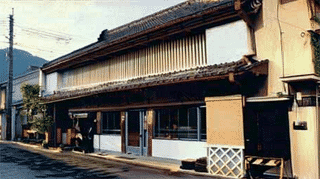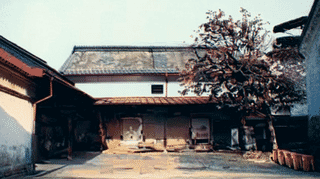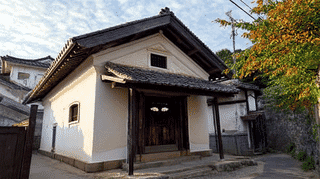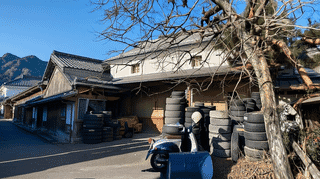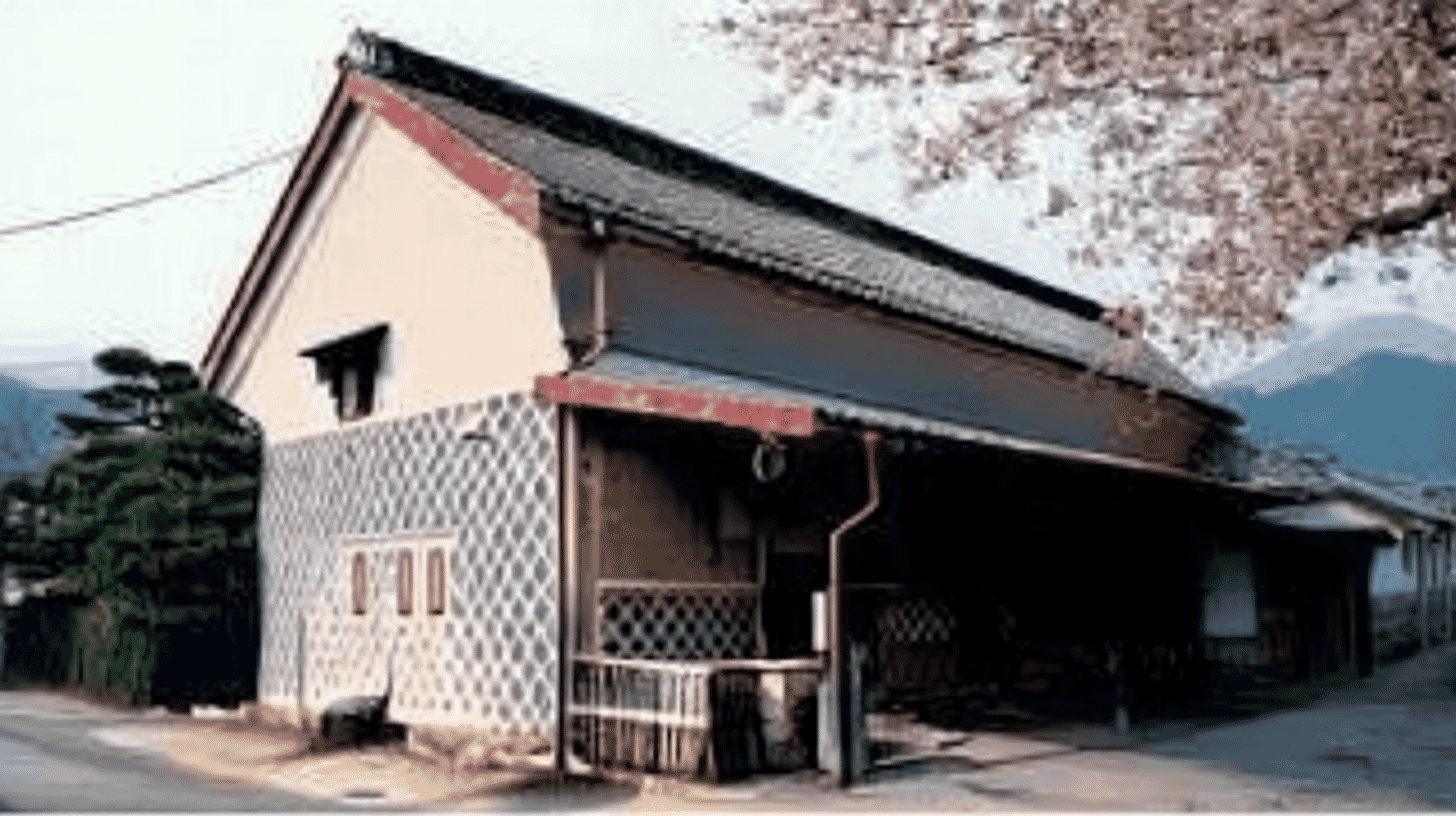
One Oil Storehouse, a Registered Tangible Cultural Property since 1999
Obara-Ya Harada Shoten Oil Warehouse (小原屋原田商店油蔵, Obaraya Harada Shoten Aburagura) stands at 1714 Kajikazawa, Fujikawa Town, Minamikoma District, Yamanashi Prefecture, an Edo-period building entered on the register of tangible cultural properties on 7 June 1999. It is a registered property rather than a designated one.
The quantity is one building.
The structure is of earthen construction, two-storeyed, tiled, with a floor area of 152 square metres. The date field reads Edo and the year field 1830 to 1867.
Called Two-Storeyed, with an Upper Floor in One Room Only
The structure field and what lies within do not quite agree.
The Agency records the interior divided by partition walls into 3 rooms, the southernmost of 2 storeys and the others open to the roof.
Of 3 rooms, only the southern one has an upper floor; the other two rise open to the roof. The structure field sums this up as two-storeyed.
At the Old University Bath and the former bank branch at Neu, height is taken within a single storey for spaces where people gather.
Here it is in a store that open height takes up most of the space: height for stacking, or for keeping large things.
For the new reception room on the same grounds, too, the structure field says two storeys and the commentary one. How field and commentary relate differs from building to building.
A Closed Store Given a Careful Finish
The assessment grants that the building is closed before it praises.
The Agency closes that it is a closed storehouse with few openings, but carefully made, with its front dado finished in tiled walling.
Tiled walling of this kind sets flat tiles into the wall and raises the joints between them in lime plaster. The dado is the lower part of the wall.
At the Misaka tunnel, the record grants the plainness of the portals before stating the value.
Here it grants that the store is closed. What it then names is the finish of one limited place: the lower front.
That a store for oil should have few windows may answer to its use. The record does not say so.
The Largest Store, at the Back of the Grounds
Of the 5, this covers the greatest area.
The Agency records a large two-storeyed earthen storehouse standing at the back of the grounds facing east, with an earth-floored eave one bay deep along its front.
Such an eave shelters an earthen floor before the building. One bay is about 1.8 metres.
At 152 square metres it is about twice the shop storehouse, which covers 78 square metres.
The shop storehouse faced the main street; the oil storehouse stands at the back. Trade at the front, storage behind.
At the Shigeta residence, the main house stands a little north of the centre and the gate to the south: the layout of a farmhouse.
Visiting
The building stands at 1714 Kajikazawa, Fujikawa Town, Minamikoma District, Yamanashi Prefecture.
At 152 square metres it is the largest of the 5 buildings on the grounds. The salt storehouse covers 86 square metres and the document storehouse 53 square metres.
The date field reads 1830 to 1867, the same range as the salt and document storehouses.
The shop, salt and document storehouses and the new reception room on the same grounds were registered on the same day.
No owner is recorded, and opening and terms follow the owner's arrangements. Check before travelling.
Q&A
- When was it registered?
- On 7 June 1999, as a registered tangible cultural property. It is registered rather than designated, and the quantity is one building.
- How is the interior laid out?
- Partition walls divide it into three rooms; the southernmost has two storeys and the others are open to the roof.
- What is the tiled walling?
- Flat tiles set into the wall with the joints raised in lime plaster. Here it finishes the lower part of the front wall.
- What is valued in it?
- That though it is a closed store with few openings, it is carefully made, with its front dado in tiled walling.
- How large is it?
- A floor area of 152 square metres, the largest of the five buildings on the grounds and about twice the shop storehouse at 78 square metres.
Basic Information
| Name | Obara-Ya Harada Shoten Oil Warehouse (小原屋原田商店油蔵, Obaraya Harada Shoten Aburagura) |
|---|---|
| Location | 1714 Kajikazawa, Fujikawa Town, Minamikoma District, Yamanashi Prefecture |
| Designation | Registered tangible cultural property (structure, modern other); registered rather than designated; 5 buildings on the same grounds were registered on the same day |
| Year Designated | 1999 (7 June), registered |
| Quantity | 1 building |
| Dimensions | Earthen construction, 2-storeyed, tiled, with a floor area of 152 square metres. It stands at the back of the grounds facing east, with an earth-floored eave 1 bay deep along its front. Partition walls divide it into 3 rooms, the southernmost of 2 storeys and the others open to the roof; the front dado is finished in tiled walling. The date field reads Edo and the year field 1830 to 1867 |
| Owner | Not stated in the record |
| Public Access | Opening and terms follow the owner's arrangements |
References
- Cultural Heritage Online: the oil storehouse
- https://bunka.nii.ac.jp/heritages/detail/185840
- Cultural Heritage Online: the shop storehouse
- https://bunka.nii.ac.jp/heritages/detail/114187
- Agency for Cultural Affairs, National Cultural Properties Database
- https://kunishitei.bunka.go.jp/
- Fujikawa Town
- https://www.town.fujikawa.yamanashi.jp/
Last verified: 2026.09.21