Discover Obaraya Harada Shoten Shinzashiki: Where Edo-Era Commerce Lives On
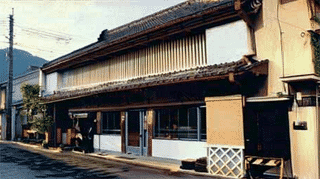
Tucked away in the historic riverside town of Kajikazawa, Yamanashi Prefecture, stands a remarkable testament to Japan's vibrant trading past. The Obaraya Harada Shoten Shinzashiki (小原屋原田商店新座敷), registered as a Tangible Cultural Property of Japan, offers visitors a rare glimpse into the architectural heritage of the Fujikawa River trade that once connected the mountains to the sea.
The Legacy of Fujikawa River Trade
To truly appreciate the Shinzashiki, one must understand the extraordinary history of Kajikazawa itself. For over 300 years, from the early Edo period until the early Showa era (1607-1928), this small town served as the most crucial river port on the Fujikawa—one of Japan's three most rapid rivers. The famous phrase "sage-gome, age-shio" (down with rice, up with salt) perfectly captures the essence of this trade: boats carried tax rice from the Kai and Shinano provinces downstream to Edo, while returning upstream with precious salt and marine products from the coast.
So significant was Kajikazawa's role in the salt trade that in the distant Takato region of Nagano Prefecture, people actually called salt "Kajikazawa"—a remarkable testament to the town's commercial influence. The Obaraya Harada Shoten, established in 1844 (some sources indicate 1846), was one of the prosperous merchant houses that thrived during this golden age of river commerce.
Architectural Significance of the Shinzashiki
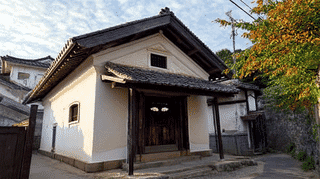
The Shinzashiki, meaning "new guest hall" or "new reception room," was constructed in 1900 (Meiji 33) as part of the extensive Obaraya Harada Shoten merchant complex. Built perpendicular to the Bunko-gura (document storehouse), this elegant structure showcases the sophisticated architectural sensibilities of late Meiji-era merchant culture.
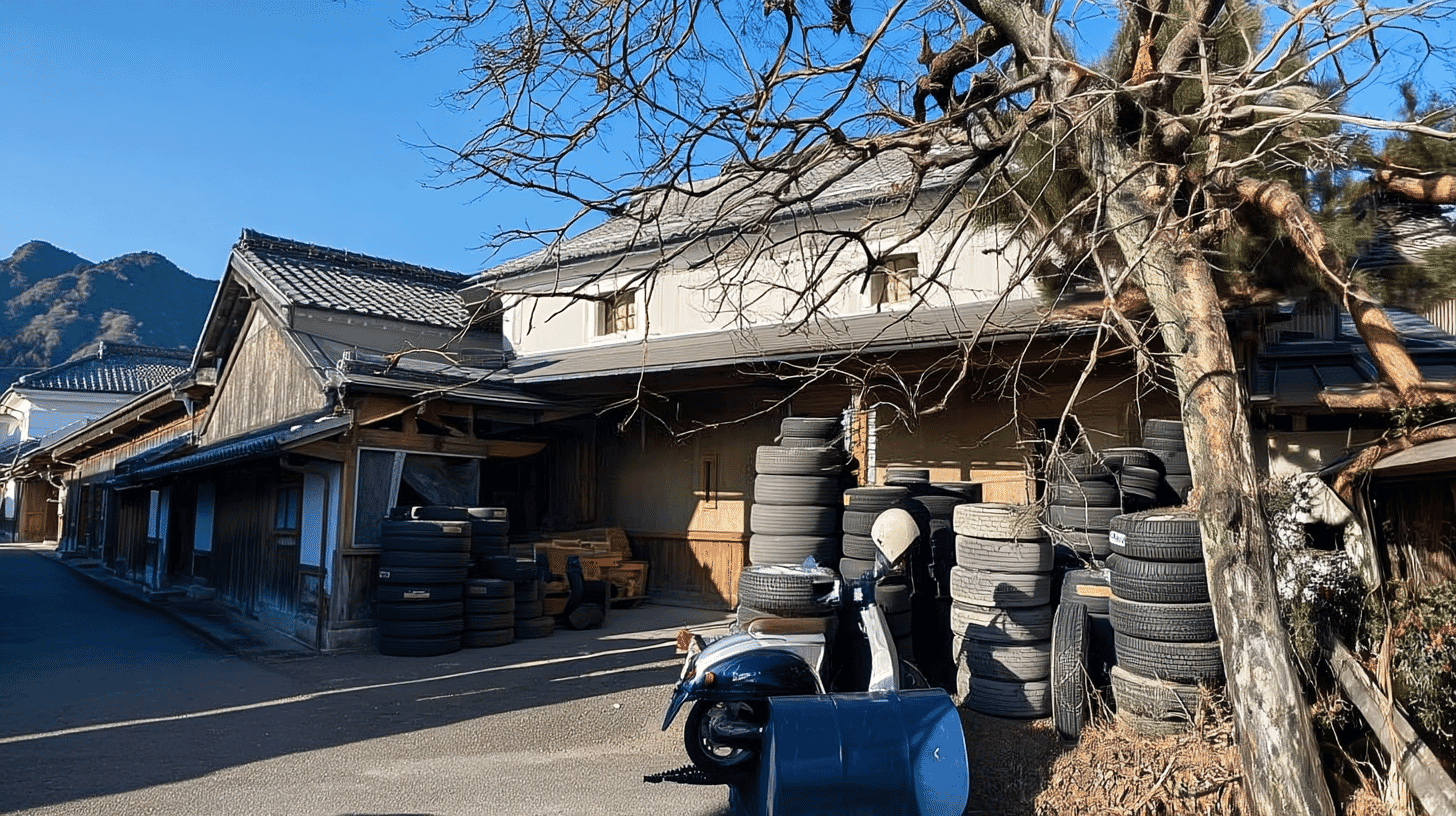
Though modest in scale with a building area of just 31 square meters, the Shinzashiki demonstrates remarkable attention to aesthetic harmony. Its exterior features traditional dozo-zukuri (earthen storehouse construction) with a two-story design and traditional kawara (roof tiles), perfectly complementing the surrounding historic buildings. This unified architectural approach creates a cohesive streetscape that transports visitors back to the prosperous trading days of old Kajikazawa.
Why Was It Designated a Cultural Property?
The Obaraya Harada Shoten Shinzashiki was registered as a National Registered Tangible Cultural Property on June 7, 1999, under the criterion of "contributing to the historic landscape of Japan." This designation recognizes the building's role as an essential component of a merchant estate (shoka no yashiki-gamae) that preserves the authentic atmosphere of Edo and Meiji-era commercial architecture.
The registration acknowledges the Shinzashiki as a precious architectural remnant that, together with the other registered buildings of the Obaraya complex (including the Mise-gura shop storehouse, Bunko-gura document storehouse, and Shio-gura salt storehouse), creates an invaluable ensemble documenting the material culture of Japan's pre-modern trading networks.
The Complete Obaraya Complex
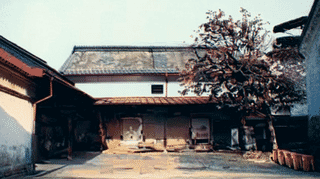
The Shinzashiki is just one part of a fascinating merchant compound that tells the complete story of Kajikazawa's commercial heritage. The complex includes:
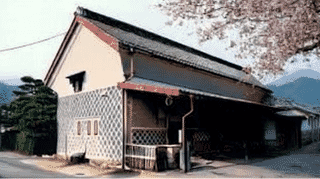
- The Mise-gura (Shop Storehouse) - featuring traditional mushiko-mado (barred windows) on the second floor
- The Bunko-gura (Document Storehouse) - a compact kirizuma-style earthen building
- The Shio-gura (Salt Storehouse) - with bamboo flooring for salt dehumidification
- The Abura-gura (Oil Storehouse) - the largest building, featuring namako-kabe (sea cucumber walls) for fire protection
This ensemble of buildings reflects the Obaraya's diverse trading activities. The family dealt primarily in salt but also traded in vegetable oil and candles. After the Meiji Restoration, they began importing kerosene from Yokohama for lamp fuel, and in the early Showa period, they installed Yamanashi Prefecture's first underground fuel storage tank—a testament to their continued commercial innovation.
Visiting Tips and Best Seasons
The Obaraya Harada Shoten complex is located along the former commercial street of Kajikazawa, where the atmosphere of the historic trading town still lingers. The best times to visit include spring, when the nearby Oboshiyama Park (designated as one of Japan's 100 Best Cherry Blossom Sites) is in full bloom, and autumn, when the Oyanagigawa Valley offers spectacular foliage.
While the buildings themselves are private property and interior access may be limited, the exterior architecture can be appreciated from the street, offering excellent photographic opportunities. The Fujikawa Town Historical and Cultural Museum "Shio no Hana" (meaning "Flower of Salt") nearby provides comprehensive exhibits on the Fujikawa River trade and is highly recommended as a companion visit.
Nearby Attractions
Kajikazawa's location at the southwestern edge of the Kofu Basin makes it an ideal base for exploring the surrounding region:
- Oboshiyama Park - One of Japan's 100 Best Cherry Blossom Sites with panoramic views of Mt. Fuji and the Kofu Basin
- Fujikawa Town Historical and Cultural Museum "Shio no Hana" - Exhibits on river trade history including a restored ferry boat
- Diamond Fuji viewing points - Fujikawa Town is famous for viewing the phenomenon where the sun sets perfectly atop Mt. Fuji
- Oyanagigawa Valley - Ten suspension bridges and beautiful waterfalls for hiking enthusiasts
- Mitama no Yu Onsen - A hot spring facility with stunning views of the Kofu Basin
- Kuon-ji Temple at Mt. Minobu - The head temple of Nichiren Buddhism, accessible via the historic Fujikawa route
- 📍 Plan Your Visit to Yamanashi
- Find tours, activities & transport passes near Obara-Ya Harada Shoten New Tatami Room
- [ Mt. Fuji & Lake Kawaguchiko Day Tours ]
Q&A
- Can I go inside the Obaraya Harada Shoten buildings?
- The Obaraya Harada Shoten is a private property that continues to operate as a business (currently a gas station). While the exterior architecture can be viewed and photographed from the public street, interior access is generally not available to the public. For those interested in learning more about the river trade history, the nearby Fujikawa Town Historical and Cultural Museum "Shio no Hana" offers excellent exhibits and even has a restored ferry boat on display.
- How do I get to Kajikazawa from Tokyo?
- From Tokyo, take the JR Chuo Main Line to Kofu Station, then transfer to the JR Minobu Line and get off at Kajikazawa-guchi Station. From the station, take a local bus or taxi (about 10 minutes) to the town center. Alternatively, by car, take the Chuo Expressway to the Kofu-Minami IC or the Chubu-Odan Expressway to the Masuo IC, then follow Route 52 south.
- What is the significance of "dozo-zukuri" architecture?
- Dozo-zukuri (earthen storehouse construction) was the traditional fire-resistant building technique used throughout Japan, particularly for valuable merchant storehouses. The thick earthen walls provided excellent protection against fire—a constant threat in densely built commercial districts. The style also offered good insulation, keeping stored goods at stable temperatures. The Obaraya complex exemplifies this architectural tradition, with its buildings featuring characteristic white plastered walls and heavy roof tiles.
- Is there English signage or guides available?
- English signage in rural Yamanashi is limited. The Fujikawa Town Historical and Cultural Museum "Shio no Hana" may have some English materials, but visitors are advised to prepare by researching the history beforehand or using translation apps. The museum offers volunteer guide services that, while primarily in Japanese, can help convey the fascinating history of the area.
- What other registered cultural properties are nearby?
- The Obaraya Harada Shoten complex itself includes multiple registered cultural properties: the Mise-gura (shop storehouse), Bunko-gura (document storehouse), Shio-gura (salt storehouse), and Abura-gura (oil storehouse), all registered alongside the Shinzashiki. The broader Kajikazawa area also preserves various historic sites related to the Fujikawa River trade, including the former location of the Kajikazawa River Port and various memorial stones.
Basic Information
| Official Name | Obaraya Harada Shoten Shinzashiki (小原屋原田商店新座敷) |
|---|---|
| Cultural Property Type | National Registered Tangible Cultural Property (Building) |
| Registration Number | 19-0037 |
| Registration Date | June 7, 1999 |
| Construction Year | 1900 (Meiji 33) |
| Architectural Style | Dozo-zukuri (earthen storehouse construction), 2-story, kawara-buki (tile roof) |
| Building Area | 31 square meters |
| Address | 1714 Kajikazawa, Fujikawa-cho, Minamikoma-gun, Yamanashi Prefecture |
| Access | Approximately 10 minutes by taxi from JR Kajikazawa-guchi Station (Minobu Line) |
| Registration Criteria | Contributing to the historic landscape of Japan |
References
- Cultural Heritage Online - Obaraya Harada Shoten Shinzashiki
- https://bunka.nii.ac.jp/heritages/detail/138381
- Agency for Cultural Affairs - National Designated Cultural Properties Database
- https://kunishitei.bunka.go.jp/bsys/maindetails/101/00001111
- Fujikawa Town Official Website - Fujikawa River Transport
- https://www.town.fujikawa.yamanashi.jp/docs/2023090600071/
- YBS Television - Yamanashi Retro Modern: Obaraya Harada Shoten
- https://www.ybs.jp/retro/2016/10/18/
- Santatsu by Sanpo no Tatsujin - Obaraya Harada Shoten
- https://san-tatsu.jp/spots/22487/
- Wikipedia - Kajikazawa River Port
- https://ja.wikipedia.org/wiki/%E9%B0%8D%E6%B2%A2%E6%B2%B3%E5%B2%B8
- Fujikawa Town Historical and Cultural Museum "Shio no Hana" - River Transport History Museum
- https://fujikawa-shionohana.com/museum/river-transport/
Last verified: 2026.01.27
Nearby heritages
- Obara-Ya Harada Shoten Salt Store
- 1714 Kajikazawa, Fujikawa-cho, Minamikoma-gun, Yamanashi Prefecture
- Obara-Ya Harada Shoten Library
- 1714 Kajikazawa, Fujikawa-cho, Minamikoma-gun, Yamanashi Prefecture
- Obara-Ya Harada Shoten Oil Warehouse
- 1714 Kajikazawa, Fujikawa-cho, Minamikoma-gun, Yamanashi Prefecture
- Obara-Ya Harada Shoten Storehouse
- 1714 Kajikazawa, Fujikawa-cho, Minamikoma-gun, Yamanashi Prefecture
- 𣇃Rice Community Center
- 1237 Ume, Fujikawa-cho, Minamikoma-gun, Yamanashi Prefecture
- Ichikawa Church
- 907 Ichikawa Daimon, Ichikawamisato-cho, Nishiyatsushiro-gun, Yamanashi Prefecture
- Shojuken Nagasaki
- 319 Ibarazawa, Minami Alps City, Yamanashi Prefecture, and others
- Ando Family Residence (Kosei Town, Nakakoma District,
- 4302 Nishinanko, Minami Alps City, Yamanashi Prefecture
- Juniper Trees at Kochozenji Temple
- Minami Alps City
- Shibata Family Residence (Former Shimizu Family Residence)
- 359 Ueno, Minami Alps City, Yamanashi Prefecture