
Muromachi
Yamanashi · 室町Browse Yamanashi’s cultural heritage from the Muromachi period (1336 – 1573). Filter by type and keyword, with concise stories, maps, and travel tips.
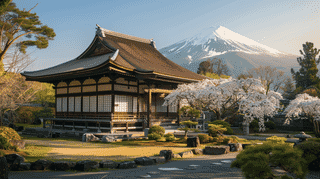
A middle Muromachi-period hall in Yamanashi Prefecture. Its own date field and its own commentary each give a year, and the two lie eighty-two years apart.
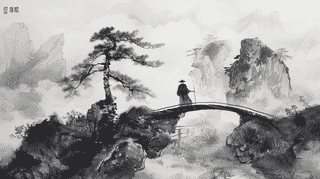
A Southern Song painting on one scroll at Kuonji in Yamanashi, recorded as having once formed a single set with two other scrolls held elsewhere today.

Rebuilt by Takeda Shingen in 1558 at the site where Kai Province's first-ranked shrine began, this cypress-bark hall carries helmets carved on its struts.
The Niomon at Unpoji in Koshu, Yamanashi, is a late-Muromachi three-bay eight-legged gate, copper-roofed and flanked by two Nio guardian kings on the stone approach.
Unpoji's main hall in Koshu, Yamanashi, is a late-Muromachi Important Cultural Property with a cypress-bark hip-and-gable roof and a curved karahafu worship porch.
The Main Hall of Takeda Hachiman Shrine in Nirasaki City, Yamanashi Prefecture, is a nationally designated Important Cultural Property rebuilt by the legendary warlord Takeda Shingen in 1541. Discover the history, architecture, highlights, and surrounding attractions of this sacred site at the birthplace of the Takeda clan.
The Main Hall of Chōkoku-ji Temple in Minami-Alps City, Yamanashi Prefecture, is the oldest building in the city, constructed in 1524 during the late Muromachi period. Designated as an Important Cultural Property of Japan, this compact Buddhist worship hall blends traditional Japanese and Zen architectural elements and enshrines a secret Eleven-Headed Kannon statue unveiled only once every 33 years.
Tenjinsha Honden in Yamanashi City is a nationally designated Important Cultural Property rebuilt in 1522 under the patronage of Takeda Nobutora. This ichikensha nagare-zukuri shrine with a cypress bark roof preserves the elegant, refined architectural beauty of the late Muromachi period.
The Buddha Hall of Toko-ji Temple in Kofu City, Yamanashi Prefecture, is a nationally designated Important Cultural Property built in the late Muromachi period in the Chinese Zen architectural style. Standing within one of the Five Great Zen Temples of Kofu established by the legendary warlord Takeda Shingen, this elegant hall with its cypress bark roof and distinctive double-eave design miraculously survived both the 1582 burning by Oda Nobunaga and the 1945 Kofu Air Raid, preserving a rare example of medieval Zen architecture.
A ridge tablet dates this one-bay cypress-bark sanctuary to 1478. Set among the vineyards of Makioka, it served four villages and was designated in 1953.