
Momoyama
Aichi · 安土桃山Browse Aichi’s cultural heritage from the Momoyama period (1573 – 1603). Filter by type and keyword, with concise stories, maps, and travel tips.
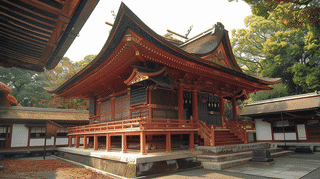
A Momoyama shrine hall in Tsushima, Aichi, three bays wide in the nagare form. The Agency dates it to 1605; it became an Important Cultural Property in 1920.

A haori held at the Tokugawa Art Museum in Nagoya. Its own period field says Momoyama, while its own date range reaches well into the Edo era besides.

A Momoyama-period Oribe ware square bowl held privately in Aichi Prefecture, designated an Important Cultural Property in 1967 and fired at the Mino kilns.
The Kuroito Odoshi Domaru Gusoku (Black-Laced Domaru Armor) is an Important Cultural Property of Japan, worn by Honda Tadakatsu (1548–1610), one of the Tokugawa Four Heavenly Kings. Featuring towering deer antler helmet crests, a fierce lion-biting front piece, and gold-leafed Buddhist rosary beads, this iconic armor embodies the spirit of a legendary warrior who fought in 57 battles without receiving a single wound. Currently deposited at the Mikawa Bushi no Yakata Ieyasukan in Okazaki City, Aichi Prefecture.
Pale green ash glaze runs down the shoulder while the foot scorches black. The Momoyama Iga flower vase Fuyo holds warped, deliberate beauty in 28 centimeters.
Discover Inuyama Castle, one of only five National Treasure castle keeps in Japan. Built in 1537, this original wooden tower offers panoramic views of the Kiso River and Nobi Plain, a charming Edo-period castle town, and centuries of samurai history in Aichi Prefecture.
Discover the Tsushima Shrine Romon, a 1591 tower gate donated by Toyotomi Hideyoshi. This Important Cultural Property in Tsushima City, Aichi blends Momoyama elegance with Japanese-style craftsmanship.
Built in 1606, the main hall of Tobe Shrine is the only shrine building in Nagoya designated a national Important Cultural Property, rich in Momoyama-era carving.
Only four buildings at Nagoya Castle carry Important Cultural Property status. A guide to the three corner turrets and the Omote Ninomon gate, with visiting details.
Two Important Cultural Property gates at Nagoya Castle, built around 1612 in the defensive korai-mon style. Both survived the 1945 air raids that razed the keep.
Hazu Shrine in Nishio City, Aichi, has three Important Cultural Property halls in a row above Mikawa Bay: a main hall of 1580 and two early Edo subsidiary halls.
Discover Ryusenji Niomon, a 1607 Important Cultural Property gate at one of Nagoya's Owari Four Kannon temples. Built in three-bay rōmon style with a kokera-shingled hip-and-gable roof, it has welcomed pilgrims for over four centuries on a hilltop overlooking the Shōnai River.