
Kamakura
Aichi · 鎌倉Browse Aichi’s cultural heritage from the Kamakura period (1185 – 1333). Filter by type and keyword, with concise stories, maps, and travel tips.
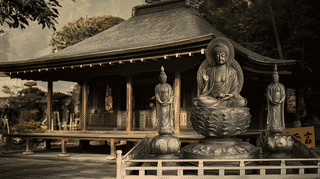
A Kamakura Amida hall in Nishio, Aichi, carrying techniques shared with Heian aristocratic houses. It is the oldest timber building in the prefecture.
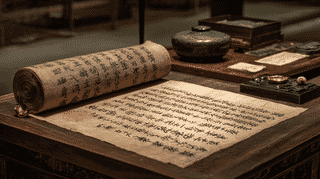
Forty volumes of the Shoku Nihongi at the Hosa Library in Nagoya. Volumes 11 to 40 are the oldest surviving copy, made in the later thirteenth century.
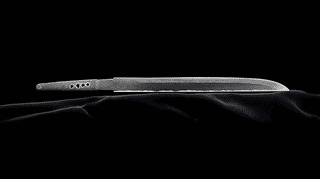
A Kamakura-period tanto at the Tokugawa Art Museum in Aichi. The two records give its length differently here, by a tenth of a centimetre in each case.

Preserved in Aichi Prefecture and designated an Important Cultural Property in 1957, this unsigned katana is attributed to the Yoshioka Ichimonji school of Bizen Province, active from the mid to late Kamakura period. Although shortened (o-suriage), the blade retains a vivid midare-utsuri and a richly varied hamon of choji clove-blossoms mixed with gunome and tobiyaki—hallmarks of this celebrated school. With its excellent workmanship and remarkably healthy condition, it offers a rare window into the Bizen tradition, the apex of Japan's five great sword-making schools (Gokaden).
A grandly proportioned katana attributed to the Kamakura-to-Nanbokucho master Sadamune, this Important Cultural Property descended through the Owari Tokugawa family and is now displayed at the Nagoya Sword Museum (Touken World) in Aichi.
Shortened long ago and unsigned, this Kamakura blade in Nagoya is attributed to the Kyoto smith Kunitoshi by its temper and point, and is unusually well preserved.
An unsigned Kamakura katana attributed to Moritoshi of Bitchu's Old Aoe school, an Important Cultural Property since 1950, and where to see Aoe blades in Nagoya.
Discover the Sword (Unsigned, Rai Kunimitsu), an Important Cultural Property held privately in Aichi and once part of the Tokugawa shogunal collection. Forged in late Kamakura-period Kyoto by the master Rai Kunimitsu, this 69.6 cm blade exemplifies the refined Yamashiro tradition. Explore its history, artistry, 1960 designation, and where to see Kunimitsu's other works in Nagoya.
Discover the Three-Eared Jar with Chrysanthemum Design (Tamba ware), an Important Cultural Property of Japan housed at the Aichi Prefectural Ceramic Museum. Crafted in the early 13th century at one of Japan's Six Ancient Kilns, this exquisite jar features bold chrysanthemum incisions and a pristine form. Learn about its history, artistic significance, and visitor information.
A 13th-century Kamakura hanging scroll at Rinsenji in Hekinan, Aichi, designated in August 2024. Just 82.8 cm tall, dense with cut-gold-leaf kirikane work.
A Kamakura-period silk mandala of Butsugen Butsumo, the Buddha-Eye Mother whose eye embodies wisdom. It served an esoteric rite and survives privately in Aichi.
A late-Kamakura tachi by Kyoto's Rai Kunimitsu, slender for the master and shortened yet still signed. An Important Cultural Property now held in Nagoya, Aichi.
Inside Kanpuku-ji's main hall in Tokai City stands a miniature wooden shrine, dated by inscription to the year 1248 and keeping clear Kamakura-period traits.
In Ama City west of Nagoya stands the two-storied South Gate of Jimokuji, the city's oldest wooden building, designated in 1900, with guardian statues below.
Myogenji Yanagido in Okazaki, Aichi, is a cypress-bark hall of early Shin Buddhism, designated in 1903. Its lattice shutters and disputed 1314 date repay attention.
Discover the Kanrin Gakushi Shishū, a National Treasure manuscript of Tang dynasty Chinese poetry preserved at Ōsu Kannon temple in Nagoya. Learn about this rare Heian-period copy, the legendary Ōsu Bunko library, and how to plan your visit.
Held at Sanage Shrine, the third-ranked shrine of Mikawa Province in Toyota City, Aichi, this Kamakura-period black-lacquered tachi with unsigned blade was designated an Important Cultural Property in 1952. Discover the story of this sword, preserved for over seven centuries at the foot of sacred Mount Sanage, and explore the historic shrine that guards it.
The Ko-Seto Yellow-Glazed Bottle with Fish-and-Wave Design, owned by the City of Nagoya, is a masterpiece of medieval Japanese ceramics produced at the Seto kilns in Aichi Prefecture during the early 14th century. Modeled on Chinese meiping bottles yet distinctly Japanese in interpretation, this Important Cultural Property combines a pale yellow-green ash glaze with intricate decoration of three fish swimming through ocean waves. As one of the finest surviving examples of Ko-Seto ware—Japan's only medieval glazed pottery tradition—it stands as a benchmark of fourteenth-century ceramic art and a window onto the Seto kilns at the height of their decorative achievement.
Held in the Hosa Library in Nagoya, the Song Edition of the Taiping Shenghui Fang (Kanazawa Bunko Version) is a Southern Song printed copy of the imperial medical encyclopedia originally compiled in 100 volumes by Wang Huaiyin under the command of Emperor Taizong. Designated an Important Cultural Property, it traveled from Hōjō Sanetoki's Kanazawa Bunko through Toyotomi Hidetsugu and Tokugawa Ieyasu to the first Owari lord Tokugawa Yoshinao. The 24 surviving printed booklets, supplemented by 27 Keichō-era manuscript volumes, bear the distinctive 'Kanazawa Bunko' and 'Gohon' seals on every volume, making it a primary witness to East Asian medical history.
Discover the Sanage Shrine Chinese Classics, an Important Cultural Property collection of medieval manuscripts of Chinese classics housed at Sanage Shrine in Toyota, Aichi Prefecture. Including the Spring and Autumn Annals, the Analects, and Bai Juyi's literary works copied between the late 13th and 14th centuries, these texts illuminate the depth of Chinese learning at a regional Japanese shrine-temple.