
Historic Sites, Places of Scenic Beauty, and Natural Monuments of Fukushima
福 島 県 の 史 跡 名 勝 天 然 記 念 物Fukushima · Historic Sites, Places of Scenic Beauty, and Natural Monuments
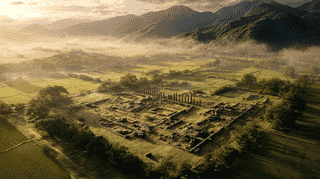
Explore the Izumi Kanga Ruins in Minamisoma, Fukushima—a National Historic Site revealing Japan's 8th-century district government complex. Discover ancient administrative halls, granaries, and artifacts from the Nara-Heian periods in this hidden archaeological treasure of the Tohoku region.
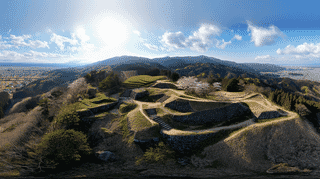
Explore the nationally designated Koori Nishiyama Castle Ruins in Fukushima Prefecture, the historic mountain fortress where the powerful Date clan rose to prominence. Walk ancient samurai paths, discover Sengoku-era fortifications, and combine your visit with Japan's finest imperial tribute peaches and nearby Iizaka Onsen.
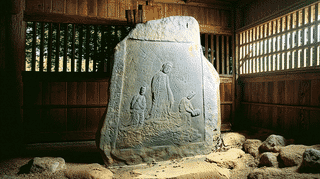
Discover the Shimotoriwatari Kuyo Sekito, a nationally designated Historic Site in Fukushima featuring a rare 1258 Amida Triad relief. Learn about this touching memorial built by a daughter for her mother during the Kamakura period.
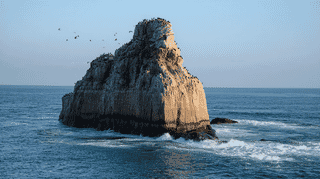
Discover Terushima Cormorant Habitat, a National Natural Monument in Iwaki, Fukushima Prefecture. This dramatic 31-meter sea cliff hosts Japanese cormorants from October to April, marking the southern limit of Pacific coast breeding. A hidden gem near Onahama's coastal resorts.

Discover Aizu Shingū Castle Ruins, a nationally designated historic site in Kitakata, Fukushima. Explore the remains of a medieval warrior clan's fortress with massive moats, earthworks, and rare archaeological finds from the Kamakura to Muromachi periods.
Irimizu Limestone Cave in Tamura City, Fukushima is a 900-meter cave designated as a National Natural Treasure in 1934. Offering an authentic caving experience through unaltered passages with knee-deep cold water, three progressive courses cater to beginners and seasoned adventurers alike.
Terraces, ramparts, and dry moats on a wooded ridge above the Abukuma River mark Shirakawa Castle, the Yuki clan seat abandoned after their fall in 1590.
The Shirakawa Barrier guarded the ancient road into Michinoku from a hill in Fukushima. Lost for centuries, then found again, it drew poets from Nōin to Bashō.
Within the grounds of Suwa Shrine in Ono Town, Fukushima Prefecture, two extraordinary cedars rise nearly 50 meters into the sky. Known as Okina-Sugi (Grandfather) and Ouna-Sugi (Grandmother), they are said to have been planted around 780 CE by the Nara-period courtier Fujiwara no Tsugutada. Designated a National Natural Monument in 1937, this pair is the only surviving grandfather-and-grandmother cedar pair in Japan.
The Great Zelkova of Takase in Aizuwakamatsu City, Fukushima Prefecture, is a National Natural Monument estimated to be around 500 years old, with a root circumference of 12.55 meters. Standing on the northeastern earthwork of the unfinished Kozashi Castle begun by Uesugi Kagekatsu in 1600, this colossal zelkova silently bears witness to the turbulent transition from the Sengoku era through the Battle of Sekigahara.
Ancestral seat of Date Masamune's clan in Fukushima: a medieval lord's residence, its planned town, and the only confirmed garden in a Tohoku warrior house.
Perched on a 407-metre hilltop above the left bank of the Abukuma River in Shirakawa, Fukushima, the Tennouzan Site preserves a Yayoi-period village from around the 1st century CE. Its pottery became the type specimen for late Yayoi ceramics across southern Tohoku and Hokuriku, named Tennoyama-style. The site was designated a National Historic Site in 2021, and its excavated artifacts received National Important Cultural Property status in 2024. A new walking path leads visitors to the summit, while the nearby Shirakawa City Museum of History and Folklore displays original finds.
Two Japanese maples in Iwaki droop their branches into a wide, umbrella-shaped crown. The weeping form, judged a mutation, became a Natural Monument in 1937.
Nakada Yokoana in Iwaki, found during 1969 road work, is a rare painted tomb cave: red and white triangles in three tiers, and a fully red-painted chamber floor.
Standing within the grounds of Fukumitsu Kokūzō-son in Otama Village, Fukushima, Baba Zakura is an Edohigan cherry tree estimated to be over 1,000 years old. Designated a National Natural Monument in 1936, it is linked by legend to the Heian-period samurai Minamoto no Yoshiie, who is said to have stuck his cherry-wood riding whip into the ground as a hitching post that took root and grew into this very tree. Also known as Komadome no Sakura (Horse-Tying Cherry) and Tanemaki Zakura (Seed-Sowing Cherry), it blooms each year around April 20 with delicate flowers that shift from pale pink to white.
Hebusu-numa, a small pond at the 842-meter summit of Mt. Hebusu in Kawauchi Village, Fukushima Prefecture, has been designated a National Natural Monument since 1941 as a breeding site for the forest green tree frog. Discover this protected mountain sanctuary where rare amphibians lay foam-wrapped eggs on overhanging branches—one of only two such designated sites in Japan, safeguarded by villagers for more than 80 years.
A National Historic Site spread across the south bank of the Mano River in Kashima Ward, Minamisoma. Around one hundred Late-Kofun mounds — mostly small round burials, plus two keyhole tombs including the 28.5-metre Mound No. 20 — yielded a rare pair of gilt-bronze fish-shaped pendants of continental origin.
More from Fukushima
Fukushima’s registered properties across designations, with featured heritage and travel notes.
The complete kokuhō catalogue — browse by prefecture, period, and category.
Nationwide jūyō bunkazai — architecture, sculpture, painting, crafts, and documents.