
National Treasures of Gifu
岐 阜 県 の 国 宝Gifu’s national treasures — properties designated kokuhō for their exceptional value to the nation.
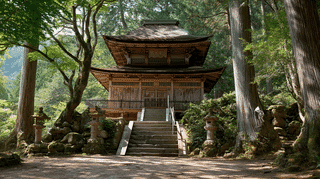
A sutra repository of 1408 at Ankokuji in Takayama, Gifu. Inside it stands an octagonal cabinet for the scriptures that turns about a post at its centre.
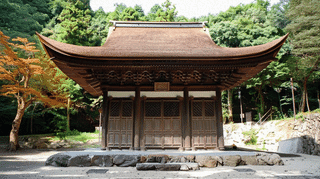
A founder's hall at Eihoji in Tajimi, Gifu, joining an outer and an inner chamber through a linking bay. The inner chamber is thought the older of the two.
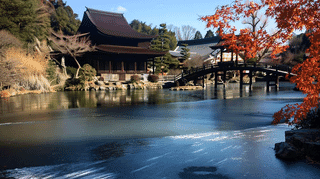
A middle-sized Zen Buddha hall at Eihoji in Tajimi, Gifu, three bays square. It simplifies the Zen manner and leaves its front open to the outside air.
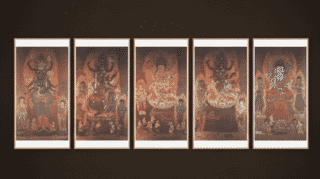
Five Heian scrolls at Kishinji in Ono, Gifu. Only three complete sets survive from before the Kamakura period, and two of these scrolls carry a date on them.

Discover the Gilt Bronze Lion and Arabesque Pattern Bowl (Kondō Shishi Karakusa Mon Hachi), a Nara-period National Treasure housed at Gokoku-no-ji Temple in Gifu City. Learn about its legendary connection to the Great Buddha of Todai-ji and plan your visit.
Discover the National Treasure tachi signed by Yasutsugu, a masterwork of the Ko-Aoe swordsmithing school from the Kamakura period. Once owned by Shogun Ashikaga Yoshiaki, this magnificent blade is housed at Hikaru Museum in Takayama, Gifu Prefecture.
The National Treasure 'Nittō Guhō Junrei Kōki' is the diary of the Heian-period Tendai monk Ennin (Jikaku Daishi), who traveled across Tang Dynasty China for nearly ten years as part of the last Japanese embassy. This oldest surviving manuscript, transcribed by the monk Kanetane in 1291, is an invaluable historical record of ninth-century Chinese society, customs, and religion — ranked alongside Marco Polo's Travels as one of the great travel accounts in world literature.
More from Gifu
Gifu’s registered properties across designations, with featured heritage and travel notes.
The complete kokuhō catalogue — browse by prefecture, period, and category.
Nationwide jūyō bunkazai — architecture, sculpture, painting, crafts, and documents.