
National Treasures of Hyogo
兵 庫 県 の 国 宝Hyogo’s national treasures — properties designated kokuhō for their exceptional value to the nation.
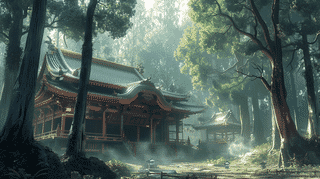
A late Kamakura-period hall in Kobe, Hyogo Prefecture. Another hall of exactly the same name over in Ehime is also a National Treasure in its own right.
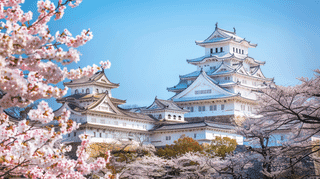
Four Momoyama-period corridor turrets at Himeji Castle in Hyogo. Turrets of nearly the same name here are listed in a lower category altogether instead.
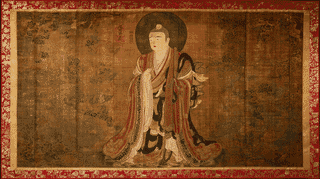
Ten Heian-period scrolls owned by Ichijoji in Hyogo Prefecture, showing the nine Tendai patriarchs with Prince Shotoku himself added on to the series.

This Tang dynasty manuscript (7th–8th century) is the oldest surviving copy of Volume 6 of the Shishuo Xinshu (Shishuo Xinyu), a celebrated Chinese anecdote collection. Designated as a National Treasure, this fragment features elegant Tang calligraphy, Heian-period reading marks, and esoteric Buddhist texts on the verso — a testament to over a millennium of Sino-Japanese cultural exchange.
Discover the Sakuragaoka Dōtaku, a National Treasure collection of 14 bronze bells and 7 bronze halberds from the Yayoi period, unearthed in Kobe. See rare pictorial bronze bells at Kobe City Museum.
Discover the Ryūsui-mon Dōtaku, National Treasure bronze bells adorned with flowing water patterns and pictorial scenes of Yayoi-period life, housed at Kobe City Museum in the heart of Kobe's historic foreign settlement.
Held by the Osaka Aoyama Historical Literature Museum in Kawanishi, Hyogo, the National Treasure Tosa Nikki is the manuscript copy made by Fujiwara no Tameie in 1236, who transcribed Ki no Tsurayuki's lost autograph 'without altering a single character.' The closest surviving witness to Japan's first kana diary, it preserves the tenth-century spelling and calligraphic forms of Tsurayuki's original — a literary treasure set in Kawanishi, the legendary birthplace of the Seiwa Genji clan.
Discover the Ichijoji Three-Storied Pagoda, a Japanese National Treasure built in 1171. This stunning late Heian-period pagoda stands in the mountains of Kasai City, Hyogo, as part of the Saigoku Pilgrimage's 26th temple.
The Taishi-do of Kakurin-ji Temple in Kakogawa, Hyogo, built in 1112, is the oldest dated building in Hyogo Prefecture and a designated National Treasure. Its elegant cypress-bark pyramidal roof, refined interior arrangement, and Heian-period murals (rediscovered by infrared photography) offer a rare glimpse into the classical age of Japanese architecture.
Standing in Kakogawa City, Hyogo Prefecture, the Main Hall of Kakurinji Temple is a National Treasure built in 1397 during the early Muromachi period. As the centerpiece of a temple known as the "Horyu-ji of the West," it is celebrated as the finest example of Setchuyo, the eclectic architectural style that fused traditional Japanese, Zen, and Great Buddha forms into a single masterpiece of medieval craftsmanship.
Jōdo-ji Jōdō-dō (Amida Hall) in Ono City, Hyōgo Prefecture, is a National Treasure built in 1192 and completed around 1197 by the priest Chōgen as part of his campaign to rebuild Tōdai-ji Temple after the Genpei War. It is the only surviving Buddhist hall in Japan that preserves the Daibutsu-yō (Great Buddha Style), an architectural idiom imported from Song China. Inside stands the Amida Triad, carved by the master sculptor Kaikei and also designated a National Treasure — the central Amida image reaching 5.3 metres in height. On clear afternoons from mid-summer to autumn, sunset light floods through the western lattice shutters and ignites the golden statues, staging the Buddhist vision of Amida descending from the Western Paradise.
The Main Hall of Rokuyasan Chōkō-ji in Kato City, Hyogo Prefecture, is an early Muromachi-period esoteric Buddhist hall built in 1413. Designated a National Treasure in 1954, this dignified seven-bay-square structure exemplifies the eclectic Setchūyō style and stands amid forested grounds beside the Tsukubane Falls.
At Kobe's Hakutsuru Museum, the National Treasure Daishomu is two Nara-period scrolls of the Sutra of the Wise and the Foolish, brushed in unusually large script.
A National Treasure at Kobe's Hakutsuru Museum: seventy-one scrolls of Nirvana Sutra commentary, fifty-four copied in Tang China, the rest later Japanese additions.
A complete English-language guide to the National Treasure tantō known as 'Fushimi Sadamune,' housed at the Kurokawa Institute of Ancient Cultures in Nishinomiya, Hyōgo. This 30.2-cm Kamakura-period dagger, attributed to the master smith Sadamune of the Sōshū tradition and bearing a vermilion-inscribed appraisal by the Hon'ami family, is celebrated for its crisp temper line, Sanskrit invocations to Fudō Myōō and Bishamonten, and its remarkable provenance from Fushimi Castle through the Katō family to the Kurokawa collection. Includes visiting hours, access, and surrounding sights.
A National Treasure tantō by the master Kyoto smith Rai Kunitoshi (active 1278–1321), preserved at the Kurokawa Institute of Ancient Cultures in Nishinomiya, Hyōgo. This 24.5 cm masterpiece, gifted by the fifth Tokugawa shogun Tsunayoshi to the daimyō Yanagisawa family in 1691, displays a luminous straight temper line, a perfectly preserved tang, and lavish hollyhock-crested mountings — viewable only during the institute's spring and autumn exhibitions.
Seven bronze dagger-axes found with fourteen bells on a Kobe hillside in 1964. Shaped like weapons yet never sharpened, they are a Yayoi National Treasure.
In Jodo-ji's Pure Land Hall in Ono, Hyogo stands a National Treasure Amida triad attributed to Kaikei, its 5.3 m central Buddha lit from behind by the late-day sun.
More from Hyogo
Hyogo’s registered properties across designations, with featured heritage and travel notes.
The complete kokuhō catalogue — browse by prefecture, period, and category.
Nationwide jūyō bunkazai — architecture, sculpture, painting, crafts, and documents.