
Registered Tangible Cultural Properties of Kagoshima
鹿 児 島 県 の 登 録 有 形 文 化 財Kagoshima · Registered Tangible Cultural Properties
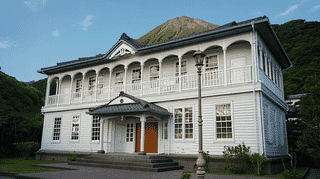
Discover the Former Shimazu Family Serigano Gold Mine Mining Office, a registered tangible cultural property near Kagoshima's Sengan-en Garden. This unique 1904 building blends Western architecture with Japanese roofing, now housing a Starbucks with stunning Sakurajima views. Learn about its gold mining history and the Shimazu clan's legacy.
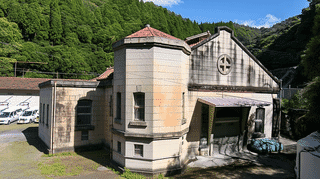
Discover the Ota Power Station in Kagoshima—a rare Meiji-era stone hydroelectric facility built by the Shimazu clan in 1908. This Registered Tangible Cultural Property features unique European-style architecture with an octagonal tower and family crest. Still operational today.

Kawakami Junior High School Main Building is a rare post-war wooden schoolhouse in Kimotsuki Town, Kagoshima. Built in 1949 and registered as a National Tangible Cultural Property, it offers a nostalgic glimpse into Japan's mid-20th century rural education.
Standing in the historic Kaseda-fumoto samurai quarter of Minamisatsuma City, Kagoshima, the Former Ajisaka Clinic is a rare single-story wooden Western-style medical building from the early Shōwa period, built by Dr. Shigehiko Ajisaka. Its varied roof composition, weatherboard walls, and decorative eave supports reflect the era's blend of Japanese craftsmanship and Western style. Registered as a National Tangible Cultural Property in 2009, it is a constituent of the Japan Heritage 'Samurai Town' storyline.
An 1894 stone gate in Yamashitacho, Kagoshima City. Its 3.1-metre opening served a middle school, a library and the prefectural office. Registered 2008; free to see.
A 1941 wooden post office at Nakayamada in Minamikyushu, Kagoshima. Extended window frames give it a stick-style face, and the 〒 mark is set into the porch bracket.
Built in 1935 on Kakeroma Island in Setouchi, Kagoshima, this 3.7-square-metre concrete structure in shrine form held imperial portraits and the education rescript.
A white wooden clinic of 1928 on the old samurai street at Nagayoshi in Hioki, Kagoshima. It practised for fifty years, closing in 1978, and covers 52 square metres.
A late Edo samurai house on Tanegashima, registered in 2017. Its attic yielded a 1551 spear licence issued to Tanegashima Tokitaka and a 1513 paired portrait.
A late Edo bracket-arm gate on Tanegashima, registered in 2017. Round log posts are rare in old Satsuma, and carved mouldings survive in its smallest members.
Built in 1929 on Tokunoshima, this concrete schoolhouse encloses its hall and stair against typhoons. Registered in 2021, it is the island's oldest concrete school.
A 24 metre wall in Kagoshima City, registered in 2014, stacking coursed welded tuff, English bond brick and pantiles as it bends and changes height with the ground.
A late Meiji wooden house in Kagoshima City, registered in 2014, with three ranges set in staggered echelon and reception rooms fitted in black persimmon wood.
This 1909 timber office in Kagoshima has a curved mukuri porch bearing the Shimazu crest. Moved to the site in 1986, it now houses the Satsuma Kiriko gallery shop.
Built in 1921 above the Myoken powerhouse in Kirishima, this cylindrical stone tank of 76 square metres feeds Unit 1 through a penstock over 150 metres long.
A rectangular stone tank of 1921 holding Amorigawa water for two generators at Myoken, Kirishima. Its penstock crosses beneath a road on a cut stone arch.
A welded tuff powerhouse of 1921 on the Amorigawa in Kirishima, registered in 2011. Its 403 square metres of edo-giri stonework still serve a working hydro plant.
Tucked into a wooded hillside in Isa City, Kagoshima, the Former Sogi Power Plant Head Tank is a precisely cut-stone reservoir built in 1909. As a key component of Noguchi Shitagau's Sogi Second Power Plant, it represents one of Kyushu's earliest water-channel hydroelectric facilities. Unlike the famous submerged brick main hall, this head tank sits on high ground and remains visible year-round. Now a National Registered Tangible Cultural Property, it stands at the cradle of Japan's electrochemical industry.
Completed in 1909 and drowned by the Tsuruda Dam, this brick hydroelectric station in Isa City rises from the reservoir only from about May to September each year.
The Former Taishi Family Takakura in Tatsugo on Amami Oshima is an early Taisho raised granary registered in 2009. It stands outdoors in Toshime Park, free to view.
More from Kagoshima
Kagoshima’s registered properties across designations, with featured heritage and travel notes.
The complete kokuhō catalogue — browse by prefecture, period, and category.
Nationwide jūyō bunkazai — architecture, sculpture, painting, crafts, and documents.