
Shōwa
Kochi · 昭和Browse Kochi’s cultural heritage from the Shōwa period (1926 – 1989). Filter by type and keyword, with concise stories, maps, and travel tips.
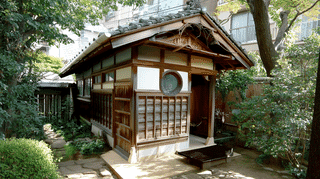
Discover the Tanitoyoke Residence Toilet, a nationally registered tangible cultural property in Tano-cho, Kochi. This early Showa-era structure showcases exquisite sukiya (tea house) style design elements, demonstrating Japan's refined aesthetic sensibility that extends even to utilitarian architecture.

A steel tower off Kochi: 64 spiral steps drop seven meters under Tatsukushi Bay to round windows on the reef. Built 1971, registered 2022, closed since May 2026.
In the old merchant town of Tano, Kochi, this small 1938 storehouse shows Tosa craft clearly: thick lime-plaster walls banded by four tiers of rain-cutting tiles.
In Tano, Shikoku's smallest town, this 1937 cultural property gave a coastal fishing master's home the formal entrance and gentry rooms of a samurai house.
Built in 1938 for the Arisawa, who owned Tano's fishing fleet, this timber annex keeps a beach-facing passage—a registered cultural property in old-town Tano, Kochi.
In the fishing town of Usa in Kochi, this around-1947 registered building holds four rooms set in the order dried bonito is made: boiling, smoking, mold, storage.
In Usa, a Kochi town known as the birthplace of Tosa-bushi, these two 1947 buildings are where the Izumi family prepared and sun-dried bonito for katsuobushi.
A Tosa fishing-town house rebuilt around 1947 after the 1946 Nankai earthquake, its plaster gables banded with mizukiri-gawara drip-tiles, the upper floor one hall.
Ittohyo Chinka-bashi in Shimanto-cho, Kochi Prefecture, is the oldest surviving submersible bridge on the Shimanto River, built in 1935. Designated as a National Registered Tangible Cultural Property, this railingless bridge embodies the local philosophy of living in harmony with the river. Its distinctive pier-less center span creates a graceful curve that blends beautifully with the clear stream and gorge landscape.
Discover Umi no Gallery in Tosashimizu, Kochi — a Registered Tangible Cultural Property designed by pioneering architect Masako Hayashi. This shell museum features 50,000 specimens in a stunning folded-plate concrete structure inspired by the sea.
The Onishi Family Residence Storehouse in Nahari Town, Kochi Prefecture, is a Registered Tangible Cultural Property built in 1938. This traditional earthen storehouse features distinctive Tosa-region architectural elements including mizukiri-gawara drip tiles and fine plasterwork. It forms part of Nahari's remarkable historic townscape, once a thriving timber port, where visitors can enjoy a walking tour of multiple registered cultural properties.
Discover Kawaguchi Bridge, a 1935 reinforced concrete bridge in Niyodogawa Town, Kochi Prefecture. This Registered Tangible Cultural Property features rare Flemish bond brick piers and geometric Art Deco parent pillars spanning the crystal-clear Doi River, a tributary of the famous Niyodo Blue river.
Discover the Former Taisho Forest Road Kakinoki-Sako Bridge, a registered tangible cultural property in Shimanto Town, Kochi. This 1944 reinforced concrete arch bridge tells the story of Japan's forest railway era along the pristine Shimanto River basin.
Discover the Former Taisho Forest Road Koyagauchi Tunnel, a registered tangible cultural property in Shimanto Town, Kochi Prefecture. Built around 1944, this 138-meter concrete tunnel once carried timber-laden trolleys and now serves as a living testament to Japan's forestry heritage along the Yusuhara River.
Discover the Former Taisho Forest Road Sagawa Bridge (Megane Bridge) in Shimanto Town, Kochi. This 1944 reinforced concrete triple-arch bridge is a Registered Tangible Cultural Property that tells the story of Japan's forestry industry along the Shimanto River.
The Former Taisho Forest Road Yusu-tanigawa Bridge is a reinforced concrete single-arch bridge built in 1944 along the Yusuhara River in Shimanto Town, Kochi Prefecture. Registered as a national Tangible Cultural Property, this small but historically significant bridge preserves the memory of the forest railway that once powered the Shimanto River basin's thriving forestry industry. Standing alongside the adjacent stone-and-brick Yusu-tanigawa Bridge, the pair offers a rare glimpse into the evolution of modern civil engineering in rural Japan.
A 1935 reinforced concrete bridge over the Niyodo River in Kochi, railless and built to be overtopped by floods, its 13-metre arch springing from bedrock.
Discover Keikisō, a Registered Tangible Cultural Property in Kami City, Kochi. This charming thatched-roof hermitage was built in 1934 for the renowned poet Yoshii Isamu, lyricist of "Gondola no Uta," during his years of seclusion in the mountain hamlet of Inono.
Koyagauchi Bridge is a reinforced concrete submersible bridge built in 1953 over the Yusuhara River in Shimanto Town, Kochi Prefecture. Registered as a National Tangible Cultural Property in 2008, the bridge is notable for its ingenious use of natural bedrock as foundations and its hydrodynamic design features that minimize flood damage. It stands as a testament to the harmonious coexistence between the people of the Shimanto River basin and the powerful forces of nature.
Discover Satokawa Bridge (Satokawa-bashi), a registered tangible cultural property spanning the Shimanto River in Shimanto Town, Kochi. Built in 1954, this chinkabashi submersible bridge is a testament to local resilience and ingenuity.