Toshodaiji Temple Kyozo: A National Treasure Older Than the Temple Itself
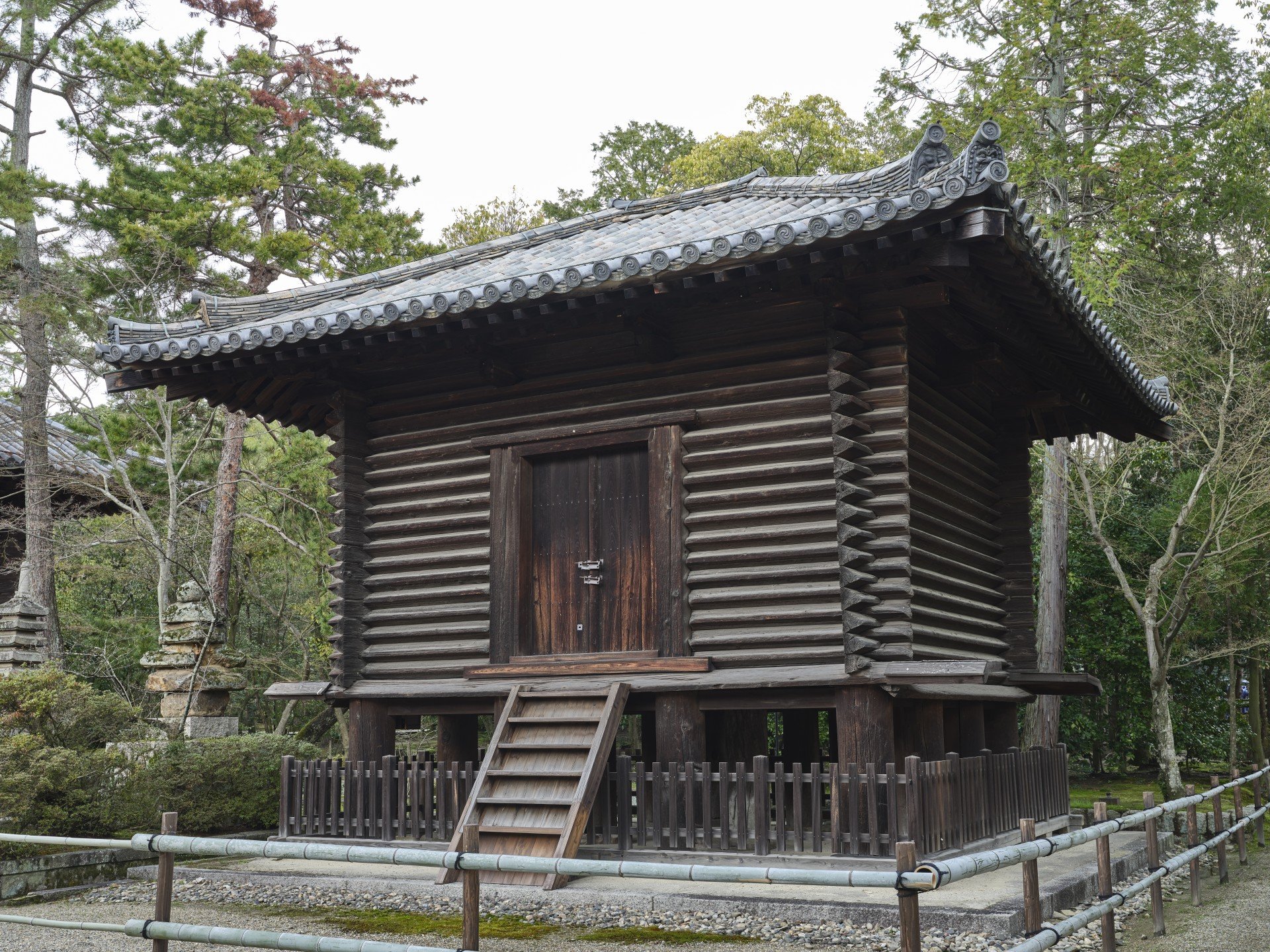
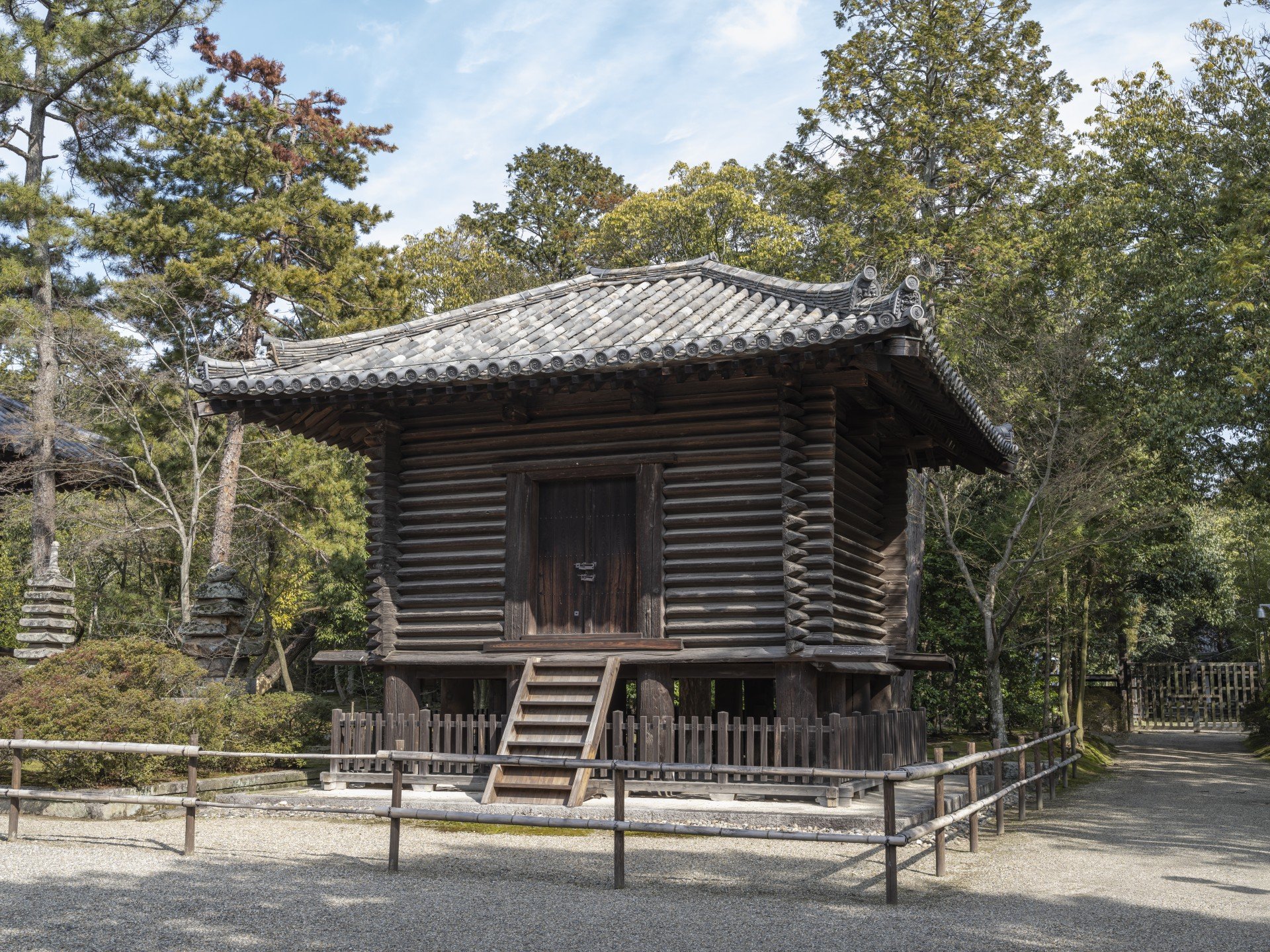
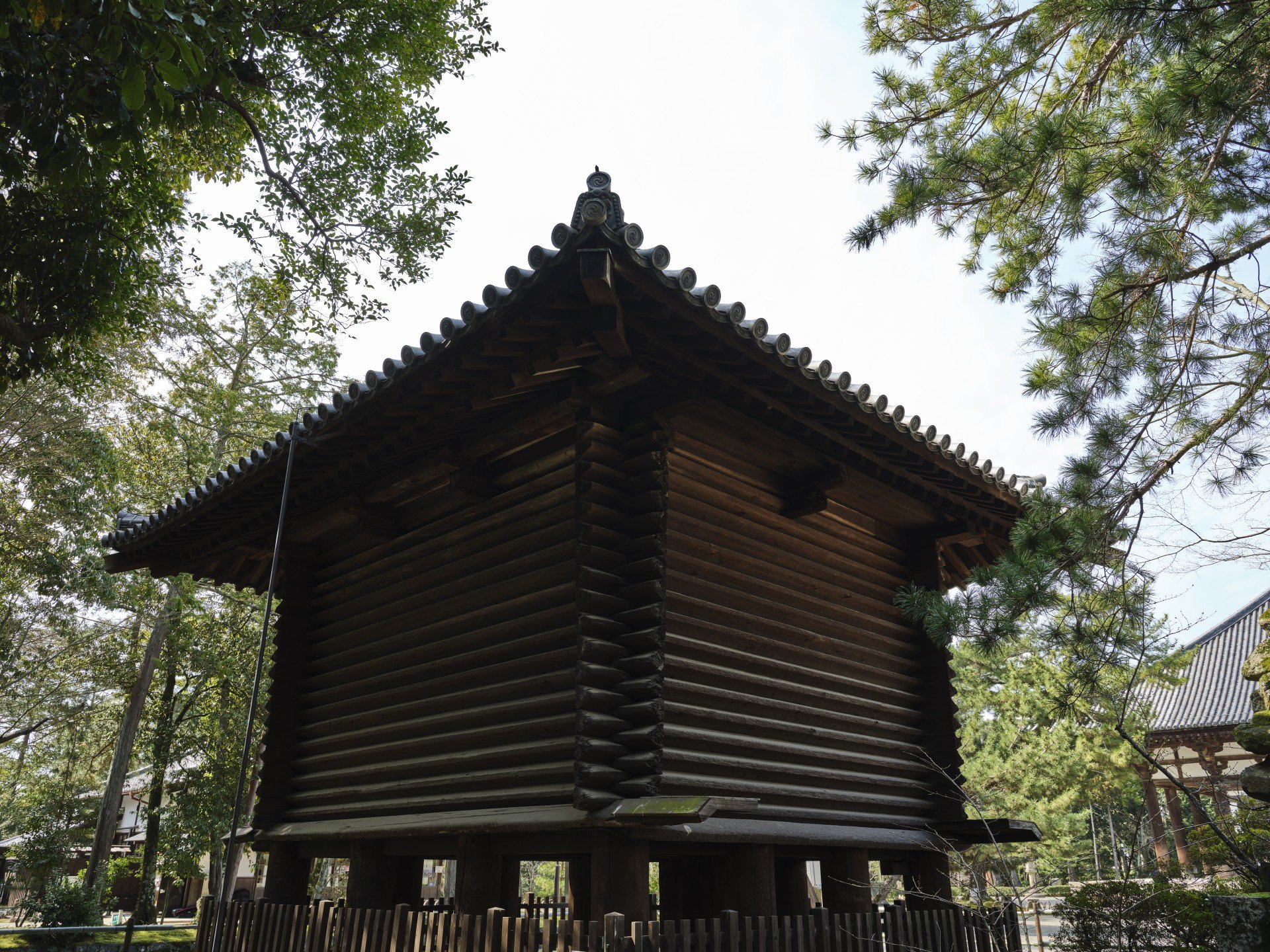
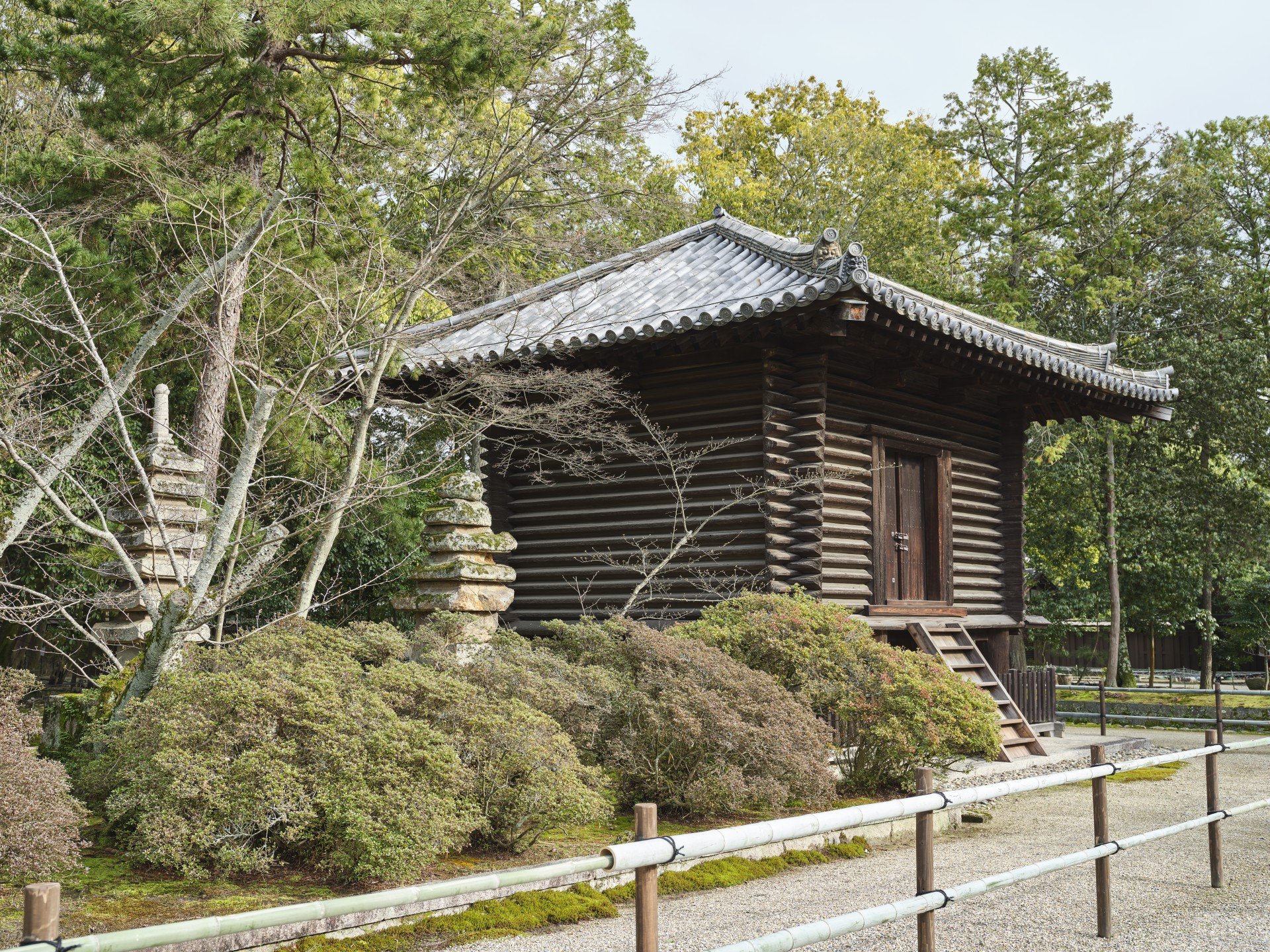
Hidden in a quiet corner of Toshodaiji Temple's sacred grounds in Nara stands a humble yet extraordinary structure—the Kyozo (Sutra Repository). This unassuming wooden building holds a remarkable distinction: it is Japan's oldest surviving azekura (log-cabin style) storehouse, predating even the establishment of the temple where it now resides. Designated as a National Treasure in 1953, this architectural gem offers visitors a rare glimpse into 8th-century Japanese construction techniques and a connection to imperial Japan that few other buildings can claim.
The Remarkable History of the Kyozo
The story of the Kyozo begins not with Buddhist monks, but with Japanese royalty. Before Toshodaiji Temple existed, this land in Nara's Gojo district was the residence of Prince Niitabe (Niitabe Shinno), the seventh son of Emperor Tenmu. The prince was a powerful figure in early Nara period politics, serving alongside Prince Toneri to assist Crown Prince Obito (later Emperor Shomu). The structure that would become the Kyozo was originally built as a rice storehouse (kome-gura) to serve the princely household.
When Prince Niitabe passed away in 735 CE, his estate eventually fell into the hands of the imperial court. In 759 CE, this land was bestowed upon the legendary Chinese monk Ganjin (Jianzhen in Chinese), who had crossed the sea to Japan after five failed attempts, losing his eyesight in the process. Ganjin established his training hall for Buddhist precepts here, initially called "Toritsu Shodai" before becoming known as Toshodaiji Temple. The prince's former rice storehouse was converted to store Buddhist sutras and sacred texts, beginning its new life as the Kyozo.
Why the Kyozo is Designated a National Treasure
The Kyozo received its National Treasure designation on November 14, 1953, following its earlier recognition as an Important Cultural Property in 1904. Several factors contribute to its exceptional cultural significance.
First and foremost, the Kyozo represents the oldest surviving example of azekura construction in Japan. While the famous Shosoin Repository at Todaiji Temple is perhaps more well-known, the Kyozo at Toshodaiji actually predates it, making this modest structure an invaluable document of ancient Japanese architectural technology.
Secondly, the Kyozo serves as tangible evidence of pre-temple structures on the site. Detailed investigations conducted during modern restoration work confirmed that the building existed before Toshodaiji's establishment, validating historical records that describe how Prince Niitabe's estate buildings were incorporated into the new temple complex.
Thirdly, the building preserves evidence of its transformation. Originally constructed with a gabled roof (kirizuma-zukuri), it was later converted to the current hipped roof (yosemune-zukuri) style when adapted for temple use. This architectural evolution can still be traced in the building's structure, providing insights into both aristocratic and religious building practices of the era.
Understanding Azekura Construction
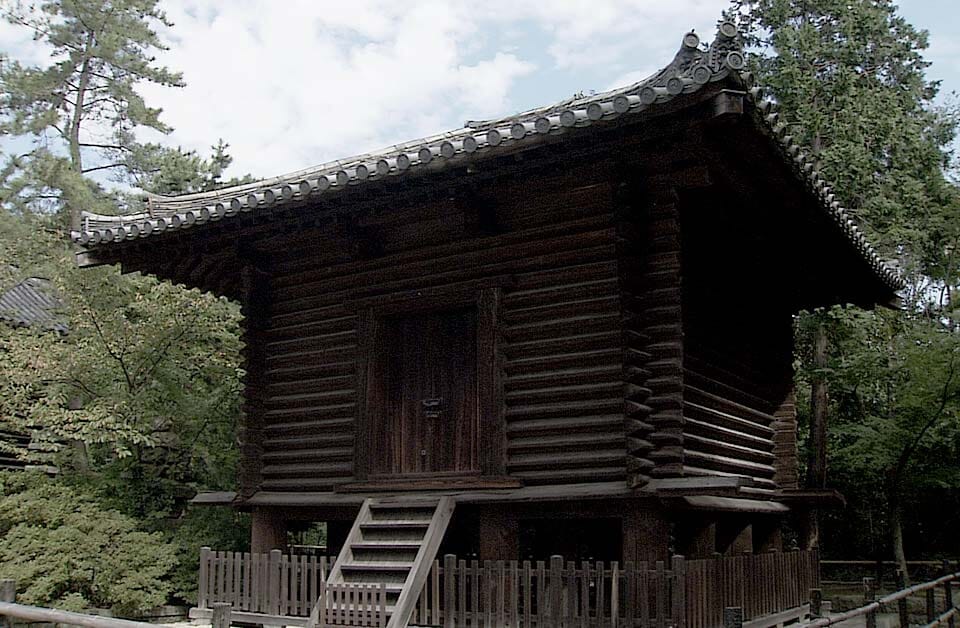
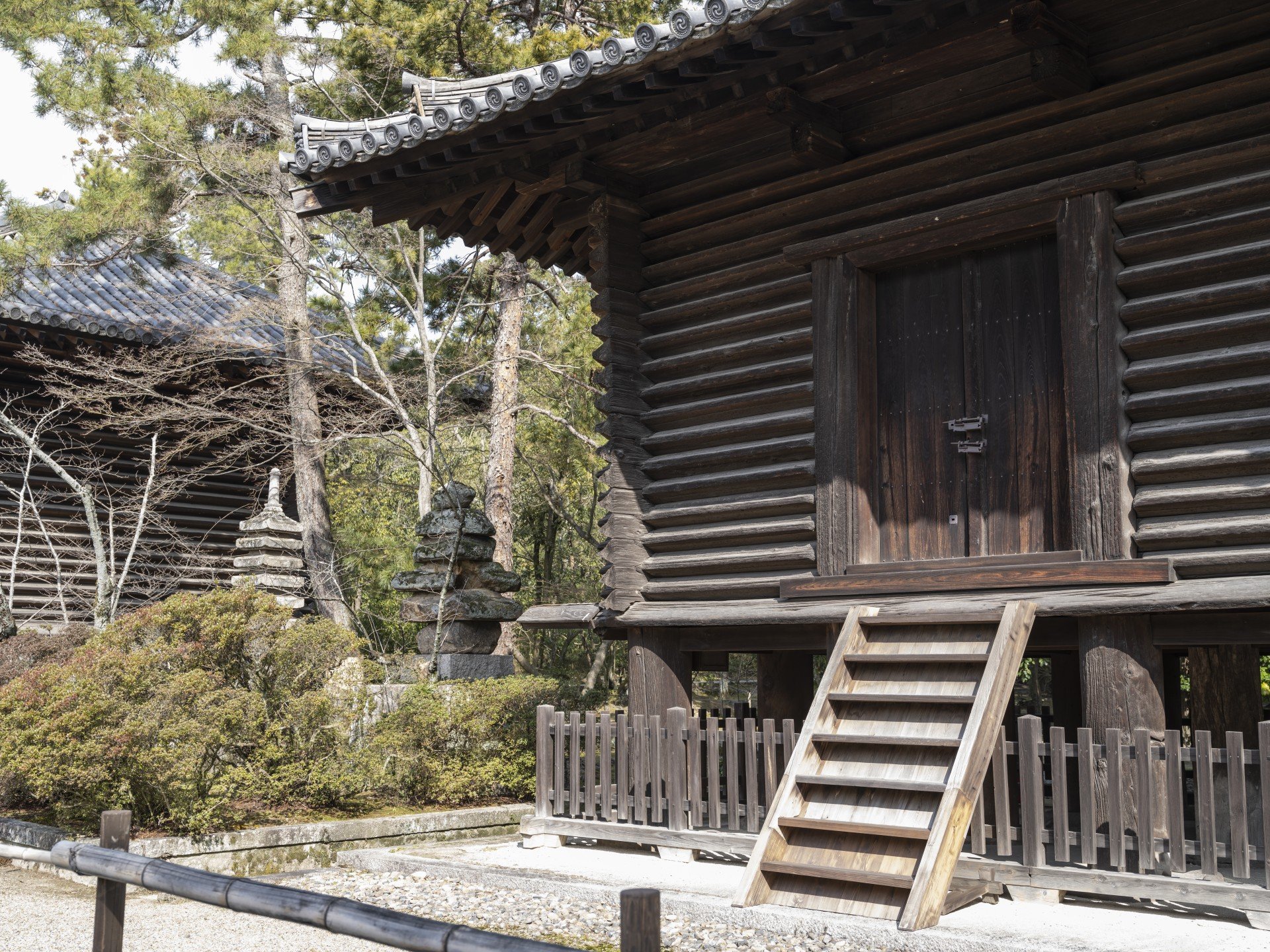
The azekura building style represents one of Japan's most distinctive traditional construction methods, developed primarily for storing valuable goods. The technique involves stacking horizontal logs with triangular cross-sections in an interlocking pattern, creating walls that rise like the woven strands of a basket. The exterior presents a characteristic wave-like pattern where the outer edges of the triangular logs protrude outward.
Several practical advantages made azekura construction ideal for storage buildings. The thick wooden walls provided excellent insulation, maintaining relatively stable temperatures inside regardless of seasonal variations. The elevated floor, raised on sturdy pillars, protected contents from ground moisture and deterred rodents and other pests from entering. The Kyozo's foundation still preserves the distinctive "he-no-ji" (へ-shaped) beams that may have served as water deflectors or rat guards.
Perhaps most remarkably, evidence inside the Kyozo suggests its original function as a grain storehouse. Holes in the main beams indicate where ladders would have been placed, allowing workers to climb up and manage the bulk grain stored within—a practical detail that connects us directly to daily life in an 8th-century imperial household.
Architectural Details of the Kyozo
The Kyozo measures three bays by three bays (approximately 5.5 meters square), making it notably smaller than its neighboring Hozo (Treasure Repository), which stands immediately to the north. Both buildings share the azekura construction style and elevated floor design, but careful observation reveals subtle differences that hint at their different origins.
The Kyozo's roof uses a different support system compared to the Hozo. In the Kyozo, the topmost horizontal log supports a squared beam (keta) that carries the roof, while the Hozo uses extended logs (mochisokuri technique) to directly support the eaves. These structural differences reflect the buildings' different construction periods and purposes.
The roof is covered with traditional hongawara tiles (curved ceramic tiles), which would have been an expensive and prestigious roofing material reserved for important buildings. The hipped roof form, adopted when the building was converted for temple use, extends protection to all four walls equally—an appropriate modification for a structure now dedicated to preserving sacred texts.
The Kyozo and Its Neighbor: A Tale of Two Treasures
Standing side by side in the eastern portion of Toshodaiji's grounds, the Kyozo and Hozo create a compelling visual pair, both representing the azekura tradition yet telling different stories. The Hozo, slightly larger and built after the temple's establishment, was purpose-built to store temple treasures. The Kyozo, smaller and older, carries within its timbers the memory of a prince's household before the arrival of Buddhism to this site.
Today, visitors often overlook these twin structures, drawn instead to the magnificent Kondo (Main Hall) and other more prominent buildings. Yet for those who seek the authentic atmosphere of Nara period Japan, these modest storehouses offer an unparalleled connection to the past. They stand as they have for over 1,260 years, quietly witnessing the passage of time.
Visiting the Kyozo
The Kyozo is located within Toshodaiji Temple's grounds, in the eastern area near the Raido (Worship Hall). While the interior is not open to the public, visitors can appreciate the exterior architecture and the remarkable preservation of this ancient structure. The building's modest size and quiet location mean it often escapes the attention of tour groups, making it an ideal spot for contemplative viewing.
Spring and autumn offer particularly pleasant conditions for visiting, with comfortable temperatures and beautiful seasonal colors in the surrounding gardens. The morning hours tend to be quieter, allowing visitors to appreciate the peaceful atmosphere that the original monks would have experienced.
Nearby Attractions
Toshodaiji Temple itself contains numerous National Treasures and Important Cultural Properties worthy of extended exploration. The Kondo (Main Hall) is the only surviving original Nara period temple main hall in Japan, housing magnificent Buddhist statues including the principal image of Rushana Buddha. The Kodo (Lecture Hall) was relocated from the Nara Imperial Palace, making it the only surviving building from the ancient capital.
A ten-minute walk south brings visitors to Yakushiji Temple, another UNESCO World Heritage Site famous for its East Pagoda (also a National Treasure) and exceptional Buddhist sculptures. Together, these two temples form the heart of the "Nishinokyo" (Western Capital) area, offering visitors a comprehensive introduction to Nara period Buddhist culture.
To the northwest, the tomb of Emperor Suinin provides a serene natural setting surrounded by a moat, while the Heijo Palace Site offers extensive ruins and reconstructed buildings from the ancient capital. These sites combine to create a full-day exploration of Japan's imperial and Buddhist heritage.
- 📍 Plan Your Visit to Nara
- Find tours, activities & transport passes near Toshodaiji Temple Sutra Repository
- [ Todaiji Great Buddha & Nara Park Deer Experience ]
Q&A
- Why is the Kyozo older than Toshodaiji Temple?
- The Kyozo was originally built as a rice storehouse for Prince Niitabe's residence, which occupied this site before the temple was established. When the land was given to monk Ganjin in 759 CE to establish Toshodaiji, the existing storehouse was converted to hold Buddhist sutras, making it older than the temple itself.
- Can visitors enter the Kyozo?
- The interior of the Kyozo is not open to the public. However, visitors can view and photograph the exterior of this National Treasure from the temple grounds, appreciating its ancient azekura construction and historical significance.
- What is the difference between the Kyozo and the neighboring Hozo?
- While both are azekura-style elevated storehouses and National Treasures, they have different origins. The Kyozo predates the temple, having been Prince Niitabe's rice storehouse. The Hozo is slightly larger and was built after the temple's establishment to store treasures. Their roof support structures also differ, reflecting their different construction periods.
- How old is the Kyozo?
- The Kyozo dates to the 8th century (Nara period), making it approximately 1,260 years old. It predates the establishment of Toshodaiji Temple in 759 CE, as it was originally part of Prince Niitabe's estate. Prince Niitabe died in 735 CE, so the building must be at least that old.
- Is the Kyozo related to the Shosoin Repository?
- Both the Kyozo and the famous Shosoin at Todaiji Temple use the azekura (log-cabin) construction technique. However, the Toshodaiji Kyozo is actually considered to be Japan's oldest surviving azekura building, predating even the renowned Shosoin.
Basic Information
| Official Name | Toshodaiji Kyozo (唐招提寺経蔵) |
|---|---|
| Designation | National Treasure (designated November 14, 1953) |
| Construction Period | Nara Period (8th century, before 759 CE) |
| Architectural Style | Azekura (log-cabin), Yosemune-zukuri (hip roof), Hongawarabuki (tile roof) |
| Dimensions | 3 bays × 3 bays (approximately 5.5m × 5.5m) |
| Location | 13-46 Gojo-cho, Nara City, Nara Prefecture 630-8032 |
| Owner | Toshodaiji Temple (Religious Corporation) |
| Temple Hours | 8:30 - 17:00 (last entry 16:30) |
| Admission | Adults: ¥1,000 / High School & Junior High: ¥400 / Elementary: ¥200 |
| Access | 10-minute walk from Kintetsu Nishinokyo Station; Bus stop "Toshodaiji" from JR/Kintetsu Nara Station |
| Contact | TEL: 0742-33-7900 |
References
- Toshodaiji Temple Official Website - Kyozo
- https://toshodaiji.jp/about_kyouzoh.html
- Cultural Heritage Database - Toshodaiji Kyozo
- https://bunka.nii.ac.jp/db/heritages/detail/146178
- Wikipedia - Toshodaiji Temple (Japanese)
- https://ja.wikipedia.org/wiki/唐招提寺
- Wikipedia - Azekura Construction (Japanese)
- https://ja.wikipedia.org/wiki/校倉造
- Wikipedia - Prince Niitabe (Japanese)
- https://ja.wikipedia.org/wiki/新田部親王
- Nara City Tourism Association - Toshodaiji Temple
- https://narashikanko.or.jp/spot/detail_10008.html
- WANDER National Treasures - Toshodaiji Kyozo
- https://wanderkokuho.com/102-02481/
- Nara Prefectural Library - Toshodaiji Kyozo
- https://www.library.pref.nara.jp/nara_2010/0559.html
Last verified: 2026.01.29
Nearby heritages
- Treasure House of Toshodaiji Temple
- Gojocho, Nara City, Nara Prefecture
- Toshodaiji Temple Hall
- Gojocho, Nara City, Nara Prefecture
- Toshodaiji Drum Tower
- Gojocho, Nara City, Nara Prefecture
- Toshodaiji Temple Golden Hall
- Gojocho, Nara City, Nara Prefecture
- Toshodaiji Temple Lecture Hall
- Gojocho, Nara City, Nara Prefecture
- Gilt Bronze Lotus Ornament Ritual Tool
- 50 Noborioji, Nara City, Nara Prefecture
- Gong and Drum Edge
- 50 Noborioji, Nara City, Nara Prefecture
- Tortoise Drum Edge
- 50 Noborioji, Nara City, Nara Prefecture
- Gilt Bronze Ritual Implements
- 50 Noborioji, Nara City, Nara Prefecture
- Former Grounds of Toshodaiji Temple
- Gojocho and Amagi-minamicho in Nara City