
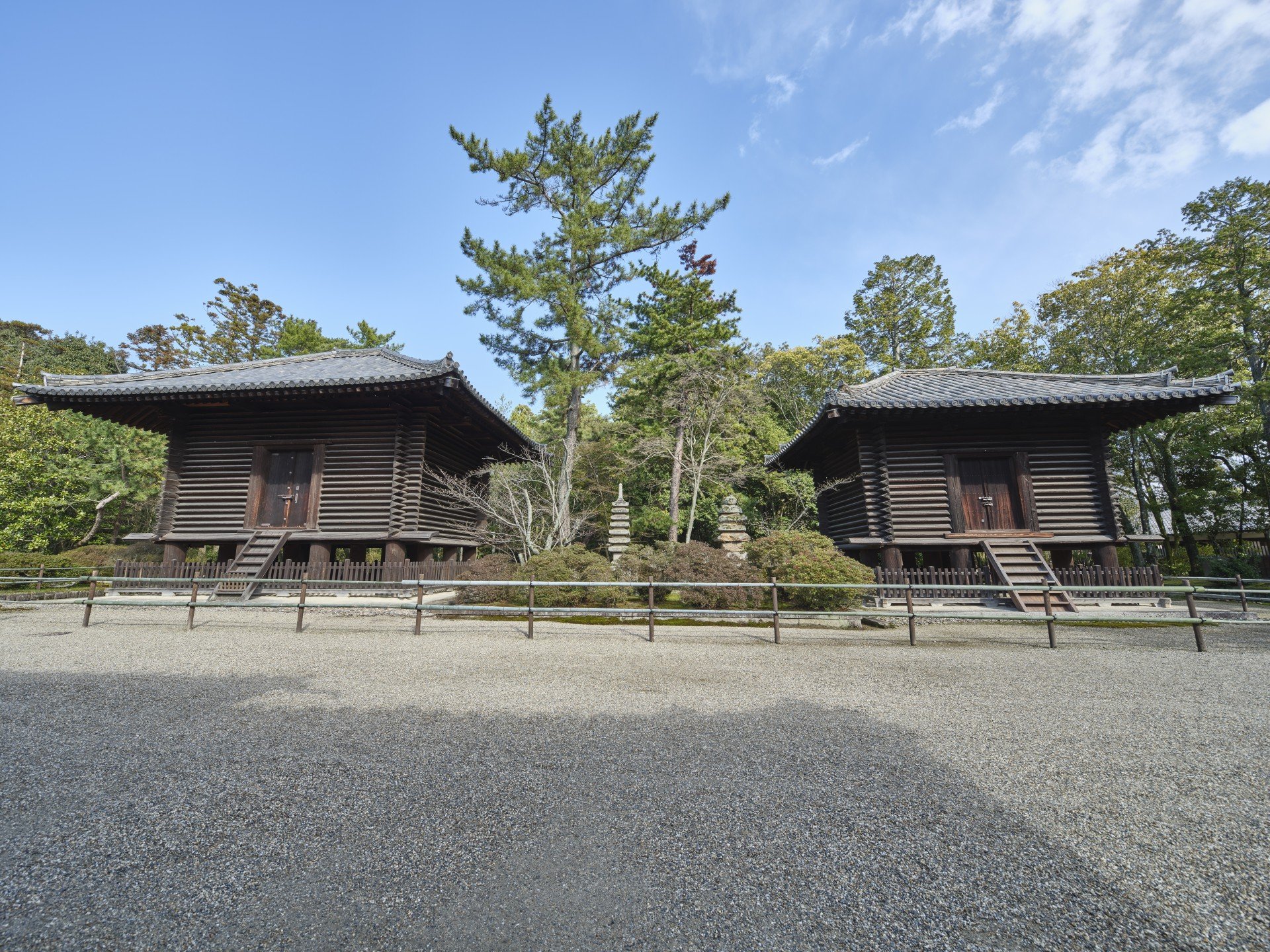
Toshodai-ji Treasure House: A Nara-Period Log Storehouse
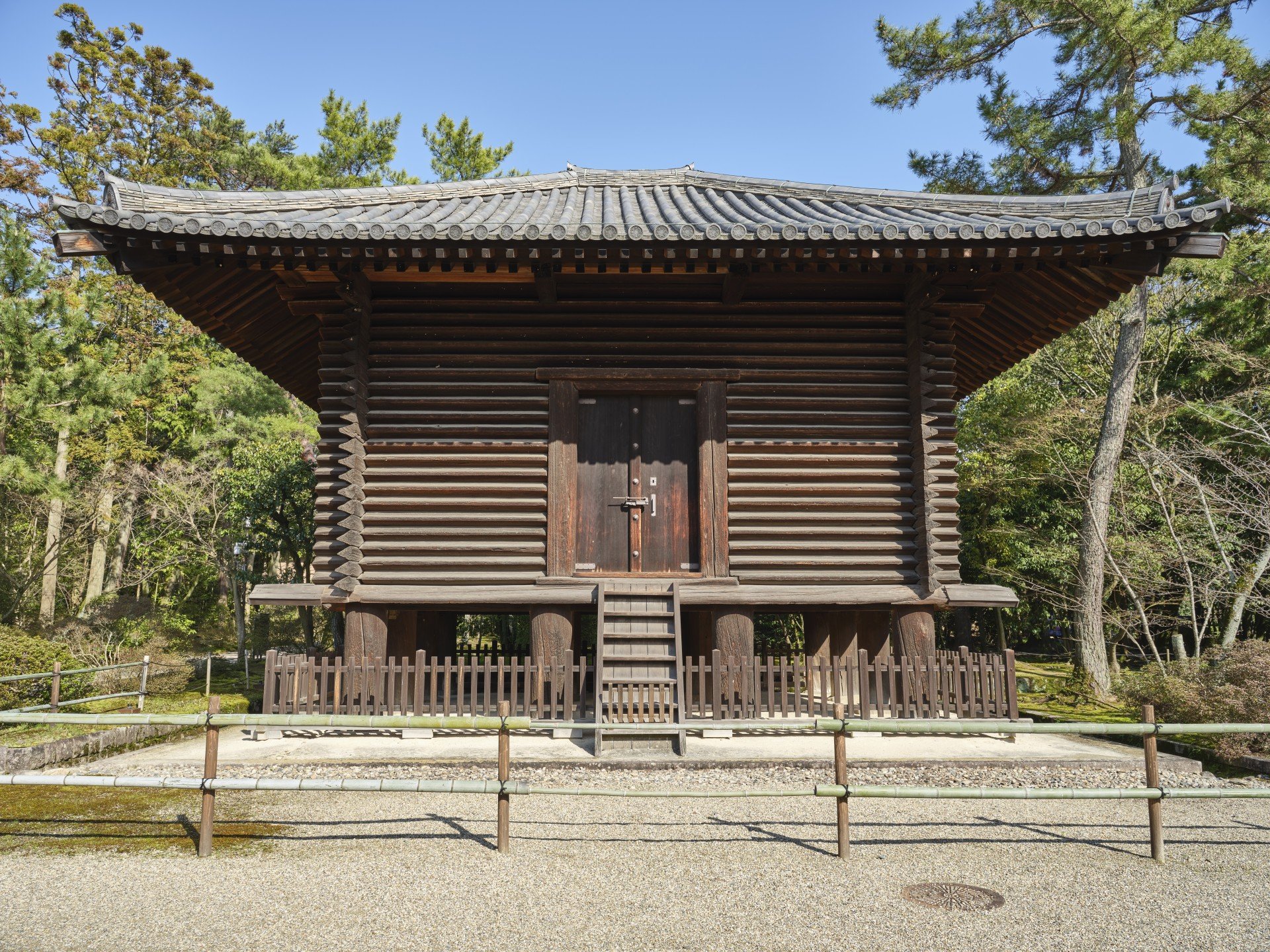
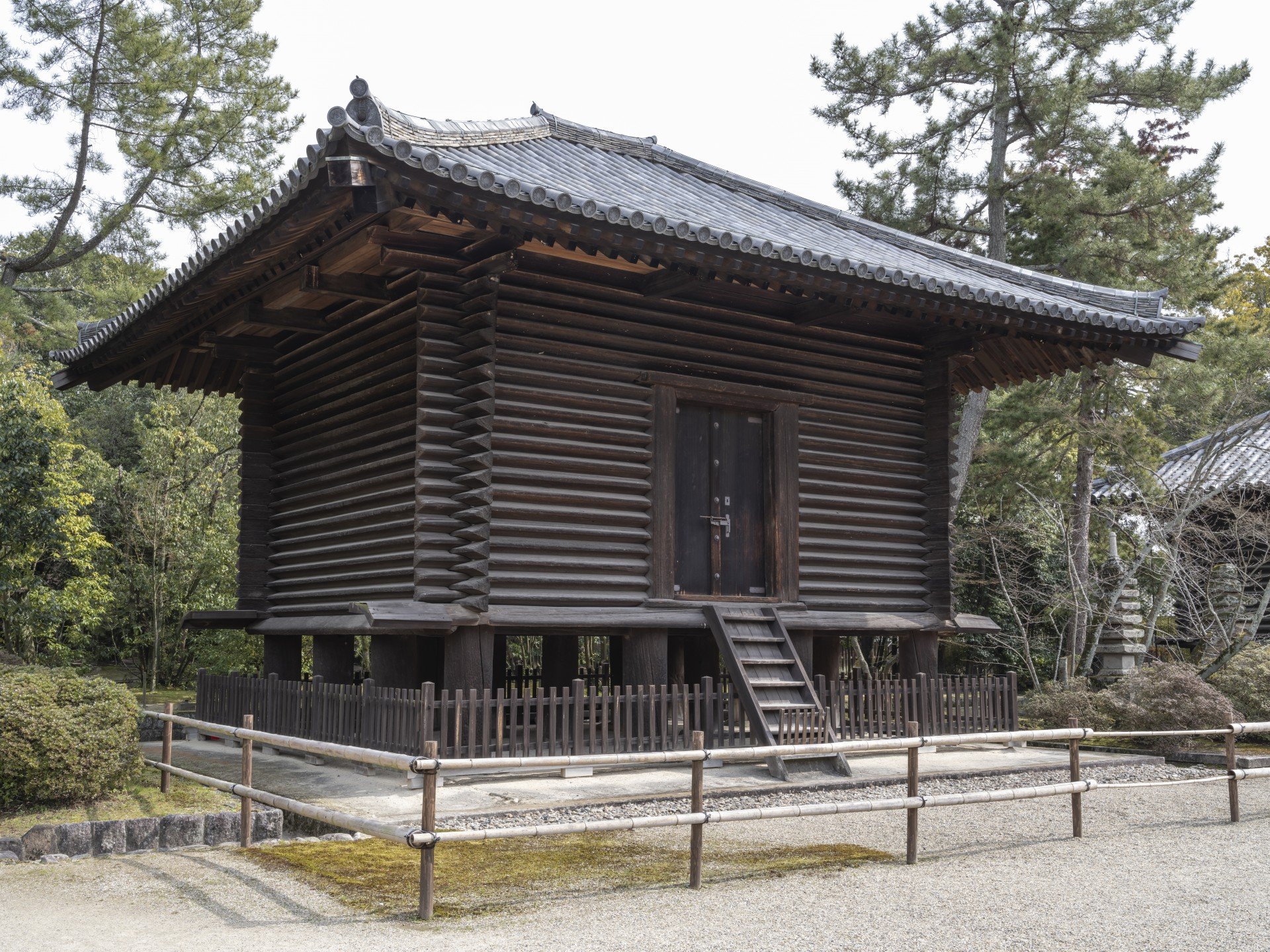
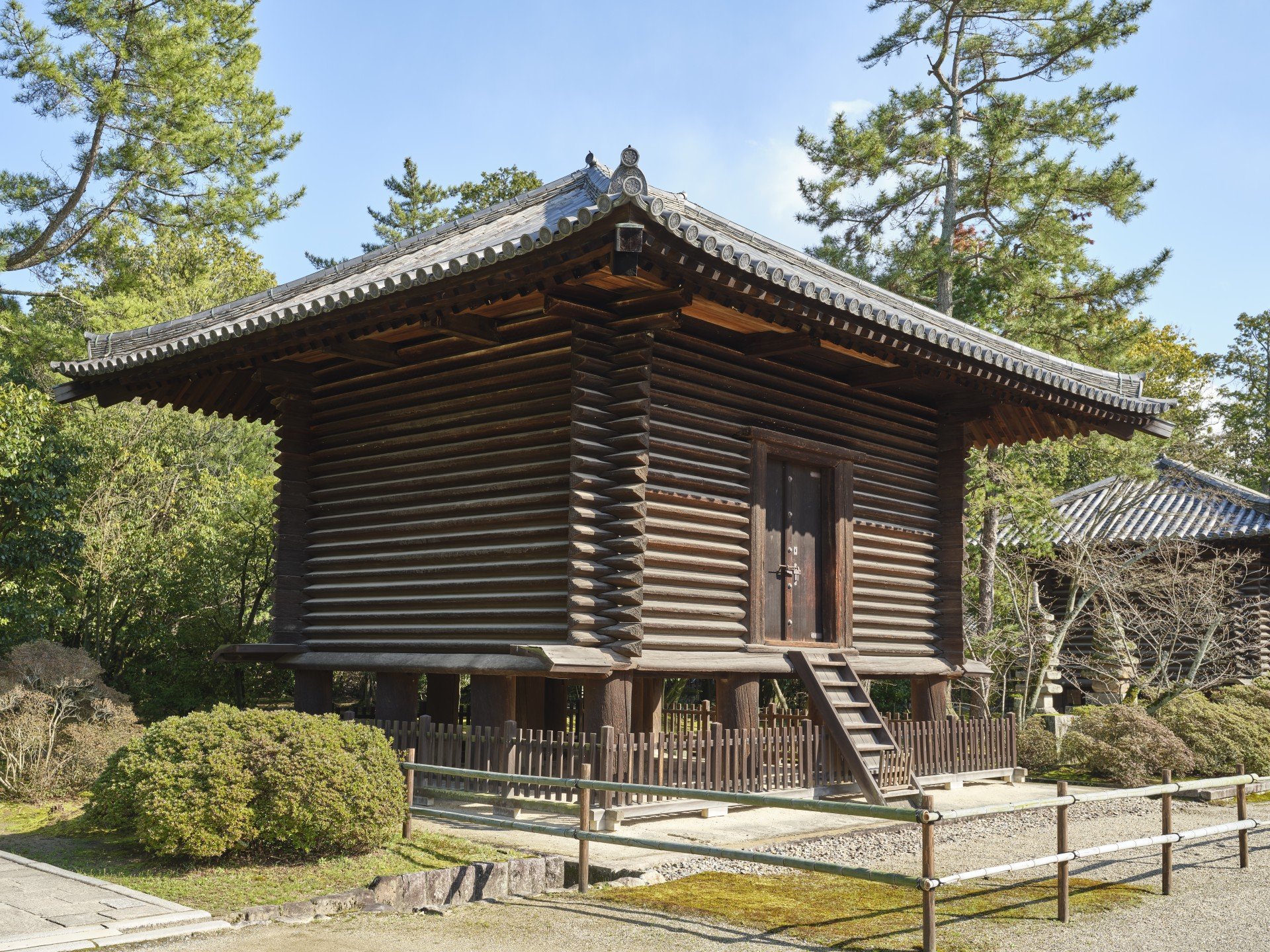
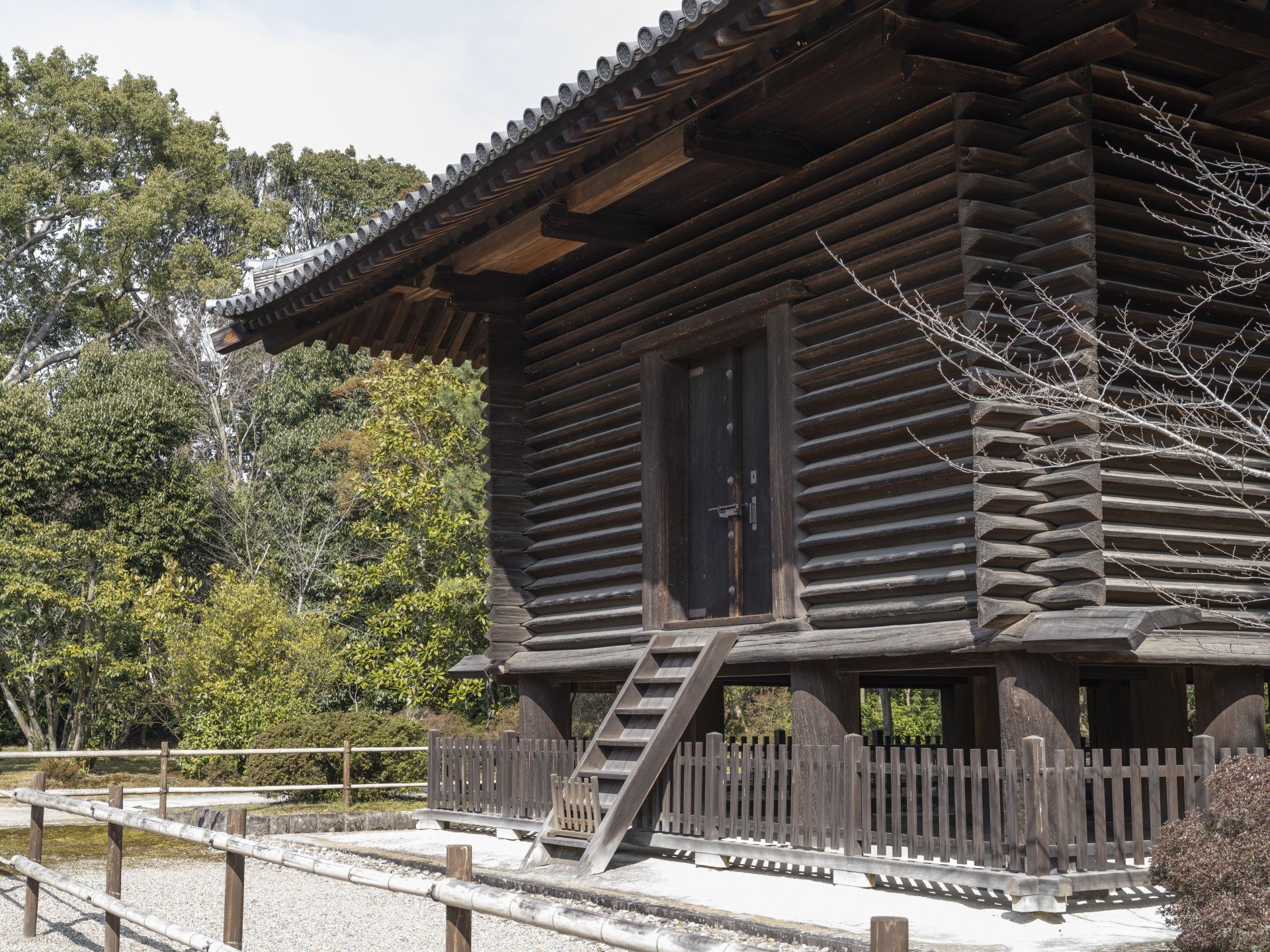
East of the main halls stand two raised timber storehouses, built in the log-cabin technique the Japanese call azekura, in which triangular-section beams are stacked crosswise to form the walls. The northern of the pair is the Treasure House. Like the great Shosoin repository at Todai-ji, it was raised to keep valuables safe, and it has done so since the eighth century.
The building dates to the Nara period, contemporary with the founding generation of the temple. It measures three bays square, carried on posts above the ground, with a hipped roof of hongawara tile. The Agency for Cultural Affairs describes it as large for its type, with a double-eaved roof and interior shelving that keeps its original arrangement, which makes it a representative example of Nara-period azekura construction.
Two Storehouses, Two Histories
The Treasure House is easy to confuse with its neighbour, the Sutra Repository that stands just to its south, since the two share the same log-built walls and raised floor. Their histories differ. The Sutra Repository is older than the temple itself: it began as a granary on the estate of Prince Niitabe, whose land Ganjin received in 759, and it is often called the oldest surviving azekura in Japan, older even than the Shosoin. The Treasure House, by contrast, was built after the temple was established, to serve the community that Ganjin had gathered.
Understanding this pairing is part of the pleasure of standing before them. Two nearly identical boxes of stacked timber, side by side, encode a gap of decades and a change of owner from a prince's household to a monastic order.
Why the Log Method Lasted
Azekura construction was chosen for storehouses for a practical reason. The stacked timber walls respond to the weather: in damp conditions the beams swell and close the joints, and in dry air they contract and open small gaps, letting the interior breathe. For centuries this behaviour was credited with protecting textiles, documents, and ritual objects from rot. Whatever the precise mechanism, the survival of Nara-period fabrics and papers in such buildings shows that the method worked.
The Treasure House was designated a National Treasure in 1959. It is not entered by visitors, but its plain, powerful form is visible from the path, and it repays a slow look. The regularity of the stacked beams, the weight of the tiled roof, and the shadowed space beneath the raised floor together give a clear picture of how the eighth century kept its treasures.
Q&A
- What is the difference between the Treasure House and the Sutra Repository?
- Both are log-built storehouses standing side by side. The Treasure House (north) was built after the temple's founding. The Sutra Repository (south) is older, converted from a granary on Prince Niitabe's estate, and predates the temple.
- What is azekura construction?
- It is a log-cabin method in which triangular-section timbers are stacked crosswise to form the walls. The technique was used for storehouses, the most famous being the Shosoin at Todai-ji.
- When was it built and designated?
- The building dates to the Nara period, eighth century. It became an Important Cultural Property in 1904 and was raised to National Treasure on 27 June 1959.
- Can I go inside?
- No. The storehouse is not open to visitors, but it can be seen and photographed from the precinct path along with the neighbouring Sutra Repository.
- What was kept inside?
- It held the temple's treasures and valuables, in a role comparable to that of the Shosoin repository at Todai-ji, which stored textiles and precious objects.
Basic Information
| Name | Toshodai-ji Treasure House (Hozo) |
|---|---|
| Location | Gojo-cho, Nara City, Nara Prefecture |
| Designation | National Treasure (building); Important Cultural Property from 1904, raised to National Treasure on 27 June 1959 |
| Count | One building (attached items: 4 old materials) |
| Period | Nara period, 8th century |
| Structure | Three bays by three bays, log-cabin (azekura) construction, hipped roof (yosemune-zukuri), hongawara tile |
| Owner | Toshodai-ji |
| Access | Part of the World Heritage site "Historic Monuments of Ancient Nara"; exterior viewing only |
References
- Toshodai-ji official site — Treasure House
- https://toshodaiji.jp/about_houzoh.html
- Agency for Cultural Affairs — National Cultural Properties Database
- https://kunishitei.bunka.go.jp/heritage/detail/102/2480
- Nara City — World Heritage: Toshodai-ji
- https://www.city.nara.lg.jp/site/world-heritage/88527.html
- Nara Prefecture — Cultural Resources: Toshodai-ji
- https://www.pref.nara.lg.jp/ikasu-nara/bunkashigen/main00077.html
Last verified: 2026.07.11