
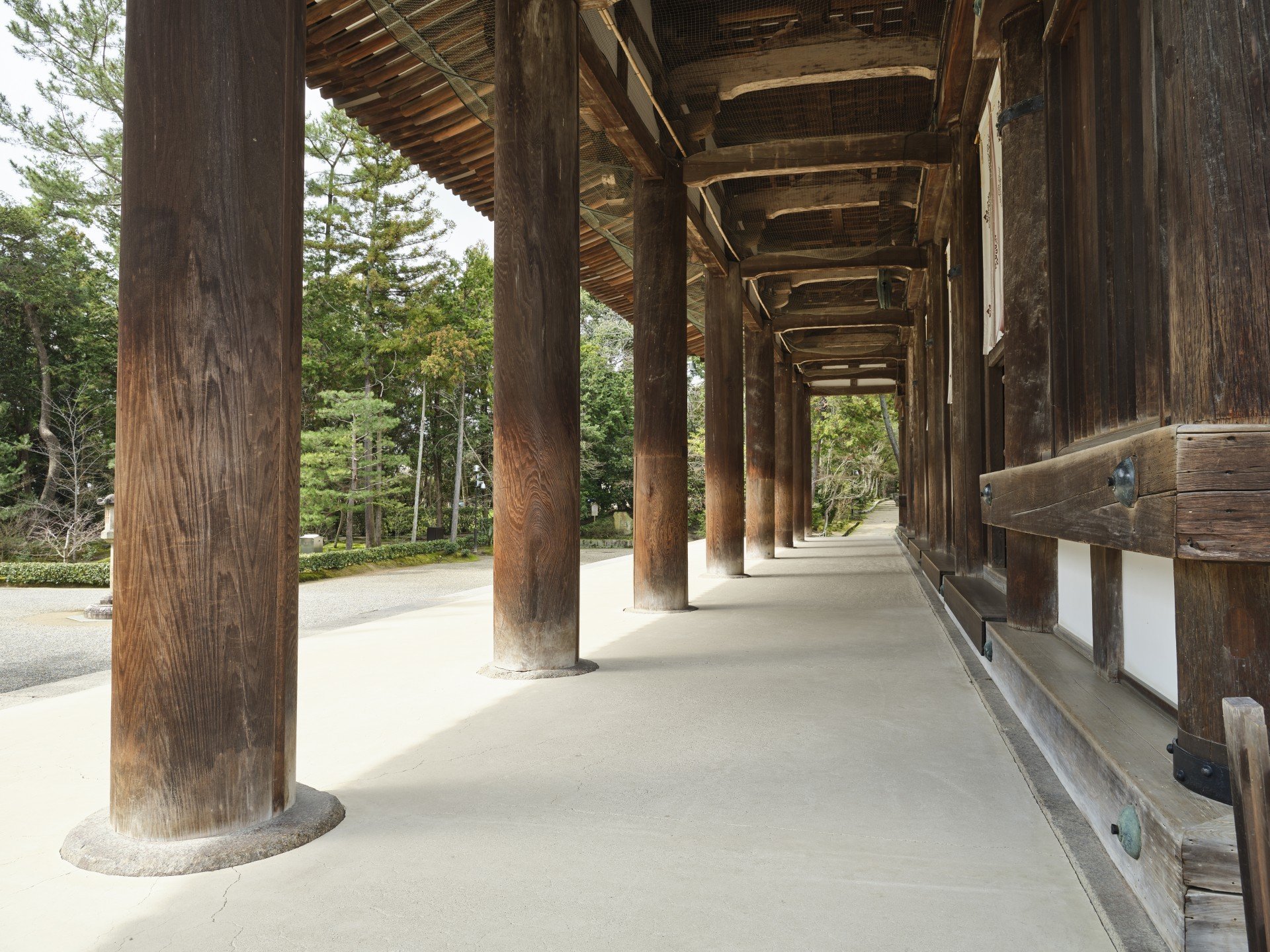
Toshodai-ji Golden Hall: The Last Nara-Period Main Hall Standing
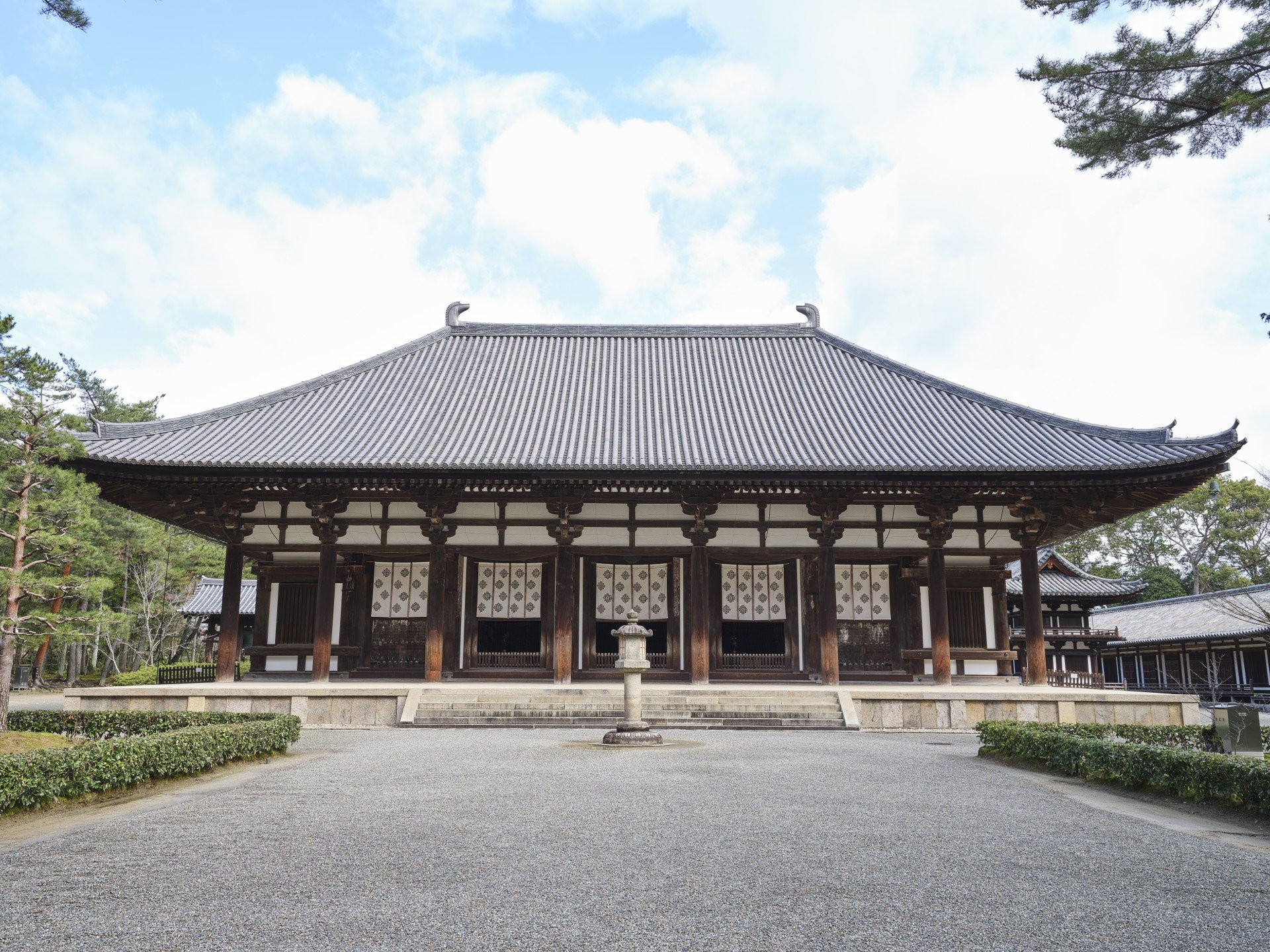
The Golden Hall faces south from behind a screen of eight columns, its front bay left open so that light and shadow move across the floor as the day turns. This is the kondo, the principal worship hall of Toshodai-ji, a temple established in 759 by Ganjin, the Chinese vinaya master known in his homeland as Jianzhen. He reached Nara only after five failed sea crossings and the loss of his eyesight, invited to Japan to give the ordination rites that the young Buddhist establishment still lacked.
The hall came a little after the founder. Ring-dating of its structural timber has identified wood felled in 781, which sets construction in the final years of the eighth century, some years after Ganjin's death in 763. Scholars generally credit the work to the temple's fourth abbot, Nyoho, who is thought to have completed the main precinct.
Why It Is a National Treasure
The claim made for this building is a simple one, and it is not exaggerated: no other temple main hall from the Nara period has come down to us. Eighth-century kondo once stood throughout the old capital, but fire, warfare, and successive rebuilding removed them one after another. What remains here is the single surviving example of its kind, which is why the hall was listed as a National Treasure in 1951.
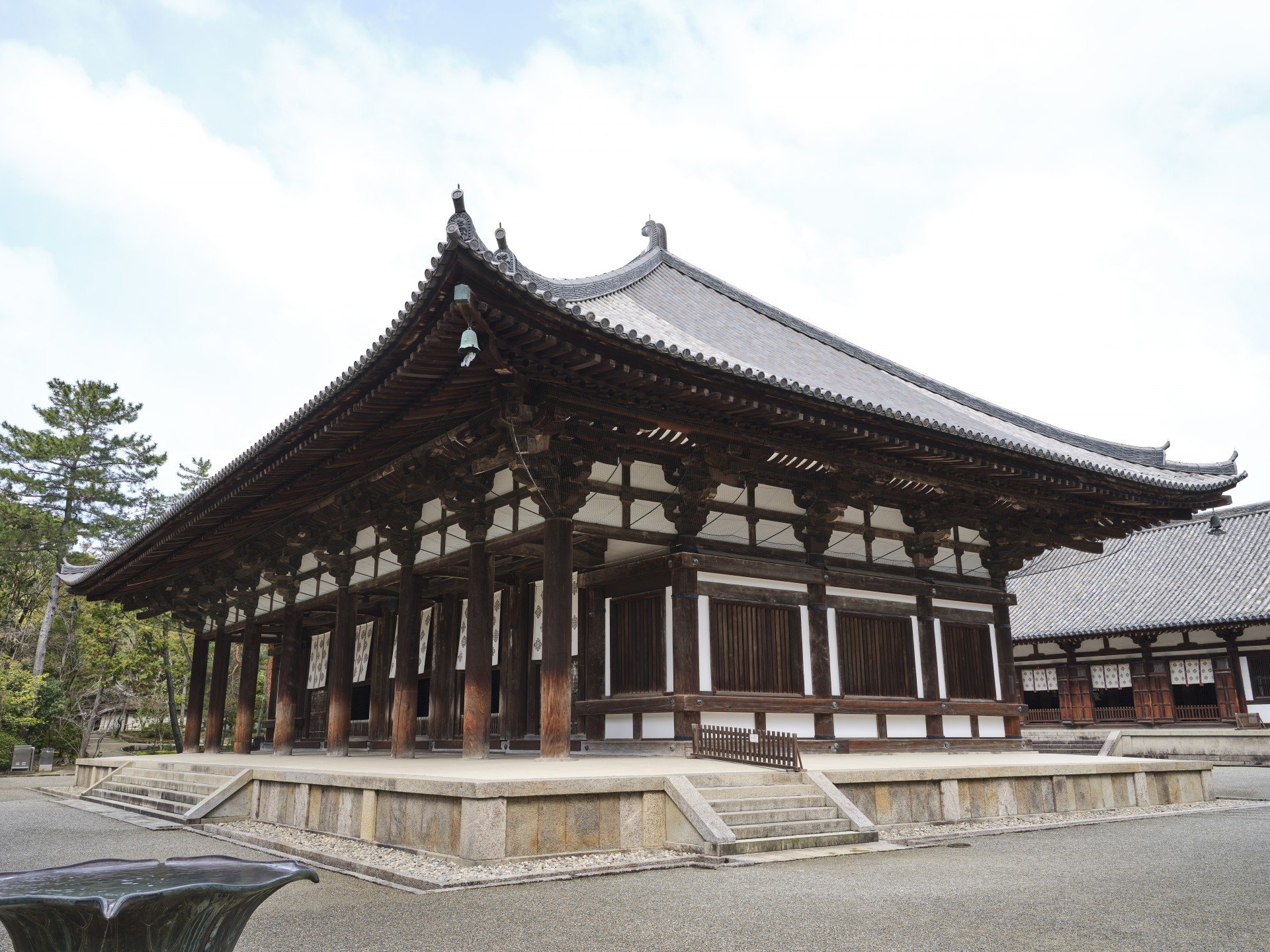
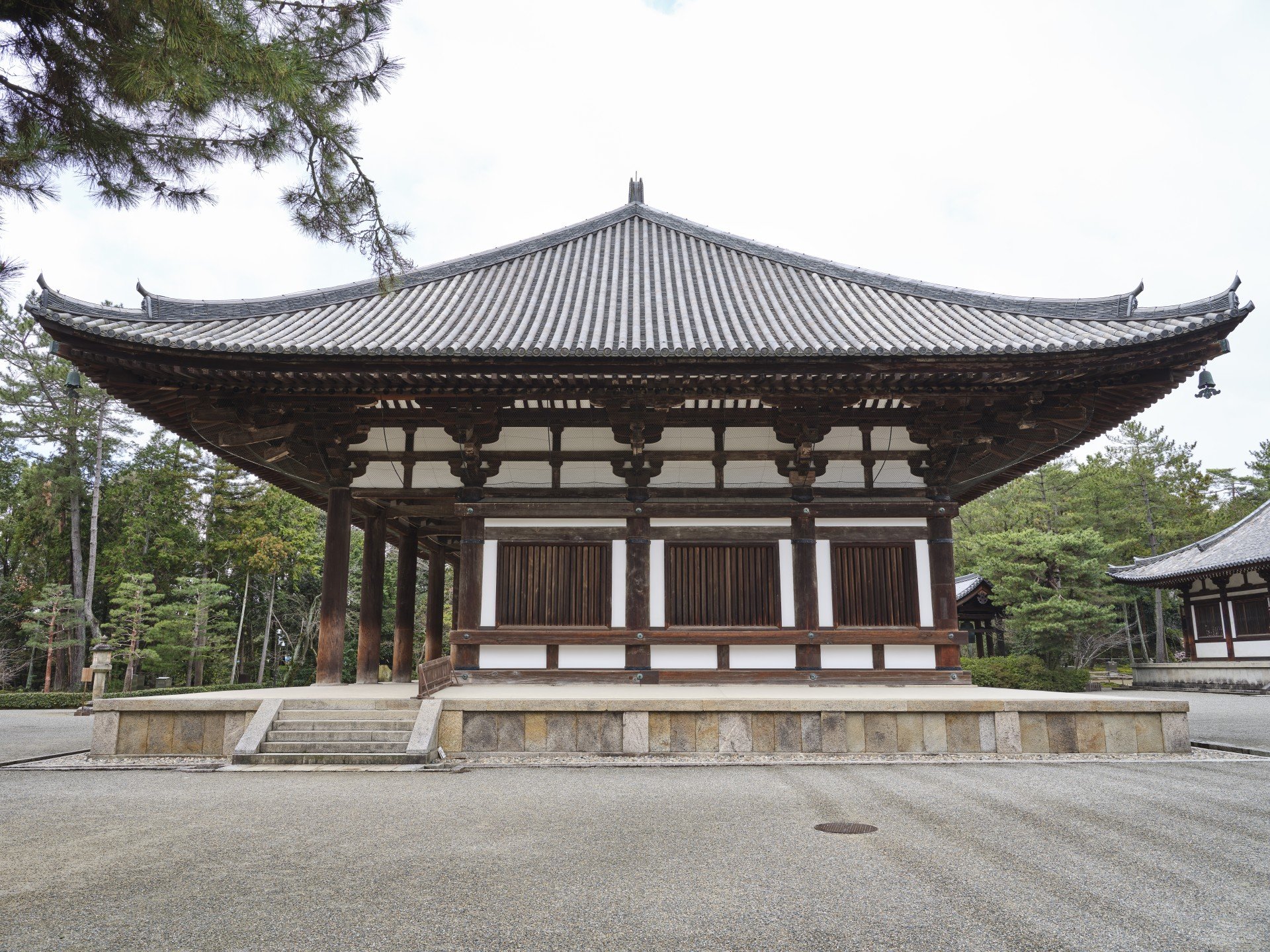
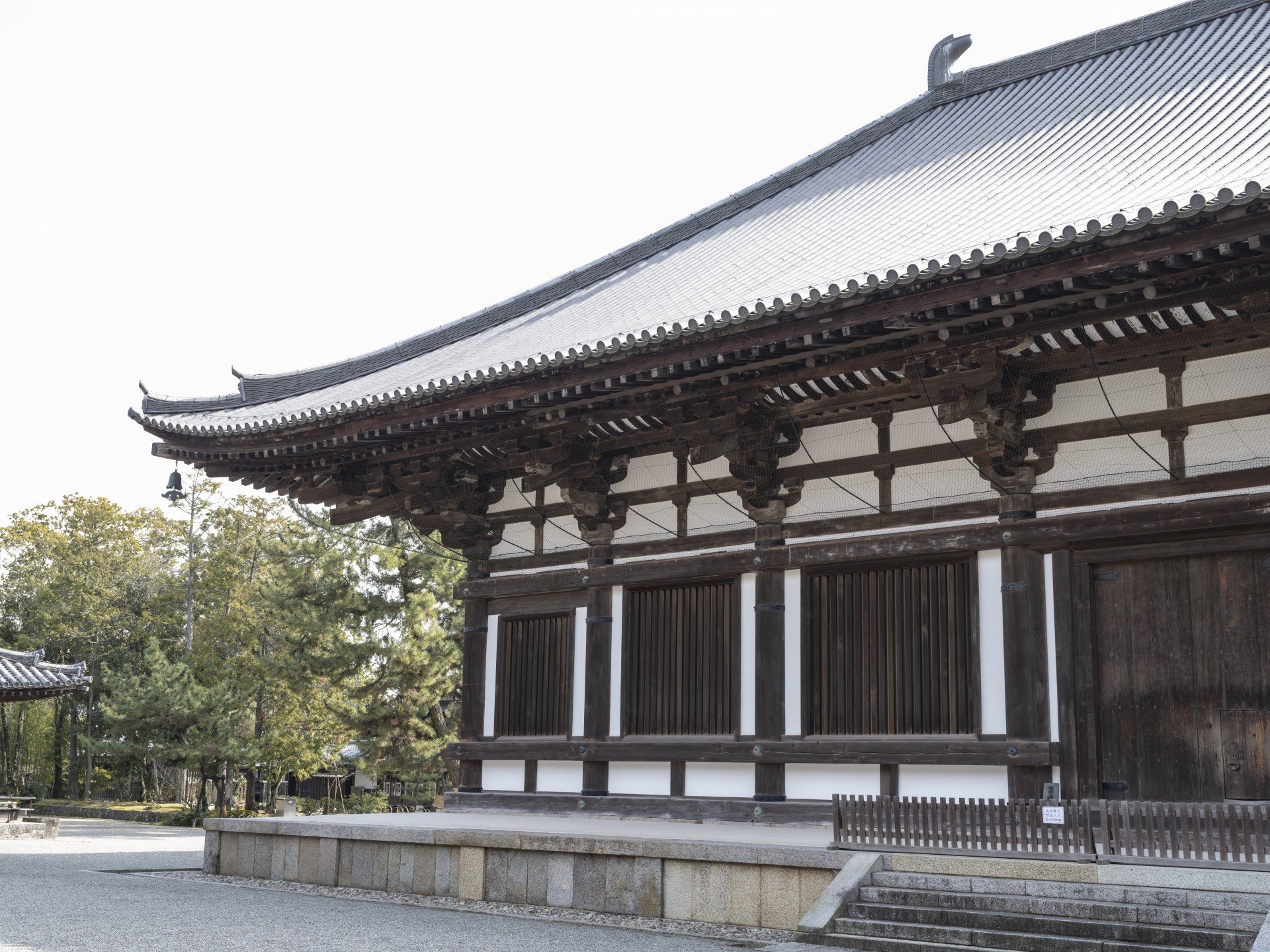
The structure runs seven bays wide and four deep, carried under a single-storey hipped roof of heavy hongawara tile. Its eight front columns swell slightly toward the middle before tapering again, a profile that Greek and Roman builders knew as entasis and that appears here on the far side of the continent. Nobody can say if the idea travelled the Silk Road or arose on its own, but the effect on the eye is the same: the row of pillars looks alive rather than rigid.
What to Look For
Start with the roof. Two ceramic shibi, the fish-tailed ornaments that finish each end of the ridge, rise against the sky. The northern one dates to the eighth century; its southern partner was renewed in later repair. These fittings gave the novelist Yasushi Inoue the title of his book on the temple's founding, and they remain the image most visitors carry away.
Inside stand three of the temple's great sculptures, all National Treasures in their own right. A seated Rushana Buddha, the cosmic Vairocana, sits within a wide halo studded with hundreds of small carved Buddhas. Beside it rise a standing Thousand-armed Kannon and a Yakushi, the Medicine Buddha. The scale of the group inside the open hall gives a rare sense of how a Nara-period sanctuary was meant to feel.
The building visitors see today passed through a full dismantling restoration between 2000 and 2009, when the roof was taken down and the frame examined piece by piece. Earlier campaigns had already left their mark: eave repairs in the late Heian period, a stone altar platform added in the Kamakura era, re-roofing in the 1320s, and a major Meiji-era overhaul in 1898 and 1899 that replaced the roof framing with a truss. The hall is less a frozen relic than a structure that has been kept standing by every century that inherited it.
Q&A
- Is the Golden Hall really the oldest of its type in Japan?
- It is the only surviving temple main hall built in the Nara period (eighth century). Other Nara-era buildings survive elsewhere, but no other kondo of that age remains, which makes this hall unique.
- Did Ganjin build it himself?
- No. Timber analysis points to construction late in the eighth century, after Ganjin died in 763. The work is usually attributed to the fourth abbot, Nyoho.
- Can I go inside and see the Buddhas?
- Yes. The Golden Hall is open to visitors during regular temple hours, and the three National Treasure sculptures are visible from the worship space. Photography of the interior is generally not permitted.
- What are the ornaments on the roof?
- They are shibi, ceramic ridge-end ornaments shaped like a fish tail, used to protect and crown the roof. The northern shibi is original to the eighth century.
- How do I get there?
- Toshodai-ji sits west of central Nara, near the west bank of the Akishino River. It is a short walk from Yakushi-ji and reachable by bus from Kintetsu Nishinokyo Station.
Basic Information
| Name | Toshodai-ji Golden Hall (Kondo) |
|---|---|
| Location | Gojo-cho, Nara City, Nara Prefecture |
| Designation | National Treasure (building); Important Cultural Property from 1897, raised to National Treasure on 9 June 1951 |
| Count | One building (attached items: 22 old members, 2 old shibi, 11 old materials) |
| Period | Nara period, late 8th century (timber felled 781) |
| Structure | Seven bays by four bays, single storey, hipped roof (yosemune-zukuri), hongawara tile |
| Owner | Toshodai-ji |
| Access | Part of the World Heritage site "Historic Monuments of Ancient Nara"; open during temple hours |
References
- Toshodai-ji official site — Golden Hall
- https://toshodaiji.jp/about_kondoh.html
- Agency for Cultural Affairs — National Cultural Properties Database
- https://kunishitei.bunka.go.jp/heritage/detail/102/2477
- Nara City — World Heritage: Toshodai-ji
- https://www.city.nara.lg.jp/site/world-heritage/88527.html
- Nara Prefecture — Cultural Resources: Toshodai-ji
- https://www.pref.nara.lg.jp/ikasu-nara/bunkashigen/main00077.html
Last verified: 2026.07.11