
Important Cultural Property of Oita
大 分 県 の 重 要 文 化 財Oita’s Important Cultural Properties — designated for their value to the nation’s cultural history.
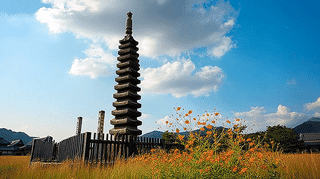
An early Kamakura-period stone pagoda in Usuki, Oita Prefecture. Its own owner there is recorded in two quite different ways in the two records today.
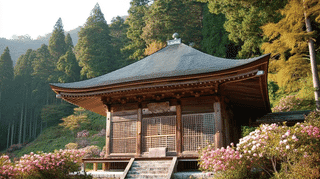
An early Muromachi-period main hall in Bungo-Ono, Oita Prefecture, Japan. Empty fields there now stand beside other fields that simply say none at all.

Discover the Usa-gū Shinryō Ōkagami, an Important Cultural Property and the sole surviving Kamakura-period manuscript documenting the sacred estates of Usa Jingū, the head shrine of over 44,000 Hachiman shrines across Japan.
An Important Cultural Property held by a private owner in Oita Prefecture, this hanging-scroll fragment is one section of the celebrated Satake-bon Sanjurokkasen-e — a 13th-century Kamakura-period scroll widely regarded as the finest surviving example of poet-portrait painting in Japan. Traditionally attributed in painting to Fujiwara no Nobuzane and in calligraphy to Gokyogoku Yoshitsune, the fragment depicts the Heian poet Fujiwara no Kanesuke (Tsutsumi Chunagon), great-grandfather of Genji author Murasaki Shikibu. It is one of 37 sections created when the original handscroll was famously divided in 1919, an event known as the Emaki Setsudan. This article guides visitors through the work's artistic significance, its remarkable scattering, and the cultural attractions of Oita that surround it.
The Miura Baien Manuscripts, designated as an Important Cultural Property of Japan, comprise 30 categories of autograph manuscripts (212 volumes) and four personal artifacts belonging to the Edo-period philosopher Miura Baien (1723–1789). Preserved in Kunisaki City, Oita Prefecture, these documents record his original philosophical system known as Jōrigaku (Study of Natural Order), which anticipated Western dialectical philosophy. The collection is displayed at the Miura Baien Museum alongside his former residence, a National Historic Site.
The Former Main Hall of Ōno Oimatsu Tenmansha Shrine, located in Maetsue Town, Hita City, Ōita Prefecture, is a sangensha nagare-zukuri structure built in 1488 and designated as a nationally Important Cultural Property. One of the rarest surviving examples of Muromachi-period shrine architecture in Kyushu, it features robust timber proportions and unique construction details, and is also renowned for the Ōno Gaku folk performance featuring kappa-inspired dances.
The Main Hall of Ganjo-in Temple, known as Aizen-do, stands on the hillside of Mount Hachiman in Taketa, Oita Prefecture, as the city's oldest surviving wooden structure. Built in 1635 by Hida master carpenters under the patronage of Lord Nakagawa Hisamori, this nationally designated Important Cultural Property features sophisticated Zen-style bracket complexes, fan-shaped rafters, and distinctive demon carvings at its eaves. Enshrining Aizen Myoo, the deity of love, it is celebrated as one of Oita's most popular romantic power spots.
Discover the Former Yahata Family Residence (Kyū Yahata-ke Jūtaku), an Important Cultural Property in Hita, Oita Prefecture. This rare 18th-century kudo-zukuri farmhouse preserves the traditional split-roof architecture of rural Kyushu.
The Gyōtoku Family Residence in Yoake, Hita City, Ōita Prefecture, is a nationally designated Important Cultural Property dating from the late Edo period. Once home to generations of official physicians serving the Kurume Domain, the residence features the distinctive L-shaped magari-ya roofline of western Ōita and a spacious earthen-floor layout typical of grand village headman dwellings. Visitors can explore the house, its borrowed-scenery garden, and a medical heritage museum free of charge.
Kōkan Bridge is a magnificent single-arch stone bridge completed in 1824, spanning the gorge of the Mie River between Usuki City and Bungo-Ōno City in Oita Prefecture. Boasting the longest stone arch span in Japan at the time of its construction, this Important Cultural Property represents the origin of large-scale stone arch bridge engineering in Kyushu. Discover the story of three merchants who sacrificed their fortunes to build it and the enduring beauty of Aso welded tuff masonry.
Designated an Important Cultural Property in 1975, this thatched farmhouse at Niogi is the oldest house in Oita City, with an upward-hinged shutter and adzed posts.
Hosokawa Tadaoki raised this two-storey gate at Komo Shrine in Nakatsu, Oita, in 1622. Skirt roofs balance its tall frame. An Important Cultural Property since 1988.
This 2.97-metre stone pagoda of 1321 at Kitsuki, Oita, was commissioned by a living patron for his own repose. Around a hundred medieval stones share the hillside.
Carved in 1316 and toppled into a shrine pond in the Meiji purge of Buddhist objects, this andesite pagoda was rescued in 1889 and stands at Shoonji, Kunisaki, Oita.
The main hall of Buzen Zenkoji in Usa, Oita: a mid-Muromachi hipped-roof building entered from its short end, protected nationally since 1907. Grounds open free.
This small hall at Senpukuji in Kunisaki, Oita shelters the stone grave of the monk who founded the temple in 1375. Rebuilt in 1636, it is 4.01 metres wide.
Built in 1524 at Senpukuji in Kunisaki, Oita, this is the oldest Soto Zen Buddha hall in Japan and the only medieval example in Kyushu. Rethatched in 2007.
A stone five-tiered pagoda at Kutsukake in Kitsuki, Oita, 4.11 m high. A 1968 repair uncovered an inscription of 1339, and it was designated nationally in 1954.
A stone hoto at Higashikataku in Kunisaki, Oita, 3.97 m high. Ki no Nagasada raised it in 1321 as his own memorial; the largest dated Kunisaki-to to survive intact.
Chofukuji Hondo at Hita, built in 1669, is Kyushu's oldest Shin Buddhist main hall: carved dragon transoms, original lotus paintings, and where Hirose Tanso taught.
More from Oita
Oita’s registered properties across designations, with featured heritage and travel notes.
The complete kokuhō catalogue — browse by prefecture, period, and category.
Nationwide jūyō bunkazai — architecture, sculpture, painting, crafts, and documents.