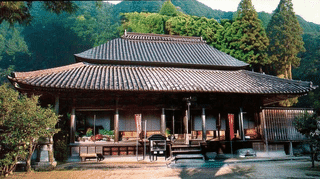
Manpuku-ji Bell Tower: A Hidden Cultural Treasure in the Mountains of Tokushima
Deep in the mountainous heart of southern Tokushima Prefecture, where the clear Naka River winds through forested valleys, stands an ancient temple that has quietly watched over its community for more than 800 years. Manpuku-ji (萬福寺), a Shingon Buddhist temple of the Kōyasan branch, is home to a graceful bell tower (shōrō, 鐘楼) that was designated as a Nationally Registered Tangible Cultural Property in 2005. Together with the main hall, the earthen storehouse, and the guardian shrine, the bell tower forms a serene temple complex that captures the essence of rural Japanese spiritual life. For travelers seeking an unhurried encounter with Japan's living heritage, away from crowded tourist paths, the Bell Tower of Manpuku-ji offers a rare and rewarding visit.
An Eight-Century Legacy: The History of Manpuku-ji
Manpuku-ji's story begins in the late 12th century. According to temple records, the temple was founded in Bunji 2 (1186), during the dawn of the Kamakura period—the same era when Japan's first samurai government was taking shape in distant Kamakura. The temple's mountain name, Enmei-zan (圓明山), means "Mountain of Perfect Brightness," an elegant expression of the enlightenment that Buddhist temples aspire to embody.
The principal image of worship is Yakushi Nyorai, the Medicine Buddha, believed to heal both body and spirit. The current statue dates from the Muromachi period, while the accompanying Four Heavenly Kings (Shitennō) are attributed to the earlier Fujiwara era, reflecting the long chain of devotion that has sustained this temple through the centuries.
In Eiroku 4 (1563), during the turbulent Warring States period, a priest named Shūshin is said to have moved the temple to its present location in the hamlet of Nobuno. The site chosen is a gentle terrace carved into the mountainside, reached by a flight of stone steps that rise from the village road below. Among the temple treasures are two important devotional paintings: the Taima Mandala (當麻曼荼羅) and the Kumano Mandala (熊野曼荼羅), both expressions of Japan's deep intertwining of Buddhist and native religious traditions.
Why the Bell Tower Was Registered as a Cultural Property
On February 9, 2005, four of Manpuku-ji's buildings were added to Japan's national register of tangible cultural properties: the main hall (hondō), the bell tower (shōrō), the earthen storehouse (dozō), and the guardian shrine (chinju-dō). The registration was granted on the basis that these buildings contribute to the historical landscape of the region and embody strong local character.
Japan's system of "Registered Tangible Cultural Properties" (登録有形文化財), introduced in 1996, protects buildings that hold significant cultural and architectural value—particularly historic structures still in daily use. Unlike "designated" cultural properties, which often receive stricter preservation constraints, registered properties remain actively used while benefiting from official recognition and conservation support. Manpuku-ji's bell tower, still fulfilling its age-old role of marking the rhythms of temple life, is an exemplary case of living heritage.
The registration also recognizes the ensemble value of the temple compound. The bell tower does not stand in isolation; it is part of a carefully composed layout in which each building complements the others. The main hall, with its distinctive four-sided eaves covered in thatched roofing (known locally as the "shihō-buta" or four-sided-cover farmhouse style), shows a regional character that is increasingly rare in Japan. The bell tower shares this modest, deeply local sensibility.
Highlights and Points of Interest
The Bell Tower Itself
The bell tower stands between the main hall and the small Jizō hall, positioned so that the sound of its bronze bell carries across the rooftops of the village below. In Japanese Buddhism, the temple bell (bonshō, 梵鐘) is sounded to mark the passage of time, to announce ceremonies, and—most famously—to toll 108 times on New Year's Eve, symbolizing the release of the 108 earthly desires described in Buddhist teaching. Visitors may feel an almost tactile hush when approaching the bell tower, an architectural form designed to hold both silence and sound in balance.
The Thatched Main Hall
The main hall, built in the late Edo period (between 1830 and 1867), is the most visually striking structure of the compound. Its wide hipped roof, with four-sided lower eaves covered in traditional tiles, evokes the rural farmhouses of the region. The floor plan follows the classical six-room hōjō layout, with broad verandas (hirobiroengawa) opening to the south and west.
The Compound Layout
The temple grounds stretch east to west along a stone-walled terrace that rises roughly three meters above the road. A pair of iron arch gate pillars, added in the modern era, marks the entrance. Walking east to west, visitors pass the earthen storehouse, the priest's residence (kuri), the main hall, the bell tower, and the small Jizō hall. Behind the main hall, on the slope rising into the forest, the guardian shrine faces south, watching over the temple from above.
A Restored Heritage
Following the 2005 registration, a major year-long renovation project began in 2006, supported by the cooperation of parishioners who wished to preserve their family temple. The bell tower and storehouse were both restored the following year, ensuring that these historic buildings will continue to serve the community for generations to come.
Visitor Information
Manpuku-ji is located in the village of Nobuno in Naka Town, deep in the mountains of southern Tokushima. The temple sits in a quiet rural setting, making it ideal for visitors who appreciate peaceful surroundings and unspoiled landscapes. Reaching the temple requires a car or bus, as there are no train stations nearby. Visitors are encouraged to be respectful of this active place of worship: the temple is a functioning religious institution with a resident priest and an engaged community of around 350 parish households.
The grounds can generally be viewed from outside at any time, but access to the interior of the buildings may require prior arrangement with the temple. As with many rural temples in Japan, a quiet, contemplative attitude is appreciated.
Surrounding Attractions
Naka Town is one of Tokushima's most scenic mountain regions, often described as a treasure trove of waterfalls, forests, and clear-water rivers. After visiting Manpuku-ji, travelers can explore a remarkable range of natural and cultural sites nearby.
Ōgama Falls (大釜の滝) is a 20-meter waterfall chosen as one of Japan's Top 100 Waterfalls in 1990. Surrounded by cliffs over 100 meters high, it plunges into a deep pool said in legend to harbor a great serpent.
Ōtodoro Falls (大轟の滝), another 20-meter cascade, drops in three dramatic tiers and can be viewed directly from the roadside—perfect for travelers of any age or ability.
Mt. Tsurugi (剣山), at 1,955 meters, is the second-highest peak in western Japan and one of the Hyakumeizan (100 Famous Mountains of Japan). A chairlift eases the ascent, making it accessible even for casual hikers.
Takanose Gorge (高の瀬峡) is a premier spot for autumn foliage, drawing visitors from across the region each November.
Kitō Yuzu (木頭ゆず), the prized aromatic citrus grown in the Kitō district of Naka Town, is celebrated throughout Japan and used in a wide variety of local products and cuisine.
Awa Bancha (阿波晩茶), a traditional fermented tea produced in Naka Town, is recognized as a Nationally Important Intangible Folk Cultural Property—a living craft to discover during your visit.
Q&A
- What is a bell tower (shōrō) in a Japanese Buddhist temple?
- A shōrō is a dedicated structure that houses a temple's large bronze bell (bonshō). The bell is struck to announce ceremonies, mark the hours, and ring out 108 times on New Year's Eve. It is a central element of temple life and a deeply symbolic element of Japanese Buddhist culture.
- What does "Registered Tangible Cultural Property" mean?
- It is a Japanese national designation for buildings and objects of important cultural value, introduced in 1996. Registered properties are protected and supported by the government while remaining actively used—unlike "Important Cultural Properties," which carry stricter preservation rules.
- When was Manpuku-ji founded?
- Temple tradition places its founding in 1186 (Bunji 2), during the early Kamakura period. It was relocated to its current site in 1563 (Eiroku 4) by the priest Shūshin.
- Can visitors ring the temple bell?
- Bell ringing is generally reserved for ceremonies and the temple priest. Visitors who wish to ring the bell should inquire respectfully at the temple in advance. Please remember that this is an active place of worship.
- Is the temple easily accessible by public transport?
- The temple is in a remote mountain village, so access by car is strongly recommended. Local buses serve the area, but services are limited. Combining your visit with a drive along the scenic valleys of Naka Town is the most enjoyable approach.
Basic Information
| Name | Manpuku-ji Bell Tower (萬福寺鐘楼) |
|---|---|
| Temple | Enmei-zan Manpuku-ji (圓明山 萬福寺), Kōyasan Shingon Buddhism |
| Principal Deity | Yakushi Nyorai (Medicine Buddha) |
| Founded | 1186 (Bunji 2, Kamakura period); relocated to current site in 1563 (Eiroku 4) |
| Cultural Property Status | Nationally Registered Tangible Cultural Property (registered February 9, 2005) |
| Related Registered Properties | Main Hall, Bell Tower, Earthen Storehouse, Guardian Shrine (four buildings) |
| Address | 20 Terramae, Nobuno, Naka-chō, Naka-gun, Tokushima 771-5406, Japan |
| Owner | Religious Corporation Manpuku-ji |
| Access | By car from Tokushima city (approximately 1.5 hours); in the Aioi district of Naka Town |
References
- Manpuku-ji Official Website (那賀町の萬福寺)
- http://enmeizan.com/
- About Manpuku-ji (萬福寺について)
- http://www.enmeizan.com/concept.html
- Manpuku-ji Hondō – Cultural Heritage Online (文化遺産オンライン)
- https://bunka.nii.ac.jp/heritages/detail/180856
- Manpuku-ji (Tokushima, Naka-chō) – Wikipedia
- https://ja.wikipedia.org/wiki/萬福寺_(徳島県那賀町)
- Naka Town Official Website (那賀町公式ホームページ)
- https://www.town.tokushima-naka.lg.jp/
- Awa Navi – Tokushima Tourism Information Site
- https://www.awanavi.jp/
- National Cultural Properties Database (国指定文化財等データベース)
- https://kunishitei.bunka.go.jp/
Last verified: 2026.04.21