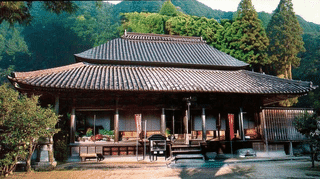
Manpukuji Temple Storehouse: A Quiet Masterpiece of Late-Edo Craftsmanship in the Mountains of Tokushima

Tucked deep in the forested folds of southern Tokushima Prefecture, where over ninety percent of the land is mountain and the Naka River carves emerald gorges through the hills, stands one of Japan's lesser-known but quietly extraordinary cultural properties. The storehouse of Manpukuji Temple (Manpukuji-kura) is a small, dignified earthen-walled building from the closing decades of the Edo period, and it embodies the patient craft of regional Japanese carpenters and plasterers at the height of their skill. For travelers seeking an authentic, off-the-beaten-path encounter with rural Japan's living heritage, this storehouse and the ancient temple it serves offer a rewarding detour into a landscape few foreign visitors have ever explored.

An Ancient Temple in a Mountain Village

To understand the storehouse, one must first understand the temple that built it. Manpukuji is a Buddhist temple of the Koyasan Shingon sect, with the mountain name Enmyozan and a principal image of Yakushi Nyorai, the Buddha of Healing. According to temple tradition, Manpukuji was founded in 1186, in the early Kamakura period, when the great age of warrior-pilgrim culture was just beginning to take shape across Japan. The original Yakushi Nyorai statue is believed to date from the Muromachi period, while the temple's Four Heavenly Kings statues are even older, attributed to the Fujiwara age.

In 1563, during the turbulent Sengoku period, a priest named Hideshin relocated the temple to its present site in Nobuno, a quiet hamlet in what is now Naka Town. The temple has remained in this location ever since, gradually expanding its precinct and constructing the buildings that still stand today. Among its treasures are the Taima Mandala and the Kumano Mandala, important Buddhist paintings preserved across centuries. Together with the storehouse, the main hall, the bell tower, and the guardian shrine were all designated as Registered Tangible Cultural Properties of Japan on February 9, 2005.

The Storehouse Itself: A Study in Modest Perfection

The Manpukuji Storehouse stands on the eastern side of the temple precinct. It is a two-story earthen-walled structure built in the dozō-zukuri style, the classic Japanese method for fireproof storage buildings that protected a community's most precious belongings from the ever-present threat of fire. The building has a footprint of just twenty-three square meters — modest in scale, but every detail bespeaks the care of an experienced provincial craftsman.

Although no construction record survives, scholars have dated the storehouse to the late Edo period, somewhere between 1830 and 1867, based purely on its construction techniques. The roof is a gabled (kirizuma) form running north–south, finished in pantiles (sangawara) and built in the so-called "placed roof" or okiyane style, in which the tile roof sits as a separate unit above the structural earthen-walled box beneath. This clever arrangement protected the fragile plasterwork from the worst of the weather and allowed the roof to be repaired or replaced without disturbing the storehouse itself.

White Plaster and Pine-Fin Ornament

The west face carries a doorway sheltered by a small projecting eave (hisashi), the only formal entrance into the building. The exterior walls are finished in carefully applied shikkui — the white lime plaster that has long been the hallmark of high-quality Japanese earthen architecture. The lower walls (the "loincloth" or koshi) are protected by horizontal weatherboards held in place with battens (oshibuchi shitamijita), a robust solution for buildings standing in a humid mountain valley. At the top of the walls, just beneath the eaves, runs a ribbed cornice or molding (jabara), giving the small structure a quiet sense of dignity.

The building's most distinctive ornamental feature appears at the very peak of each gable end. Suspended beneath the ridge is a decorative bargeboard ornament known as a gegyo, a traditional element found on temples, shrines, and storehouses across Japan. What makes this storehouse special is that its gegyo are decorated with an unusual variation called matsu-no-hire — literally "pine fins" — a rare flourish that distinguishes the Manpukuji Storehouse from the great majority of similar buildings in the region.

Why It Earned Cultural Property Status

The Manpukuji Storehouse was registered as a Tangible Cultural Property of Japan in 2005 along with three other buildings on the temple's grounds. Registration recognizes structures that contribute meaningfully to the historical landscape and that retain enough of their original character to be worth preserving. In the storehouse's case, several factors combined to earn it this honor.

First, it is a well-preserved example of dozō-zukuri construction from the late Edo period — a building type that was once ubiquitous across rural Japan but is rapidly disappearing as old structures are demolished or rebuilt. Second, the quality of its workmanship is unusually high for a small village temple, suggesting the work of a master plasterer and a community willing to invest in lasting craftsmanship. Third, the unusual matsu-no-hire decoration on the gable ends represents a regional variation that adds to the diversity of Japan's surviving architectural heritage. Finally, the storehouse forms part of a coherent group of historic buildings — main hall, storehouse, bell tower, and guardian shrine — that together evoke the appearance of a complete late-Edo-period Buddhist precinct in mountainous Shikoku.

Highlights for Visitors

The Manpukuji Storehouse is a small building, and a quick visit can be measured in minutes; but those minutes reward attentive looking. Visitors with an interest in Japanese architecture should take time to study the texture of the white plaster, the pattern of the lower weatherboards, the careful join where the roof meets the wall, and especially the pine-fin gegyo at the gable peaks. In good light the gentle shadows cast across the white walls reveal the patient hand of the plasterer.

The wider precinct is equally rewarding. The main hall, with its characteristic four-sided eaves and what was originally a thatched roof in the regional "shihō-buta" farmhouse style, is itself a registered cultural property and a fine example of how local building traditions adapted Buddhist architecture to a mountain village. The bell tower and guardian shrine round out the historic group. The temple grounds are quiet, framed by surrounding forest, and offer a glimpse of an unhurried Japan that exists far from the tourist trails of Kyoto and Tokyo.

Around Naka Town: What Else to See

Naka Town, the municipality that contains Manpukuji, is one of the most spectacular natural areas in Tokushima Prefecture. Travelers who make the journey to the temple should plan a full day or more in the area to take in its rugged beauty and other cultural sites.

Natural Scenery

The Washikujishi Line is a celebrated stretch of the Naka River where rapids, deep pools, and dramatic rock formations combine to create one of the "Twelve Great Scenic Views of Awa." A short walk along its banks offers a fine introduction to the wild character of the region's rivers. Further upstream, the Ōkama Falls, listed among Japan's top one hundred waterfalls, plunges through a sheer rock gorge surrounded by a canopy of trees that turn brilliant red in autumn. The Takanose Gorge in the upper reaches of the Naka River is another famous destination for autumn foliage.

Cultural and Spiritual Sites

Visitors interested in Buddhist heritage can take the Tairyūji Ropeway, one of the longest cable car rides in western Japan, up to Tairyūji, a temple high in the mountains that forms the twenty-first stop on the Shikoku Pilgrimage of eighty-eight temples. Kurotaki-ji, another remote mountain temple, is also within reach of Naka Town for the more adventurous traveler.

Local Comforts

The roadside stations Michi-no-Eki Washi-no-Sato and Michi-no-Eki Momijikawa Onsen offer hot springs, regional cuisine, and shops selling local specialties. Naka Town is famous throughout Japan for its Kitō yuzu citrus, whose intensely fragrant juice and zest find their way into everything from ponzu sauce to sweet liqueurs. Local tea is also of high quality, and travelers will find generous opportunities to sample these regional flavors.

📍 Plan Your Visit to Tokushima
Find tours, activities & transport passes near Manpukuji Temple Storehouse
[ Iya Valley Vine Bridges & Awa Odori Dance ]

Q&A

QCan the inside of the storehouse be visited?
AThe storehouse is an active part of an operating Buddhist temple and is not generally opened to the public. Visitors are welcome to view it from outside within the temple precinct. Anyone interested in a closer look or a guided explanation is encouraged to contact the temple in advance through Naka Town's tourism office.
QIs there an admission fee?
ANo admission fee is charged for visiting the temple precinct itself. As a working temple, donations from visitors are appreciated and support the ongoing care of the historic buildings.
QWhat is the best season to visit?
AThe temple is beautiful year-round, but late spring through early summer offers fresh greenery, while mid-November brings spectacular autumn colors that combine with the white walls of the storehouse to create memorable scenes. Winter is quiet and contemplative; summer can be hot and humid in the valley.
QHow do I reach Naka Town from a major city?
AThe most convenient base is Tokushima City, reachable by train or bus from Osaka, by direct ferry from the Kansai region, or by flight to Tokushima Awaodori Airport. From Tokushima Station, buses on the Niūdani line run toward Kawaguchi, the gateway to Naka Town. A rental car is strongly recommended for exploring the area, as buses are infrequent and many sites lie at some distance from one another.
QWhat does "registered tangible cultural property" mean, exactly?
AIt is a category established by Japan's national government in 1996 to identify and protect buildings that have significant historical or architectural value but that may not warrant the most stringent designation as "Important Cultural Property." Registration encourages preservation while allowing the building to remain in active use, as is the case at Manpukuji.

Basic Information

Name Manpukuji Storehouse (Manpukuji-kura)
Address 20 Teramae, Nobuno, Naka Town, Naka District, Tokushima Prefecture
Owner Manpukuji (Religious Corporation), Koyasan Shingon Sect
Designation Registered Tangible Cultural Property of Japan (Building)
Date of Registration February 9, 2005
Period Late Edo period (estimated 1830–1867)
Structure Dozō-zukuri (earthen-walled storehouse), two stories, pantile roof, building area 23 m²
Number of Buildings 1
Temple Mountain Name Enmyozan
Temple Principal Image Yakushi Nyorai (Buddha of Healing)
Access Approx. 90 minutes by car from Tokushima City; via Niūdani line bus from Tokushima Station to Kawaguchi, then local transport

References

Manpukuji-kura — Cultural Heritage Online (Agency for Cultural Affairs)
https://bunka.nii.ac.jp/heritages/detail/140408
Manpukuji-kura — National Cultural Properties Database (Agency for Cultural Affairs)
https://kunishitei.bunka.go.jp/bsys/maindetails/101/00004638
Manpukuji Hondo — Cultural Heritage Online
https://bunka.nii.ac.jp/heritages/detail/180856
Manpukuji (Naka, Tokushima) — Wikipedia
https://ja.wikipedia.org/wiki/萬福寺_(徳島県那賀町)
Naka Town Tourism Guide — Official Naka Town Website
https://www.town.tokushima-naka.lg.jp/gyosei/kankoguide/index.html
Dozō-zukuri — JAANUS (Japanese Architecture and Art Net Users System), Columbia University
https://projects.mcah.columbia.edu/jaanus/node/4759

Last verified: 2026.04.21