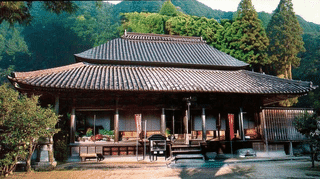
Manpukuji Chinjudo: The Guardian Shrine of a Mountain Temple in Deep Tokushima
Tucked into the mountainous heart of Tokushima Prefecture, far from the crowded temple trails of Kyoto and Nara, stands a quiet complex of buildings that tells a different kind of Japanese story. Manpukuji is a Kōyasan Shingon sect temple in Naka Town, and within its wooded precinct you will find a small, dignified structure called the Chinjudō — the "tutelary deity hall." Registered together with the Main Hall, the bell tower, and the storehouse as a National Registered Tangible Cultural Property in 2005, the Chinjudō is a living witness to one of the most fascinating features of Japanese religion: the centuries-long coexistence of Buddhist temples and Shinto deities on the same sacred ground.
For international visitors who want to step beyond the well-trodden itineraries and feel the quieter, more local pulse of Japanese heritage, Manpukuji in Naka offers an experience that is at once modest, authentic, and unexpectedly moving.
What Is a Chinjudō?
To understand why the Chinjudō matters, it helps to know a little about the religious logic behind it. For most of Japanese history, Buddhism and the indigenous kami worship that would later be called Shinto were not two separate religions but two intertwined systems. Buddhist temples routinely enshrined local kami as their guardians, and Shinto shrines often housed Buddhist images. This fusion was known as shinbutsu-shūgō — the "amalgamation of kami and buddhas."
A chinjudō, literally a "tutelary guardian hall," is the small Shinto-style sanctuary built inside a Buddhist temple compound to honor the kami who protects that specific place. The practice dates back more than a thousand years and remained nearly universal among Japanese temples until the Meiji-era separation of the two religions in 1868. Even today, many temples preserve their chinjudō as silent reminders of this older, more fluid spiritual world.
The Chinjudō at Manpukuji is exactly this kind of building — a small shrine that has watched over the temple for generations, where the monks and local faithful have traditionally paid respects to the kami of the land before turning their attention to the Buddhist rites of the Main Hall.
The Story of Manpukuji: Eight Centuries in the Mountains
Manpukuji itself carries a history that long predates the current buildings on the site. Temple tradition records that it was founded in 1186 (Bunji 2), at the very dawn of the Kamakura period, when a new warrior government had just begun to take shape in eastern Japan. The principal image of worship is Yakushi Nyorai, the Buddha of Healing, whose current statue dates from the Muromachi period and whose attendant Four Heavenly Kings are attributed to the earlier Fujiwara era.
In 1563 (Eiroku 4), amid the turbulence of the Sengoku warring states period, a priest named Shūshin relocated the temple to its present site in the village of Nobuno. The mountain name of the temple is Enmei-zan ("Circle of Light Mountain"), and the compound has remained here, at the foot of the forested slopes along the Naka River basin, ever since.
The current Main Hall was rebuilt in the late Edo period — it is now more than 170 years old — and the Chinjudō, storehouse, and bell tower belong to the same phase of the temple's life. Together they form an intact ensemble of nineteenth-century religious architecture in a rural mountain setting.
Why the Chinjudō Was Designated a Cultural Property
On February 9, 2005, Japan's Agency for Cultural Affairs registered four buildings of Manpukuji — the Main Hall, the storehouse, the bell tower, and the Chinjudō — as National Registered Tangible Cultural Properties. The registration recognized not any single outstanding feature but the value of the whole compound as an ensemble that preserves the character of a rural mountain temple at the end of the Edo period.
The centerpiece of the registration was the Main Hall, whose appearance is described in official documents as a "four-sided-cover vernacular farmhouse style" (shihō-buta minka-fū). The roof is a hipped thatched roof, originally of kaya (miscanthus), with tile-roofed lower eaves extending on all four sides — a design that clearly reflects the local farmhouse architecture of the Naka River valley. In other words, the temple's builders did not import a standardized Kyoto or Koyasan temple form; they built in the idiom of their own mountain community.
The Chinjudō earns its place in this registration as part of this same coherent, regionally rooted landscape. Small tutelary shrines from the late Edo period survive only rarely in their original settings, and the Chinjudō of Manpukuji remains in the very spot where it has long protected the temple, alongside buildings of the same era. It is the kind of quiet, unpretentious structure that rarely appears in travel guidebooks, yet speaks volumes about how religion was actually lived in pre-modern rural Japan.
What to Look For When You Visit
Manpukuji is not a tourist destination in the sense that Kyoto's famous temples are. There are no ticket gates, no souvenir stalls, no crowds. What awaits the visitor instead is a calm, green precinct where four gently aged buildings stand together in dialogue with the surrounding forest.
The Main Hall is the first thing that catches the eye. Its broad, thatched hipped roof and the tiled skirt of eaves that wraps around all four sides give it the silhouette of a grand local farmhouse rather than a conventional temple. Walk the veranda that runs along the south and west sides and you can see how the design pulls the building close to the ground, grounded in the landscape like the traditional homes of the area.
From there, the Chinjudō sits as a small, distinct structure within the precinct — easily missed if you do not know to look for it, but rewarding when you do. Unlike the spare, austere monumentality of many famous Shinto shrines, a temple-guardian hall like this one is often intimate and quietly crafted, with a hint of rustic charm and the weathering of many rainy seasons.
The two-story storehouse to the east displays elegant plastered walls, a tiled roof, and an unusual decorative gable ornament in the shape of a stylized pine needle — a small touch of craftsmanship rewarding to those who linger. The bell tower completes the ensemble.
In 2005 and 2006, the temple's parishioners organized a year-long major restoration of the Main Hall, and the storehouse and bell tower were repaired the following year. The result is a compound that is carefully tended and visibly loved.
Around Manpukuji: What Else to See in Naka Town
The town of Naka, which covers a vast area of mountains and river valleys in southern Tokushima, is a rewarding base for travelers who love nature, onsen, and quiet scenery. Over ninety percent of the town is forested, and it reaches deep into the Tsurugi-san Quasi-National Park. A visit to Manpukuji combines naturally with a slow drive or cycle along the Naka River.
Just a short distance away lies the Michi-no-Eki Momijigawa Onsen, a roadside station with a hot spring bath, a local restaurant, an inn, and a market selling regional produce and crafts. It is an ideal place to pause and soak after the drive. Farther into the mountains, the Washiki Line is a dramatic stretch of the Naka River famous for rapids, oddly shaped rocks, and vivid autumn color — counted among the Twelve Scenic Views of Awa. Deeper still are the Ōkama Falls and the Ōtodoro Falls, two of the region's most powerful waterfalls, and the Takanose Gorge, known for its blazing autumn maples.
Naka is also famous for Kitō yuzu — a citrus fruit grown in the Kitō district that is considered among the finest in Japan — and for Aioi bancha, a locally fermented tea with a distinct, gently tart flavor. Try them both at a farm stand or in a local meal, and your memory of the temple will carry their taste home with you.
Q&A
- What exactly is a chinjudō, and how is it different from an ordinary Shinto shrine?
- A chinjudō is a small Shinto-style sanctuary located inside a Buddhist temple compound, built to honor the kami who protects that particular temple. While it resembles a miniature shrine in form, it is not an independent religious institution but a part of the temple, reflecting the centuries-old Japanese tradition in which Buddhism and kami worship were practiced side by side on the same grounds.
- Can visitors enter Manpukuji freely?
- Manpukuji is a working parish temple rather than a formally ticketed tourist site. Visitors are generally welcome to walk around the precinct and view the exterior of the registered cultural property buildings. Interiors and special access should be confirmed in advance by contacting the temple directly, and visitors are asked to behave respectfully, as services and funerals may be in progress.
- How do I get to Manpukuji from Tokushima City?
- The temple is located in the Nobuno district of Naka Town, in southern Tokushima Prefecture. The most practical way to reach it is by rental car from Tokushima City, following the Naka River valley south along National Route 195. Public transport is limited in these mountains, so an overnight stay at a nearby inn or onsen is recommended for a relaxed visit.
- What does "four-sided-cover vernacular farmhouse style" mean?
- It refers to a distinctive Naka-region design in which a building has a central hipped thatched roof with lower, tile-roofed subsidiary eaves extending on all four sides. The look is more like a grand mountain farmhouse than like a standard Buddhist temple, and it is one of the main reasons that Manpukuji's buildings were recognized as culturally significant.
- When is the best season to visit?
- Spring, when the mountain slopes are green and blossoms appear, and autumn, when the Naka River valley fills with vivid maple colors, are both excellent. Combining a temple visit with a soak at the nearby Momijigawa Onsen and a drive through the Washiki Line or Takanose Gorge works especially well in November.
Basic Information
| Name | Manpukuji Chinjudō (Tutelary Deity Hall of Manpukuji Temple) |
|---|---|
| Designation | National Registered Tangible Cultural Property (Building), registered February 9, 2005 |
| Parent Temple | Enmei-zan Manpukuji, Kōyasan Shingon Sect |
| Principal Image of Main Hall | Yakushi Nyorai (Buddha of Healing) |
| Temple Founded | 1186 (Bunji 2); relocated to present site in 1563 (Eiroku 4) |
| Period of Construction | Late Edo period (together with the Main Hall, storehouse, and bell tower) |
| Address | 20 Aza-Teramae, Nobuno, Naka-chō, Naka-gun, Tokushima Prefecture 771-5406 |
| Owner | Religious Corporation Manpukuji |
| Access | Approximately 1 hour 30 minutes by car from Tokushima City via National Route 195 |
| Contact | Tel: 0884-62-0029 (please contact the temple in advance for visits) |
References
- National Cultural Properties Database, Agency for Cultural Affairs — Manpukuji Main Hall
- https://bunka.nii.ac.jp/heritages/detail/180856
- National Cultural Properties Database, Agency for Cultural Affairs — Manpukuji Storehouse
- https://bunka.nii.ac.jp/heritages/detail/140408
- Manpukuji Temple Official Website (Naka Town)
- http://enmeizan.com/
- Wikipedia — Manpukuji (Naka, Tokushima Prefecture)
- https://ja.wikipedia.org/wiki/萬福寺_(徳島県那賀町)
- Naka Town Official Tourism Guide
- https://www.town.tokushima-naka.lg.jp/gyosei/kankoguide/index.html
- Michi-no-Eki Momijigawa Onsen — Awa Navi (Tokushima Prefecture Tourism Portal)
- https://www.awanavi.jp/archives/spot/2993
Last verified: 2026.04.21