
Historic Sites, Places of Scenic Beauty, and Natural Monuments of Tokyo
東 京 都 の 史 跡 名 勝 天 然 記 念 物Tokyo · Historic Sites, Places of Scenic Beauty, and Natural Monuments
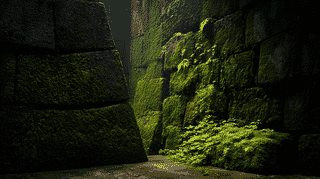
Discover the mysterious Luminous Moss at Edo Castle ruins in Tokyo—a National Natural Monument glowing with emerald light in the heart of Japan's largest city. Learn about this rare botanical wonder, its 1969 discovery, and why this urban oasis defies scientific expectations.

Just a five-minute walk from Tokyo Station, the Edo Castle Ruins are the remains of the largest castle ever built in Japan, where 15 generations of Tokugawa shoguns ruled for nearly 270 years. Designated a National Special Historic Site in 1960, the inner castle is now open to the public free of charge as the Imperial Palace East Gardens, offering visitors a chance to walk through massive Edo-period stone walls, ascend the foundation of the lost main keep, and view Important Cultural Property gates such as Sakuradamon.
Standing in Izumitsu on the volcanic island of Izu Oshima, the Sakura-kabu of Oshima is an Oshima cherry estimated at over 800 years old and the only plant in Tokyo to be designated a Special Natural Monument. Its main trunk broke off centuries ago, but the tree has continued to regenerate itself by sending adventitious roots from its fallen branches and raising new trunks from the ground — earning it the name of the cherry that walks. Rooted on a kipuka, a pocket of older land that lava once flowed around rather than over, it once served as a beacon for Edo-period sailors and still flowers each late March.
The Former Shimbashi Station Site and Takanawa Embankment Site, located in Minato Ward, Tokyo, is a nationally designated Historic Site preserving the birthplace of Japan's railway. When the country's first railway opened in 1872, trains traveled between Shimbashi and Yokohama partly on a 2.7-kilometer stone embankment built directly into Tokyo Bay. Visitors today can explore the reconstructed Shimbashi Station and its free Railway History Exhibition Room in Shiodome, while the rediscovered Takanawa Embankment ruins are being prepared for on-site public viewing in fiscal year 2027 within the new Takanawa Gateway City development. This article guides international travelers through one of Tokyo's most evocative landmarks of the Meiji modernization era.
Explore the Shitanoya Archaeological Site in Nishitokyo City, a National Historic Site preserving one of the largest Middle Jōmon period settlements in southern Kanto. Walk among reconstructed pit dwellings and experience 5,000 years of history just 30 minutes from Shinjuku.
A 900-year-old zelkova at Nerima's Hakusan Shrine. Roughly 19 m tall with an 8 m trunk, it is Tokyo's largest keyaki and a designated National Natural Monument.
A Natural Monument on the path to Musashi-Mitake Shrine in Ome, Tokyo. This giant zelkova is about 8.2 m around and 30 m tall, and roughly 600 years old.
A 916-meter volcanic cone 1,300 km south of Tokyo, this off-limits Ogasawara island shelters the world's only confirmed Matsudaira's storm-petrel breeding colony.
In Fuchu, Tokyo, the Musashi Fuchu Kumano Shrine Kofun is a rare round-top, square-base tomb of the late 7th century, with a free hall recreating its stone chamber.
In 1884 a student unearthed a strange reddish jar from a shell midden in this Tokyo district, Yayoi. The place name went on to label the pottery, then a whole era.
More from Tokyo
Tokyo’s registered properties across designations, with featured heritage and travel notes.
The complete kokuhō catalogue — browse by prefecture, period, and category.
Nationwide jūyō bunkazai — architecture, sculpture, painting, crafts, and documents.